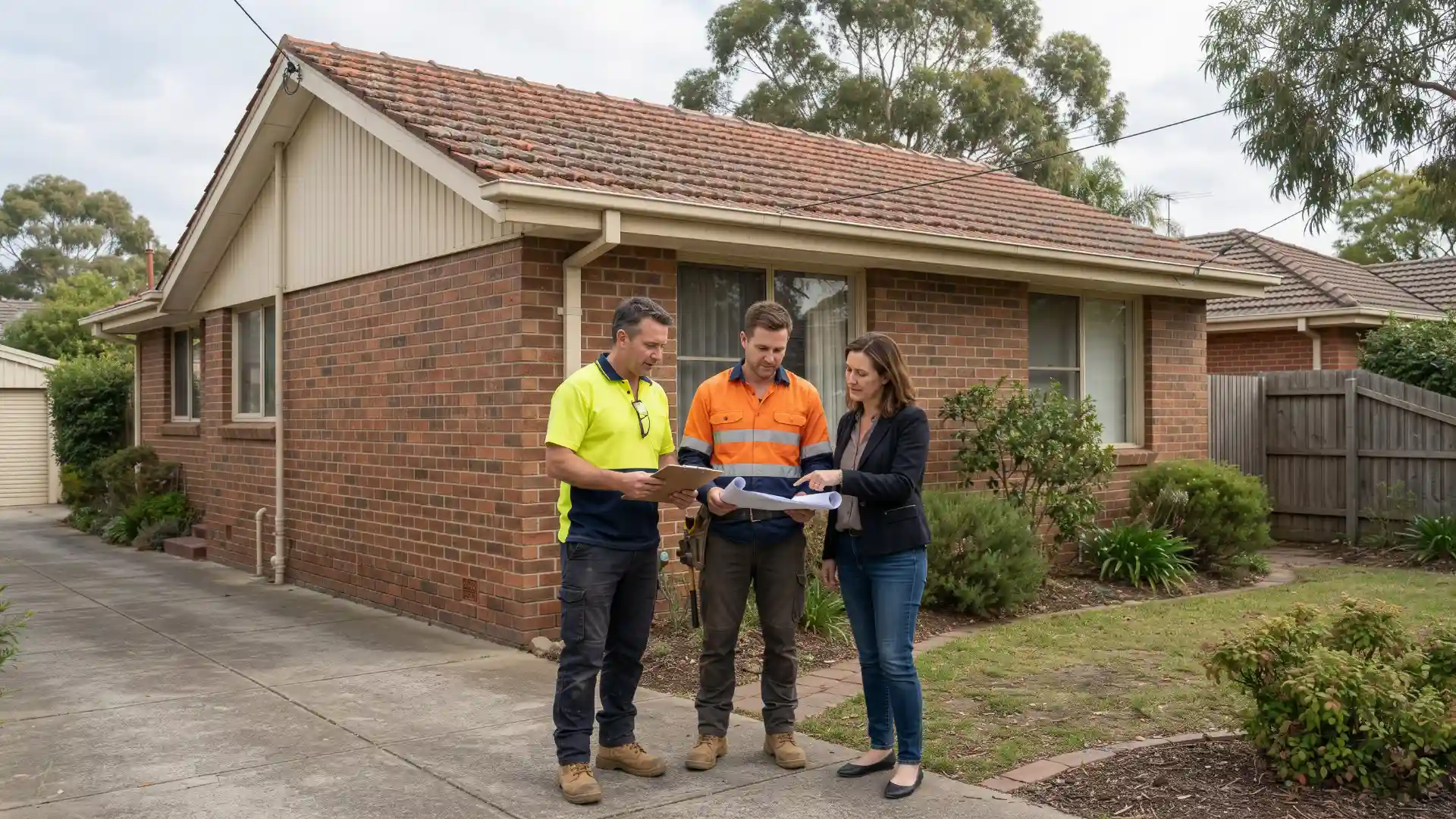
Eaves are an important part of a building’s external structure, and contractors may need to consider them when planning roofing, guttering, painting, electrical, renovation or general maintenance work. Before arranging work around these areas, it is important to understand the property’s existing materials, site conditions, access permissions and any relevant asbestos information.
This guide provides eaves access information for contractors who need to coordinate exterior building work at residential, commercial and industrial properties in Melbourne and Victoria. It explains the documentation worth requesting, the importance of contractor communication and the asbestos considerations that should be addressed before work is authorised.
Eaves and soffits can contain older asbestos cement products. Consequently, asbestos awareness for contractors is an important part of planning work around older buildings. The presence of asbestos should never be assumed or ruled out simply from the appearance of a building material.
Eaves access information for contractors: Start with the property records
Eaves generally refer to the lower edges of a roof that extend beyond the external walls. Soffits are the underside sections beneath these roof overhangs.
These areas may be relevant to several building trades, including:
- Roofing and roof replacement contractors.
- Guttering and fascia contractors.
- Exterior painting professionals.
- Electrical and communications contractors.
- Builders and renovation contractors.
- Property maintenance teams.
- Building inspectors and project coordinators.
Depending on the project, eaves access for contractors may involve coordinating site permissions, understanding existing building materials and confirming whether any restrictions apply to the proposed work.
For older buildings, asbestos-containing cement products may be present in external building components. WorkSafe Victoria identifies eaves among the building locations where asbestos-containing materials may be encountered.
This is why asbestos eaves in Melbourne should be considered during appropriate property and renovation planning, particularly where the building’s material history is incomplete.
A contractor should not identify asbestos solely through visual appearance. Where material identification is uncertain, the appropriate arrangements must be made through suitably qualified professionals.
Understanding asbestos considerations around eaves
Asbestos was historically used in numerous Australian building products, including cement-based sheeting.
Some older properties may contain asbestos cement in eaves or soffit sections. However, the age of a property or the appearance of its external materials does not establish that asbestos is present.
The main distinction contractors should understand is between friable and non-friable asbestos-containing materials.
Non-friable asbestos generally refers to material in which asbestos fibres are bonded within a stable material such as cement. Friable asbestos is material that can be crumbled, pulverised or reduced to powder by hand pressure when dry, or has become capable of doing so because of a work process.
The material’s condition matters. Previously bonded materials can deteriorate or change condition.
For this reason, asbestos considerations around eaves should be addressed before a contractor’s proposed work is approved.
Contractors should understand that:
- An old cement-based building product is not automatically confirmed asbestos.
- A photograph cannot conclusively establish asbestos content.
- Material condition and existing identification records are important.
- Uncertain materials require appropriate professional assessment.
- Work should not proceed on the assumption that unidentified materials are harmless.
The presence of asbestos-containing soffit materials may affect the planning and coordination of exterior property work.
What information should contractors clarify before eaves work?
Good project planning begins with reliable information. The information contractors need before eaves work should cover both the proposed construction activity and any known building-material concerns.
The following information can help establish a clearer project scope.
1. Property and project details
Confirm the property address, property type and general description of the proposed work.
For example, a roofing contractor replacing roof components may have different coordination requirements from an electrician working on an external installation.
Identify the specific building area involved and ensure that the project description is understood by the property representative and relevant contractors.
2. Existing building-material information
Ask whether the property has existing asbestos documentation or an asbestos register where applicable.
Relevant records may include:
- Existing asbestos registers.
- Previous asbestos identification reports.
- Building and renovation documentation.
- Known material locations.
- Previous removal or management records.
These documents can help contractors understand which areas require additional consideration.
Where workplace asbestos registers are required, WorkSafe Victoria explains the importance of keeping them current and making them accessible to relevant workers and contractors.
3. Site access permissions
Contractors should confirm who is authorised to coordinate access to the property.
This may involve the building owner, property manager, builder, site supervisor or facilities manager.
Clarify:
- Who authorises contractor attendance.
- Which areas are included in the agreed project.
- Whether any areas have restricted access.
- Whether other trades are scheduled at the same time.
- Who communicates changes to the work arrangements.
Contractor eaves access should always be coordinated through the responsible site representative rather than based on informal assumptions.
4. Existing restrictions and outstanding work
The contractor should understand whether any asbestos-related work or other specialist work needs to be addressed before the proposed building activity.
For example, a roofing replacement project may depend on a separate removal project being completed and the relevant area being formally released for subsequent work.
The agreed sequence should be documented and communicated to everyone involved.
Why contractor coordination matters before property work
Multiple trades may be involved in a single renovation or maintenance project.
A builder might coordinate roofing contractors, electricians, guttering specialists and painting contractors. Each business may have a different scope and schedule.
Effective contractor coordination before property work helps prevent misunderstandings about responsibilities, access permissions and outstanding work.
A practical coordination process should establish:
- The main property contact.
- The agreed scope for each contractor.
- Relevant building and asbestos documentation.
- Any restricted areas and site instructions.
- The sequence of specialist work.
- Who confirms that an area is available for subsequent work.
The purpose is to make sure contractors receive the relevant information before attending the site.
What if asbestos is suspected?
If a contractor becomes aware of suspected asbestos-containing material, the concern should be reported to the responsible site representative.
Do not disturb the material, attempt to identify it through physical contact or undertake unapproved work around the affected area.
The responsible parties should obtain appropriate professional advice and establish the arrangements required before the proposed work continues.
This is an important part of eaves contractor preparation, particularly when working on older residential and commercial properties.
Asbestos registers and contractor information in Victoria
For workplaces where asbestos is present, Victorian workplace requirements include maintaining an asbestos register and making relevant information accessible to affected employees and contractors.
WorkSafe Victoria explains that an asbestos register should contain information such as:
- The location of identified asbestos-containing materials.
- The type and condition of the material.
- Whether the material is friable or non-friable.
- Areas that are inaccessible but likely to contain asbestos.
- Work activities that may damage or disturb the material.
The register should be reviewed before relevant demolition or refurbishment work.
This information is especially important when planning activities around eaves, roofs and external building components.
Asbestos awareness before building work is not simply a matter of recognising older building materials. It also involves understanding the property’s records, communicating relevant risks and ensuring the appropriate professionals are involved.
Contractors should consult the applicable workplace requirements and site-specific asbestos management arrangements rather than relying on general assumptions.
For further information, refer to WorkSafe Victoria’s guidance on understanding and managing asbestos in workplaces.
When should specialist asbestos removal be considered?
Where asbestos-containing materials have been identified and the proposed project requires their removal, the work must be assessed against the applicable Victorian requirements.
The type and condition of the material, the proposed work and the relevant licensing requirements all matter.
JD Asbestos Removal focuses on non-friable asbestos removal for suitable residential, commercial and industrial properties. Its associated waste disposal is limited to waste generated through its own removal work.
The company’s service scope should not be confused with general contractor access, roofing replacement, rebuilding or standalone asbestos testing and inspection services.
Contractors arranging projects involving asbestos-containing eaves should establish the appropriate specialist arrangements before scheduling subsequent building work.
For additional information, see these related JD resources:
- Asbestos eaves replacement planning
- Safe asbestos soffit removal before renovating
- Limited-access asbestos removal
These resources provide further context about eaves-related project planning and suitable removal enquiries.
Preparing an enquiry with JD Asbestos Removal
Contractors, builders and property representatives who have identified a potential non-friable asbestos removal requirement can provide JD with relevant project information.
Useful information to include in an enquiry:
- Property suburb or postcode.
- Whether the property is residential, commercial or industrial.
- A description of the eaves or soffit area involved.
- Any existing asbestos register or identification reports.
- The general scope of the planned renovation or building work.
- Relevant project timing and contractor coordination requirements.
- Any known site restrictions or access arrangements.
Existing photographs may help explain the general project context when obtained from a safe position. Do not approach or disturb suspected materials to obtain additional photographs.
Providing accurate information helps JD review whether the enquiry relates to its non-friable asbestos removal services.
For relevant projects, non-friable asbestos removal Melbourne enquiries can be submitted through the company’s quote page.
Final considerations for contractors
Planning exterior building work requires more than arranging a contractor and agreeing on a project date.
Understanding existing materials, confirming site permissions, reviewing relevant records and coordinating specialist work can help establish a clearer project scope.
The most useful eaves access information for contractors is information that is accurate, current and communicated to everyone responsible for the work.
Where asbestos is suspected or identified, appropriate professional arrangements should be established before affected work proceeds.
For contractors working on older Melbourne properties, proper planning and communication remain important parts of responsible project coordination.
Frequently Asked Questions
-
Why is eaves access information important for contractors?
Eaves access information helps contractors understand the project scope, property permissions, existing building materials, relevant asbestos documentation and any site restrictions before arranging exterior work.
-
Can eaves and soffits contain asbestos?
Some older buildings may contain asbestos cement products in eaves and soffit areas. However, appearance alone cannot confirm asbestos. Appropriate professional identification is required where material content is uncertain.
-
Should contractors review an asbestos register before renovation work?
Where workplace asbestos-register requirements apply, relevant information should be reviewed before demolition or refurbishment work. Contractors should clarify the material locations, condition and any applicable site restrictions with the responsible property representative.
-
What should contractors do if asbestos is suspected near eaves?
Contractors should report the concern to the responsible site representative and avoid disturbing the suspected material. Appropriate professional advice and any necessary specialist arrangements should be established before affected work proceeds.
-
Does JD Asbestos Removal provide eaves access or roofing services?
JD Asbestos Removal focuses on suitable non-friable asbestos removal for residential, commercial and industrial properties. It does not advertise general roofing, building access or replacement construction services as part of its removal scope.
Leave a Reply