Renovating an older home can involve more than updating visible finishes. Work around the roofline, eaves and external ceilings may expose materials that have been in place for decades. If your property has soffits that may contain asbestos, it is important to address the question before builders begin cutting, drilling, removing or replacing surrounding components.
Safe asbestos soffit removal starts with understanding what is known about the material, what the renovation will involve and whether the proposed work is suitable for a professional non-friable asbestos removal service. A soffit’s age or appearance cannot confirm that it contains asbestos. The right approach is to avoid disturbing suspected materials and obtain appropriate advice before work proceeds.
A safe asbestos soffit removal plan should also consider the people involved in the renovation, the property’s access arrangements and the sequence of other building work. Addressing these details early can help prevent uncertainty once trades are ready to begin.
Why soffits need attention before renovation work
A soffit is the underside of an architectural feature, often the area beneath the eaves where the roof edge meets the external wall. Depending on the building design, soffits may be made from timber, metal, plasterboard, fibre cement or other products. Some older properties used asbestos-containing cement sheet products in external building components, including eaves.
That does not mean every older soffit contains asbestos. Construction date, previous renovations, building records and existing asbestos reports may help establish what is known, but appearance alone is not a reliable identification method. If the material has not been confirmed, describe it as suspected rather than stating that it is asbestos.
The timing matters because renovation work can change the condition of a material. A builder may need to access roof spaces, replace fascia or guttering, install lighting, improve ventilation, repaint eaves or alter the roofline. Activities such as drilling, cutting, sanding, breaking or dismantling a suspected asbestos-containing product can release fibres.
This is why safe asbestos soffit removal should be considered before the renovation scope and trade schedule are finalised. Identifying the issue early gives the owner, builder and relevant professionals time to clarify what is present, what work is proposed and whether removal or another management approach is appropriate.
For further background, read JD’s guide to asbestos risks and awareness before renovation or removal. It explains why suspected asbestos should not be disturbed and why appearance alone is not a reliable way to identify it.
What to know about suspected asbestos soffits
Asbestos-containing building products were used in Australia for many years. Non-friable asbestos, often called bonded asbestos, generally has fibres bound within a material such as cement. However, a product that was originally non-friable may deteriorate or become damaged, changing the way it must be managed.
Do not try to determine whether a soffit is friable by pressing, scraping, snapping or otherwise testing it. Nor should you rely on colour, surface texture, age or a photograph to identify asbestos. A material’s classification and condition need to be assessed appropriately by competent professionals.
If you have an asbestos register, renovation report, building record or previous laboratory result, keep it available. Check that the document refers to the same part of the property. A report about a garage wall, for example, does not automatically establish the composition of the eaves on the main house.
If no reliable identification information exists, ask an appropriately qualified professional about the next step. Appropriate sampling and laboratory analysis may be needed to confirm whether asbestos is present. Do not collect a sample yourself or remove a piece to send away.
WorkSafe Victoria explains the distinction between friable and non-friable asbestos-containing materials and notes that non-friable products can deteriorate and change classification.
Planning safe asbestos soffit removal before renovations
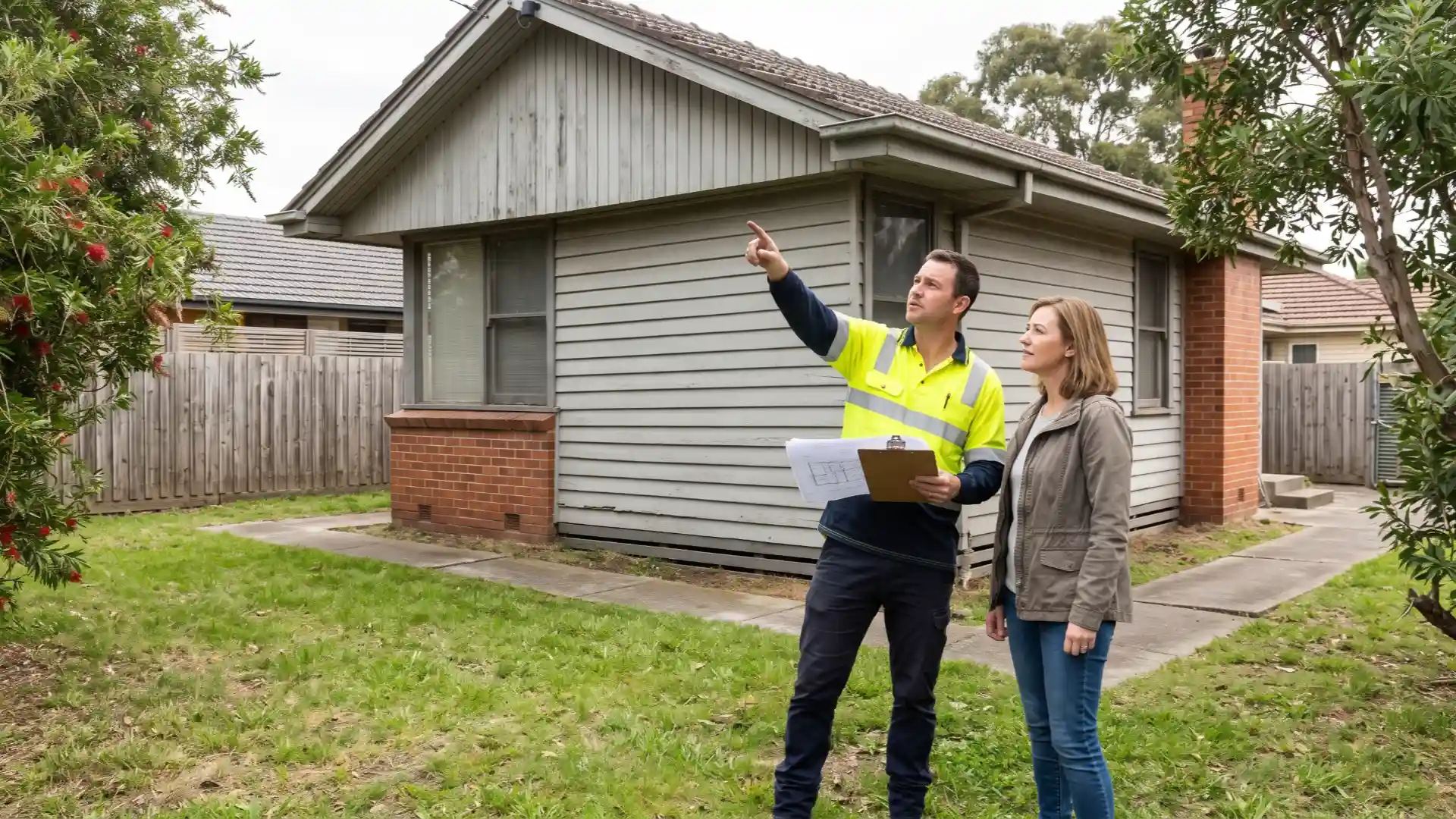
A practical plan begins with the renovation scope rather than assumptions about the material. Write down which parts of the roofline or eaves are affected, what the builder intends to change and whether access is needed from inside or outside the building. This information can help professionals understand the project without anyone disturbing the soffit.
The following considerations can help organise the discussion.
1. Identify the exact work area
Describe the affected elevation or section of the property as clearly as possible. For example, explain whether the concern relates to the front eaves, a rear extension, a carport or a detached garage. If several areas are involved, list them separately rather than treating the whole roofline as one confirmed asbestos area.
Existing photographs can help show the location and surrounding access, provided they were taken safely from a normal position. Do not climb onto a roof, ladder or unstable surface to obtain a closer image. Do not lift panels, open cavities or move building components to reveal hidden surfaces.
2. Explain what the renovation requires
Tell the builder and the professional reviewing the suspected material what work is proposed. Replacing gutters may involve different access needs from installing downlights or changing the roof structure. A new extension may also connect to an older eave section.
This context matters because the material may not need the same response in every situation. A suitable professional can consider the available information, condition and proposed work before advising on the appropriate next step.
3. Gather existing records
Collect any previous asbestos reports, building plans, renovation documents or maintenance records that relate to the area. Make a note of who prepared the document and when it was produced. If the information is incomplete, say so rather than treating an assumption as a confirmed result.
A pre renovation asbestos soffit assessment can help clarify what is known before trades are scheduled. The purpose is to establish reliable information and an appropriate management pathway, not to encourage homeowners to inspect or test materials themselves.
4. Coordinate the people involved
Make sure the property owner, builder, relevant trades and asbestos professional understand that suspected material may be present. Avoid allowing unrelated work to continue in a way that could disturb the area while the issue remains unresolved.
For occupied homes, consider residents, children, pets and neighbouring properties when discussing access and work-area arrangements. For commercial sites, explain operating hours, shared access, tenants and any activities that may need coordination.
5. Confirm the agreed scope before work begins
If removal is considered appropriate, ask for a clear description of the materials and locations included. The written scope should make it possible to understand what work is being quoted and what is excluded. Do not assume that removing soffit sheets automatically includes fascia, gutters, roof components, insulation, structural repairs or replacement building work.
When professional removal may be appropriate
Whether removal is required depends on the material, its condition, location and the planned renovation. Some asbestos-containing materials may be managed in place when they are in good condition and are unlikely to be disturbed. However, if the renovation will affect the material, a suitable professional should advise on the appropriate approach before work starts.
JD Asbestos Removal specialises in non-friable asbestos removal for suitable residential, commercial and industrial properties. Each enquiry needs to be considered against the material, its condition, access requirements and proposed work. JD’s service is not a blanket solution for every asbestos-related situation, and work outside its non-friable removal scope needs an appropriate alternative arrangement.
Owners looking for non friable asbestos removal Melbourne should compare the proposed service with the actual material and project requirements. The phrase “non-friable” describes a material category; it is not a statement that the material is harmless or safe to disturb. If the condition is uncertain or the material may be friable, do not assume it falls within a non-friable removal service.
Professional asbestos soffit removal should be planned around the agreed work area and applicable requirements. The contractor should explain access restrictions, site arrangements, the work included and how waste generated through the removal will be managed. The owner should understand what needs to happen before other renovation trades return to the area.
For a suitable project, safe asbestos soffit removal is more than arranging a date for the work. It involves confirming the material and scope, discussing site access and coordinating the removal with the renovation schedule. You can review JD’s residential and general asbestos removal services to understand the types of suitable projects the team considers.
What can affect an asbestos soffit removal quote?
An asbestos removal quote should reflect the actual project rather than a general price per sheet or a guess based on photographs. Several factors may affect the scope and arrangements:
- Material identification and condition: Whether asbestos has been confirmed, the material type and its condition can affect what advice or work is appropriate.
- Extent of the affected area: The number of soffit sections and their layout help define the proposed work.
- Height and access: Roofline height, ground conditions, nearby structures and safe access requirements may influence planning.
- Surrounding building components: Fascia, gutters, roofing, lighting, services and adjoining finishes may affect how the work is coordinated.
- Occupancy and site use: Residents, tenants, customers, employees and other contractors may need planned access arrangements.
- Waste arrangements: The asbestos waste generated through removal must be appropriately contained, transported and sent to a facility authorised to receive it.
- Project timing: The renovation schedule and any dependencies with other trades should be discussed before dates are agreed.
When contacting an asbestos removal contractor Melbourne property owners should provide the suburb, property type, relevant reports and a clear description of the planned renovation. This helps the team understand the enquiry and identify any information still needed. A quote should only be treated as final once the scope and any relevant conditions have been confirmed.
If you are comparing an asbestos removal quote, check that the proposed work areas, exclusions, access arrangements and waste responsibilities are clear. Ask how any additional materials discovered during the project would be handled. Do not assume that repairs, replacement soffits, painting or general building work are included unless the written agreement specifically says so.
A safe asbestos soffit removal quote should be based on the agreed scope and project requirements, not on an unsupported assumption about the material. If more information is needed before the contractor can define the work, clarify what is required and who will arrange it.
Preparing for asbestos soffit removal and renovation coordination
Preparing for asbestos soffit removal is mainly about communication and avoiding accidental disturbance. Homeowners should not attempt to prepare the material by cleaning it, removing fixtures, scraping paint or taking down sections. Leave suspected materials undisturbed and follow the instructions provided by the relevant professional.
Before the agreed work, discuss the following points with the contractor and builder:
- Which exact soffit areas are included in the agreed removal scope?
- What access restrictions will apply to residents, workers and visitors?
- Do nearby trades need to pause or change their planned activities?
- Who will communicate the work-area restrictions to occupants and contractors?
- What waste handling and disposal arrangements apply to waste generated through the removal?
- What completion information or handover documentation will be provided?
- Who will confirm when the area can be accessed for the next stage of renovation?
For a residential project, the builder may need to adjust the sequence so that work affecting the soffit does not begin before the asbestos issue is resolved. For a commercial property, the plan may also need to consider customers, employees, deliveries and shared spaces.
Do not treat a scheduled removal date as automatic permission for other trades to enter the work area immediately afterwards. Follow the contractor’s instructions and confirm the handover arrangements before restarting renovation activities. Good coordination is an important part of safe asbestos soffit removal.
What happens after you submit an enquiry?
An enquiry gives the removal team an opportunity to understand the property and the work being considered. Useful information includes the suburb, property type, the location of the soffits, the planned renovation and any existing asbestos documentation. If you have photographs already taken safely, they may help explain the setting, but they cannot confirm asbestos.
JD reviews enquiries to understand whether the proposed work may fit its non-friable asbestos removal service. Further information may be required before the scope, quote or scheduling can be discussed. Submitting an enquiry does not confirm that the work has been accepted, that a price has been finalised or that a date is available.
The next step depends on what is already known. If the material has not been identified, appropriate professional advice and testing may be needed before removal can be planned. If the material is confirmed and the project appears to fit the service scope, the team can discuss the proposed work and relevant site arrangements.
For more information about asbestos waste requirements in Victoria, refer to EPA Victoria’s guidance on managing asbestos waste. Asbestos waste must be managed appropriately and directed to a facility authorised to receive it.
For commercial or industrial properties, the project may involve additional coordination with site operations, tenants and other contractors. Where relevant, read JD’s commercial and industrial asbestos removal information before preparing your enquiry.
A practical checklist before renovating around soffits
Use this checklist to organise the project conversation. It is not a guide to inspecting, sampling or removing suspected asbestos.
- Note the property address and suburb.
- Identify which soffit or eaves areas are involved, using existing plans or safe photographs.
- Describe the renovation work planned near those areas.
- Gather any existing asbestos reports or relevant building records.
- Clearly state whether asbestos is confirmed or only suspected.
- Tell the builder and relevant trades not to disturb the suspected material until the issue has been addressed.
- Discuss the proposed work with an appropriately qualified professional.
- Confirm whether the project fits a suitable non-friable removal service.
- Review the written scope, exclusions, access arrangements and waste management responsibilities.
- Confirm the handover arrangements before renovation work resumes.
Taking these steps early can make the project easier to coordinate and reduce the chance of trades arriving before the asbestos question has been resolved. It also gives you a clearer basis for comparing services and understanding what is included in the agreed work.
A well-organised safe asbestos soffit removal project begins with reliable information, a defined work area and clear communication between the owner, contractor and renovation team.
Discuss Safe Asbestos Soffit Removal with JD
If your renovation involves older soffits or eaves that may contain asbestos, do not disturb the material to investigate it. Gather the information already available and explain the planned work, property location and areas of concern.
JD Asbestos Removal can review enquiries for suitable non-friable asbestos removal at residential, commercial and industrial properties across Melbourne and selected Victorian areas. The service includes responsible management and disposal of asbestos waste generated through JD’s own removal work. Share your project details to discuss whether the proposed work may fit the service scope.
Frequently Asked Questions
-
Can soffits contain asbestos?
Some older properties used asbestos-containing cement sheet products in external building components, including eaves and soffits. However, not every older soffit contains asbestos. Appearance alone cannot confirm its presence. Appropriate professional assessment and, where necessary, laboratory analysis may be required.
-
Should suspected asbestos soffits be removed before renovations?
It depends on whether asbestos is present, the material’s condition and whether the planned renovation could disturb it. Some materials may be managed in place, while others may require professional removal. Obtain appropriate advice before work begins and do not disturb suspected materials.
-
Can I identify asbestos soffits by looking at them?
No. Colour, texture, age and photographs cannot reliably confirm whether a soffit contains asbestos. If the material is suspected, leave it undisturbed and seek appropriate professional advice. Do not take samples or break off pieces yourself.
-
What information should I provide when requesting an asbestos soffit removal quote?
Provide the property suburb, property type, location of the affected soffits, planned renovation work and any existing asbestos reports or relevant building records. Explain whether asbestos has been confirmed or is only suspected. Photographs already taken safely may help explain the location but cannot identify asbestos.
-
Can JD Asbestos Removal assist with small soffit removal projects?
JD Asbestos Removal reviews suitable non-friable asbestos removal enquiries for residential, commercial and industrial properties. Whether a small soffit project can be accepted depends on the material, its condition, access and the agreed project scope. Contact JD with the property and project details to discuss suitability.