A property does not need a wide driveway or direct vehicle access for an asbestos removal enquiry to be worth discussing. Narrow side paths, steep driveways, shared entrances, rear structures and occupied neighbouring areas can all affect how a project is assessed. Limited access asbestos removal requires the site layout, material condition and proposed work to be considered together.
For Melbourne property owners, builders and site managers, the best first step is to provide clear information without disturbing the material. JD Asbestos Removal specialises in suitable non-friable asbestos removal for residential, commercial and industrial properties. Restricted access does not automatically mean a project can or cannot proceed; the actual site and scope need to be reviewed.
Why access matters before asbestos work begins
Access is more than the width of a gate. It includes the route people and equipment may need to use, the position of the material, nearby structures, the ability to establish an appropriate work area and the movement of waste generated through the agreed removal work.
Common constraints include narrow driveways or side passages, steps and slopes, rear garages or sheds, shared driveways, limited working space, nearby occupants and other contractors working at the same time.
These details can influence work sequencing, site preparation, communication and waste movement. A short route may be complicated if it passes through a shared area, while a longer route may be manageable if it is clear. An early review of limited access asbestos removal should consider real site conditions rather than rely on a single photograph or assumption. Limited access asbestos removal needs to be planned around the site and agreed scope.
What counts as restricted access?
Restricted access describes a site where reaching the material or arranging the work area may involve additional constraints. It does not refer to one specific measurement or automatically indicate that specialist equipment is required. The relevant issue is whether the site can support a safe, suitable and properly controlled removal process for the material involved.
An asbestos cement fence may sit behind a narrow garden path, a garage may be at the rear of a block, or a commercial site may have a shared loading area. Each situation raises different questions. When considering restricted access asbestos removal, distinguish between access for an initial review, access for the removal team and arrangements for waste generated by the project. These are related but separate considerations.
Never create access by dismantling, cutting, drilling, breaking or moving suspected asbestos. Describe any obstruction in the enquiry instead.
Planning limited access asbestos removal before work begins
A reliable plan starts with information. Before a contractor can assess limited access asbestos removal, they need to understand the material, its location, known condition and the property’s layout.
1. Identify the material information available
Tell the removal team whether asbestos has already been identified or whether the material is only suspected. If you have an existing asbestos report, register, building record or previous assessment, mention it and provide the relevant information through the agreed enquiry process.
Asbestos cannot be reliably confirmed by appearance alone. The difference between friable and non-friable asbestos-containing material and notes that laboratory analysis is required where identification is uncertain.
JD’s removal service is limited to suitable non-friable asbestos-containing materials. Property owners researching non friable asbestos removal Melbourne services should still confirm that the material and project are within the provider’s scope. Material type, condition and the proposed work all matter. If a material is damaged, deteriorated or potentially friable, do not assume it falls within a non-friable removal service.
2. Describe the route to the material
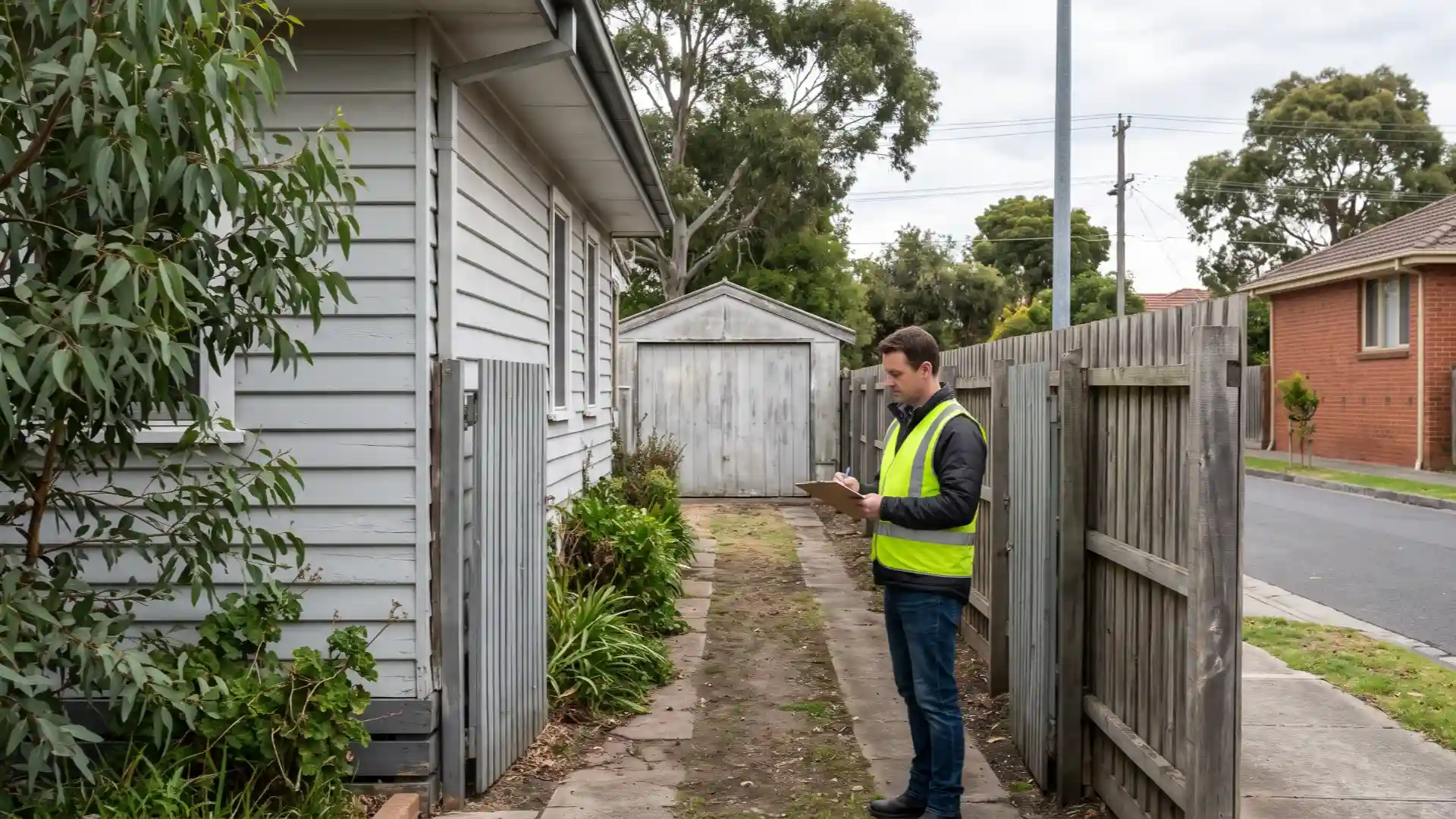
Explain how the relevant area is reached from the property entrance. Useful details may include a narrow gate, side passage, steps, slope, locked access point, shared driveway or rear-lot position. Mention whether the route passes through a home, occupied work area or common property.
For asbestos removal for difficult access properties, this description helps the team understand the site. You do not need to measure every pathway or decide what equipment should be used; a clear description is enough to start a limited access asbestos removal review.
3. Explain what is around the work area
Nearby fences, walls, garden beds, parked vehicles, services, neighbouring buildings and public or shared spaces may affect how the area is considered. Mention nearby residents, employees, customers or contractors.
Do not move objects that are touching or covering suspected asbestos if doing so could disturb the material. Instead, describe what is visible from a safe position and allow the site requirements to be reviewed.
4. Share the project timing
Tell the team whether the work relates to a planned renovation, property maintenance, sale preparation, demolition or a commercial project. If other trades are involved, explain their proposed dates and whether the area is occupied or in use.
Restricted access asbestos removal planning is easier when asbestos work is considered before other trades are scheduled. Early communication helps identify access and coordination questions before the project becomes time-critical.
How access can affect the scope and quote
A quote should be based on the actual work being considered, not simply the presence of a difficult entrance. Limited access asbestos removal cost factors may include the material type and condition, approximate quantity, location, site layout, access route, work-area requirements, project coordination and arrangements for managing the waste generated by the removal.
A narrow path may be straightforward at one property but complicated at another if it is obstructed, shared or beside fragile structures. A rear structure may also require review because of its position and surroundings.
When requesting an asbestos removal quote, provide the information already available rather than trying to calculate the job yourself. Useful details include:
- Property suburb or postcode and property type.
- Suspected or identified material, location and any existing report.
- Entrance and route details, including shared access, stairs or narrow spaces.
- Project purpose, proposed timing and other contractors or occupants.
This helps JD review the enquiry and discuss next steps. If further information, inspection or testing is needed, the arrangements and any applicable charges should be discussed before proceeding. Access details alone are not enough to confirm a quote when the material and scope remain unclear. This is an important part of limited access asbestos removal cost planning, particularly when the route affects how the agreed work can be organised.
Residential properties with narrow or shared access
Homes can present access challenges in different ways. A detached garage may be positioned behind a narrow side path, an older fence may run along a boundary with limited clearance, or a shed may sit at the rear of a sloping block. Townhouses and multi-unit properties can add shared driveways, common walkways and strata permissions to the planning process.
Explain who controls the route and whether neighbours or a body corporate need to be informed. Note locked gates or shared-area restrictions, but do not try to alter the site yourself.
JD’s residential asbestos removal service covers suitable non-friable removal enquiries for homes and associated residential structures, including garages, sheds and fencing. Suitability depends on the material, its condition and site requirements.
A residential limited access asbestos removal enquiry should also explain whether the property is occupied or renovation work is planned, so the work area is not assumed to be available.
Commercial and industrial sites need coordination
Commercial properties may have loading zones, security gates, operating hours, delivery schedules, shared access roads and multiple contractors. Warehouses, workshops, retail premises and industrial sites can also contain areas that remain active while a project is being planned.
The site contact should identify who can approve access, who needs to be informed and whether normal operations may be affected. Share relevant builder, contractor or property-manager schedules.
The JD commercial and industrial asbestos removal service describes the factors considered for suitable projects, including access, occupancy and other scheduled activities. The removal scope remains limited to suitable non-friable asbestos-containing materials.
For a business, professional asbestos removal site access planning considers nearby people, site rules and other activities. Share known induction requirements.
Waste movement is part of the access discussion
The route out can be as important as the route in when planning limited access asbestos removal. Waste generated through asbestos removal must be managed appropriately and taken to a facility authorised to receive it.
Asbestos waste must be managed correctly and disposed of at an authorised landfill. It also outlines relevant requirements for transport, storage and disposal.
Waste management and disposal relates to asbestos waste generated through its own removal projects. It should not be confused with a standalone collection service for asbestos waste from unrelated work. When discussing limited access asbestos removal, mention any known restrictions that could affect the movement of materials or the agreed work area. The removal team can then review the project requirements as part of the overall scope for limited access asbestos removal.
Property owners should not package, carry, transport or relocate suspected asbestos waste to make a route easier. Leave the material undisturbed and seek appropriate professional advice.
Common planning mistakes that can create delays
Avoid these common planning mistakes:
Relying on a photograph alone
A photograph may show the material but not the route or site restrictions. Do not approach suspected asbestos to take a closer image; describe what is visible from a safe position.
Mentioning access restrictions too late
A narrow driveway, shared gate or restricted operating window may affect planning. Include these details in your first asbestos removal enquiries.
Assuming every material is suitable
Friable and non-friable asbestos are different categories. JD handles suitable non-friable materials only, and an enquiry does not mean every project will be accepted.
Preparing the area yourself
Do not cut, drill, scrape, break, dismantle or move suspected asbestos. Keep people away and explain the access issue to a suitable professional.
Expecting a quote from one detail
A narrow gate alone does not establish the scope. Material, condition, quantity, location and surroundings all matter. Good limited access asbestos removal planning considers the whole project.
What to include in your enquiry to JD
A clear enquiry does not need technical language. A short summary of the available information is enough to start.
Include the property suburb or postcode, property type, material and location, any existing report, the route to the area, nearby occupants or structures, project purpose and proposed timing.
If unsure whether the material is asbestos, say so. Do not break, scrape or sample it yourself. WorkSafe Victoria advises that appearance alone cannot confirm asbestos.
The team can review the property information, the access conditions and whether the proposed removal falls within its non-friable service scope. If an inspection or additional information is needed, the next steps and any applicable charges can be discussed before proceeding.
Discuss your site before making changes
A difficult entrance does not automatically rule out a suitable project. The property layout, material, work area and waste arrangements should be considered before work is planned. Clear enquiry details help identify what needs to be confirmed.
For homeowners, builders, property managers and businesses in Melbourne, JD Asbestos Removal reviews enquiries for suitable non-friable asbestos removal at residential, commercial and industrial properties. If you are considering limited access asbestos removal, explain the material, location, route and project timing without disturbing the suspected asbestos.
Start with the information you already have and send JD your asbestos removal enquiry. The team can review the details and discuss the appropriate next step for your property.
Frequently Asked Questions
-
Can asbestos be professionally removed from a property with limited access?
A property with limited access may still be suitable for professional removal. The material type, condition, site layout, access route and proposed work need to be reviewed before the removal scope can be confirmed. JD’s removal service is limited to suitable non-friable asbestos-containing materials.
-
Does restricted access affect an asbestos removal quote?
It can. Access routes, shared areas, steps, slopes, work-area arrangements and waste movement may all be relevant when reviewing a project. The quote also depends on the material, its condition, quantity and the agreed scope.
-
What information should I provide for a limited access asbestos removal enquiry?
Provide the property suburb or postcode, property type, material location, any existing asbestos report, a description of the access route, nearby occupants or structures, project purpose and proposed timing. Do not disturb suspected asbestos to gather information.
-
Can a narrow driveway or pathway affect asbestos removal planning?
Yes. A narrow driveway or pathway may affect access arrangements, work-area planning and the movement of waste generated through the removal project. The actual property conditions need to be reviewed rather than assessed from the pathway width alone.
-
Does JD undertake non-friable asbestos removal at difficult-access properties?
JD reviews enquiries for suitable non-friable asbestos removal at residential, commercial and industrial properties. Whether a particular difficult-access property is suitable depends on the material, its condition, site layout and proposed work. The team can discuss the enquiry and appropriate next steps.