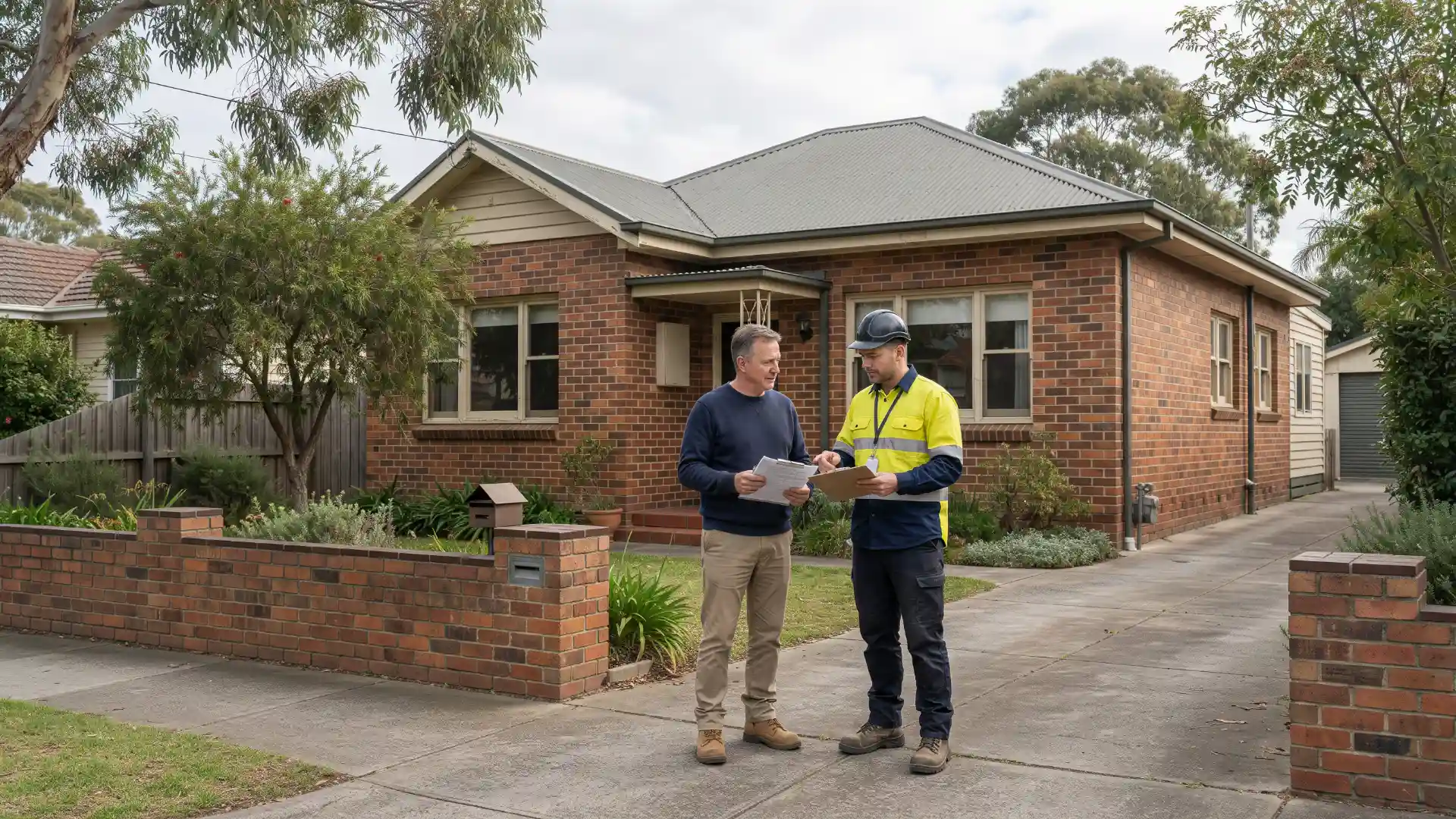
Planning asbestos eaves removal at a home where people are still living requires clear communication, suitable scheduling and an understanding of how the work area may affect everyday household activities. Preparing an occupied house for asbestos eaves removal should begin with a discussion between the homeowner and removal contractor about access, occupancy and the arrangements that may be needed before work starts.
Eaves and soffits are among the building areas where asbestos-containing materials may be present in older properties. If the material is suspected to contain asbestos, avoid disturbing it. Its condition, type and extent need to be considered by appropriately qualified or authorised professionals before a removal plan is agreed.
Why occupied homes need advance removal planning
A residential property does not stop being a home simply because maintenance or removal work is scheduled. People may need to enter and leave the property, use outdoor areas, access garages, receive deliveries or care for children and pets. Work around the eaves can therefore affect more than the immediate section of the building.
Good asbestos removal preparation Melbourne homeowners undertake should begin with a conversation about how the property is used. The contractor needs relevant information about access points, household routines, nearby structures and any circumstances that could affect the proposed work area.
The objective is not to find a way for everyone to continue their usual activities regardless of the work. It is to establish practical arrangements that respect the removal area’s restrictions and the controls required for the particular job.
Eaves and soffits in older residential properties
Eaves are the parts of a roof that extend beyond the external walls. Soffits are the panels or linings commonly fitted underneath these overhanging sections. Depending on the age and construction of a building, some eaves or soffit products may contain asbestos.
WorkSafe Victoria explains the difference between the two main material categories in its guide, What is friable and non-friable asbestos?. Non-friable asbestos-containing material generally has fibres bonded within a stable material, while friable material can be crumbled or reduced to powder by hand pressure when dry. Material condition and the effect of work processes matter when determining appropriate controls.
A homeowner should not try to identify a material by breaking, scraping, drilling or cutting it. If the eaves are damaged, deteriorating or suspected to contain asbestos, avoid disturbing the area and seek appropriate professional advice.
Preparing an occupied house for asbestos eaves removal
Preparing an occupied house for asbestos eaves removal starts with understanding how residents use the property and what parts of the site may be affected. The contractor should explain the proposed work area and any restrictions that residents need to follow.
For some projects, occupants may be able to remain elsewhere on the property while work takes place. For others, temporary arrangements away from the property may be necessary. This must be determined for the individual site and work plan. Homeowners should not assume that remaining inside the house will always be suitable.
1. Explain the household’s normal activities
Tell the contractor how the property is normally used. Relevant details may include:
- The number of people who regularly live at the property.
- Whether children, older residents or people who need assistance are present.
- Whether tenants, visitors or support workers regularly attend.
- The usual entry and exit points.
- Whether outdoor areas, driveways, garages or side access routes are used frequently.
- Any scheduled deliveries, appointments or other visits that could coincide with the proposed work.
This information helps the contractor consider how the work area may affect household movement. It also helps identify questions that should be resolved before attendance.
2. Discuss the proposed work area
Ask which parts of the property may need to be restricted and whether access around particular walls, paths, doors or outdoor spaces will be affected.
Do not decide independently where barriers should be placed or how a removal area should be controlled. Those arrangements must be determined by the people responsible for the work and the applicable safety requirements.
Homeowners can help by explaining where people normally walk, where vehicles are parked and whether there are gates or narrow access points that may need to be considered.
3. Agree on communication arrangements
Identify one main household contact who can communicate with the contractor. If the property is rented, the owner or property manager should coordinate with the tenant and make sure relevant information reaches everyone affected.
Confirm how changes to the work schedule will be communicated, who residents should contact with questions and how they will be told when access restrictions change.
Clear asbestos eaves contractor coordination reduces the chance of residents relying on assumptions or receiving inconsistent information. It is also an important part of preparing an occupied house for asbestos eaves removal because household members need to know which instructions apply to them.
Household arrangements for children, pets and visitors
Children and pets may not recognise temporary work restrictions or understand why an ordinary part of the property is unavailable. Their arrangements should therefore be considered before the contractor arrives.
Children and family members
Explain that the work area is restricted and that nobody should enter it unless specifically authorised by the people managing the work. Arrange suitable supervision and discuss whether normal outdoor play areas, entrances or routes will be affected.
Do not rely only on verbal reminders to keep children away from a restricted area. Follow the contractor’s instructions and the physical access controls established for the job.
Pets
Tell the contractor if dogs, cats or other animals normally use the yard, driveway or nearby outdoor areas. Ask what arrangements are required for the duration of the work.
Depending on the site layout, it may be necessary to keep animals in a separate suitable area or arrange for them to be elsewhere. Do not move barriers, signs or other controls to create a route for a pet.
Tenants, visitors and service providers
If the property is rented, the landlord or property manager should communicate the proposed arrangements to tenants in advance. This includes the expected work period, areas that may be unavailable and any instructions provided by the contractor.
Visitors, delivery drivers, gardeners and other service providers should also be considered. Where possible, avoid scheduling non-essential visits that could conflict with the work.
These household access arrangements should be agreed before the work begins, rather than improvised after a restricted area has been established.
Planning access, parking and contractor attendance
Access can be a significant consideration for residential properties. A narrow driveway, shared path, side gate, adjoining boundary or limited parking space may affect how the contractor can approach the work area.
Before confirming the appointment, explain the property’s access conditions. Mention any locked gates, shared driveways, body corporate arrangements, parking restrictions or other practical limitations.
Share useful property information
Where relevant, provide the contractor with:
- The property’s correct address and a suitable contact number.
- Details of the best agreed access point.
- Any known parking or entry restrictions.
- Information about shared areas or neighbouring access.
- Relevant photographs of the general building area, if requested and safe to obtain without approaching or disturbing suspected asbestos material.
- Known scheduling constraints.
Do not climb ladders, approach unstable structures or handle suspected asbestos material to obtain photographs. If a closer view is needed, ask the contractor how the information should be provided.
Confirm attendance and timing
Discuss the proposed arrival window, expected work period and any arrangements needed before the team arrives. Ask whether residents need to move vehicles, keep a gate available or avoid using a particular route.
A planned schedule is useful, but homeowners should allow for changes if site conditions or safety requirements need further consideration. Do not treat an estimated finish time as permission to re-enter a restricted area.
For a property with limited access, eaves removal preparation should account for the actual layout rather than assume every home can be approached in the same way. This is particularly relevant when preparing an occupied house for asbestos eaves removal where residents and contractors may otherwise rely on the same access points.
Planning around the removal area and daily routines
The most important part of household project planning is understanding that normal access may change while work is underway.
The contractor should explain the relevant restrictions for the particular property. Residents should follow those instructions and respect all signs, barricades and exclusion arrangements.
For further information, homeowners can read WorkSafe Victoria’s General requirements for all asbestos removal work. This resource outlines safety requirements associated with asbestos removal, including controls that help restrict access to work areas.
Homeowners should not enter the work area to retrieve belongings, speak with workers, take photographs or check progress. If something important is inside a restricted area, contact the person responsible for the work and ask how the issue should be handled.
If the household relies on a particular entrance or outdoor facility, discuss alternatives before the work starts. This may include arranging a different route, changing the timing of an activity or temporarily making other arrangements.
What if the property has restricted access?
Some homes have narrow side passages, adjoining structures, shared boundaries or outdoor equipment close to the eaves. These details should be raised during the quotation and planning process.
Do not remove suspected asbestos products, dismantle structures or alter the area to make access easier. Any preparation that could disturb building materials should be discussed with the contractor first.
The process of planning asbestos removal at an occupied property should take account of the actual building, the proposed work and the people who use the site. It should not rely on a generic assumption that every household can remain in place throughout the work.
What homeowners should communicate before work begins
A useful pre-work discussion should cover the material and proposed scope, household occupancy, access and timing. Homeowners should also raise any known changes to the property’s condition since the initial discussion.
For example, mention if the eaves have been damaged, if another contractor has recently worked nearby, or if a new access restriction has been introduced. Do not attempt to repair or clean suspected asbestos material before the removal contractor attends.
The contractor should explain the proposed scope and any relevant site arrangements. If the work area, material condition or removal quantity differs from what was originally discussed, the plan may need to be reviewed before work proceeds.
Homeowners should ask questions if any instruction is unclear. In particular, confirm:
- Which areas will be restricted.
- Whether residents need to make alternative arrangements.
- How the household will be notified of schedule changes.
- Who is responsible for controlling access to the work area.
- What needs to happen before the area can return to normal use.
- How waste generated through the removal work will be managed.
This is the practical purpose of planning asbestos removal at an occupied property: making sure everyone understands the agreed arrangements before work starts.
A practical occupied home asbestos preparation plan should also consider what homeowners should prepare before eaves removal, including household communication, agreed access and any changes to normal routines. Organising contractor attendance at home is easier when the property contact explains these details before the scheduled visit.
What happens after non-friable asbestos eaves removal?
The end of the physical removal activity does not automatically mean that every nearby area can immediately return to normal use. The relevant completion steps and any access restrictions depend on the work undertaken and the applicable requirements.
Ask the contractor to explain how completion will be communicated and whether any inspection, clearance or other documentation is required for the particular job. Do not remove signs or barriers yourself or assume that an area is ready for use simply because workers have left.
For general information about asbestos-related responsibilities and safety, homeowners can also consult WorkSafe Victoria’s Asbestos safety basics.
Where waste is generated through the removal work, its handling and disposal must be managed appropriately. Homeowners should clarify how this is included in the agreed work scope.
If further building, painting, replacement or renovation work is planned, discuss the sequence with the relevant contractors. Do not assume that asbestos removal automatically includes rebuilding, replacement or other follow-on trades.
Choosing a suitable residential removal contractor
When comparing a residential asbestos removal quotation, make sure the proposed scope is clear. The quotation discussion should identify the relevant eaves area, the information available about the material, the property’s access conditions and any household arrangements that may affect the job.
Ask what is included and what is outside the scope. If the material is suspected to be friable, damaged in a way that changes its classification, or otherwise outside the contractor’s confirmed service scope, that issue needs to be addressed before proceeding.
JD Asbestos Removal focuses on non-friable asbestos removal. Its removal-related waste disposal should be understood as waste generated through its own removal work, not a separate general waste collection service.
For homeowners comparing residential asbestos removal Melbourne options, the most useful quotation is one that clearly explains the proposed work and relevant site considerations rather than relying on a broad description alone. This is especially important when arranging occupied residential property removal, where the household’s access and daily routines also need to be considered.
A clear discussion about bonded asbestos eaves removal should also establish what material and work are being considered. The material category and condition must be appropriate for the proposed service; homeowners should not assume that all asbestos-containing materials fall within the same removal scope.
Arrange your occupied-home eaves removal discussion
Preparing a home for removal work is easier when household information, access requirements and communication arrangements are discussed early. Residents should understand which areas may be restricted, who will provide instructions and what must happen before normal access resumes.
If you are preparing an occupied house for asbestos eaves removal at a Melbourne property, provide clear details about the home and its occupancy when requesting a quotation. This helps establish whether the proposed work is within the service scope and what further information may be needed.
Frequently Asked Questions
-
Can residents stay in an occupied home during asbestos eaves removal?
It depends on the property layout, the removal area and the controls required for the specific work. Some projects may allow residents to remain elsewhere on the property, while others may require temporary arrangements away from the home. Confirm the arrangements with the contractor before work begins.
-
What should homeowners tell the contractor before eaves removal?
Explain how the property is occupied, identify usual entry and exit points, mention children or pets, describe parking and access restrictions, and raise any known changes to the condition of the eaves. Do not disturb suspected asbestos material to obtain information.
-
Should children and pets be kept away from the removal area?
Yes. Children, pets and other unauthorised people should be kept out of the restricted work area and must follow the access arrangements established for the job. Ask the contractor what household arrangements are required for the particular property.
-
Can homeowners use the area immediately after the removal team finishes?
Do not assume that the area can immediately return to normal use when physical removal work ends. Follow the contractor’s instructions and wait until the relevant completion steps and any applicable access restrictions have been addressed.
-
Does JD Asbestos Removal undertake all types of asbestos removal?
JD Asbestos Removal’s stated service scope is non-friable asbestos removal. If the material is friable, damaged in a way that changes its classification, or otherwise outside the confirmed scope, the issue must be addressed before proceeding. Waste disposal is limited to waste generated through JD’s own removal work.
Leave a Reply