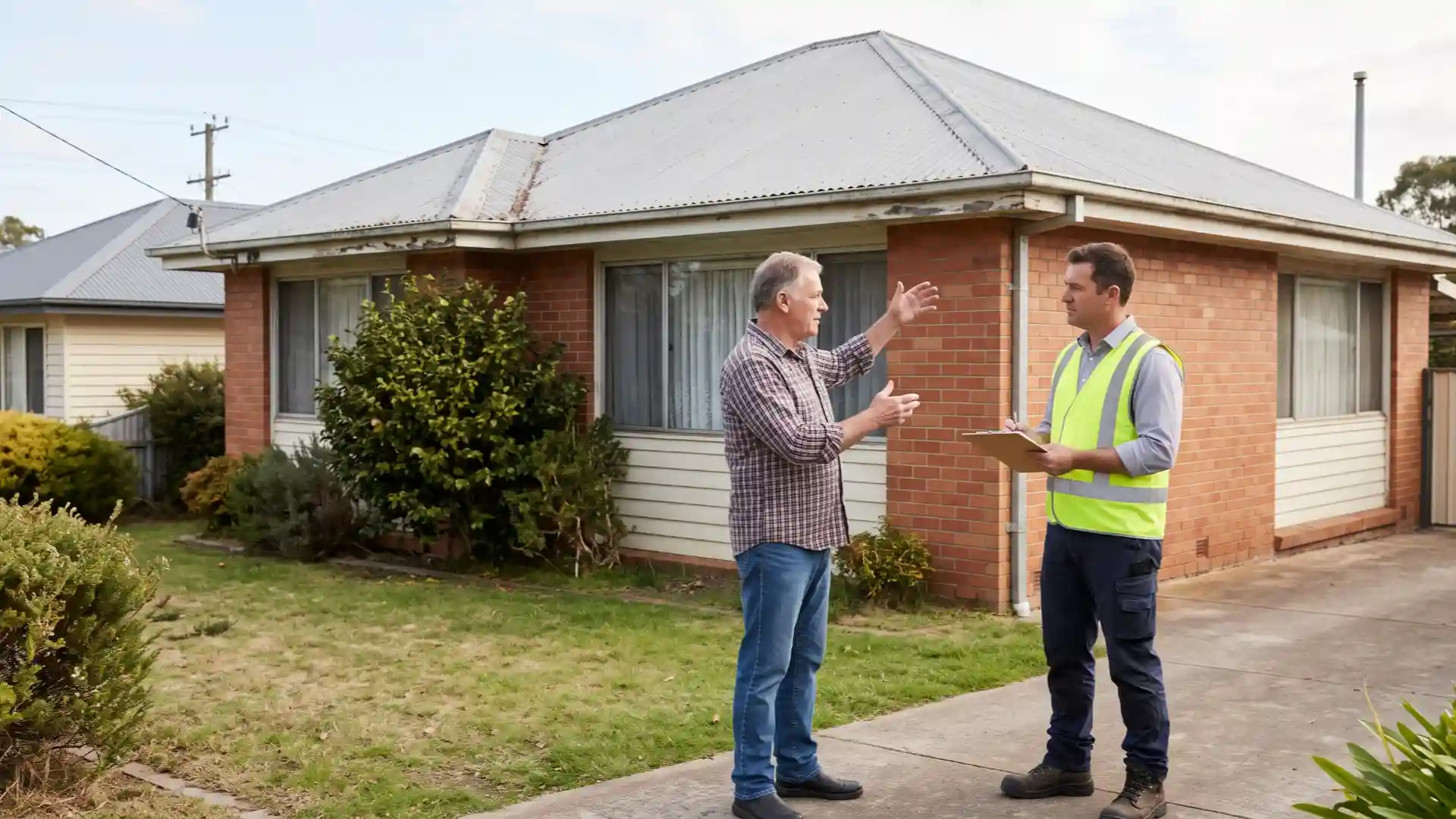
Fascia boards form part of the exterior roofline of a property. On some older Australian homes, these areas may contain asbestos cement materials. If you are concerned about the age or condition of your property’s fascia, it is important to understand the situation before arranging renovation, maintenance or replacement work.
Suspected asbestos fascia should not be treated as an ordinary building-material issue. Homeowners should avoid disturbing suspected materials and seek appropriate professional advice about the next steps. Where non-friable asbestos-containing materials require removal, the work needs to be considered within the applicable Victorian safety and regulatory requirements.
This guide explains what homeowners should consider, what information may be useful when making an enquiry, and how to plan a project involving suspected asbestos fascia.
What Is Fascia and Why Does It Matter?
Fascia is the board or finishing material fitted along the edge of a roof. It commonly runs along the lower roofline and may support or cover the edge of the roofing structure and guttering.
On older properties, fascia materials can differ from those used in modern construction. Some older buildings may have asbestos cement products incorporated into exterior building components, including fascia areas.
However, the appearance or age of a material alone cannot confirm whether it contains asbestos. Different building products can look similar, and homeowners should not rely on visual assumptions to identify the material.
The presence of older fascia materials does not automatically mean that immediate removal is required. The property’s circumstances, the material’s condition and any planned building work all need to be considered.
Why Suspected Asbestos Fascia Needs Careful Consideration
Asbestos-containing building products can present a health risk when fibres become airborne and are inhaled. The level of risk depends on factors including the material type, its condition and whether it has been disturbed.
Some asbestos cement products are classified as non-friable when the asbestos fibres remain firmly bound within the cement matrix. This does not mean that the material can be treated as an ordinary renovation product or disturbed without appropriate controls.
For homeowners, the important point is to avoid making assumptions about the material. If you have concerns about old fascia asbestos sheets, do not attempt to remove, cut, drill, sand or break them.
Instead, explain your concerns to an appropriate professional and ask what assessment or removal arrangements may be required.
Common Situations That Lead to a Fascia Removal Enquiry
Homeowners may begin considering asbestos fascia removal for several reasons. These situations do not independently confirm the presence of asbestos, but they can create a reason to seek professional advice.
Planning exterior renovations
A homeowner may be planning roofline improvements, gutter-related work, exterior painting or a broader renovation. If older fascia materials are present, it is sensible to consider their status before other trades begin work.
Concerns about ageing building materials
Older exterior materials may show signs of deterioration or general ageing. A homeowner may be uncertain about the material’s composition and want advice before proceeding with maintenance.
Preparing a property for future work
Some owners prefer to understand potential building-material concerns before arranging a renovation schedule. Early enquiries can help identify whether additional planning is needed.
Responding to concerns raised during property work
A builder, tradesperson or property manager may raise a concern about existing fascia materials. Rather than making assumptions, the property owner can seek appropriate advice about the next steps.
In each situation, the purpose of an enquiry is to clarify the concern and understand the appropriate professional pathway.
What Should You Do If You Suspect Asbestos Fascia?
If you have concerns about suspected asbestos fascia on a house, avoid disturbing the material while you arrange appropriate advice.
Do not attempt DIY removal or carry out work that could damage the suspected material. Keep other renovation activities away from the affected area until the situation has been appropriately considered.
You can begin by gathering general property information that may help when making an enquiry:
- The property’s suburb and general location.
- Whether the property is residential, commercial or another building type.
- Which part of the roofline or exterior is causing concern.
- Whether renovation or maintenance work is being planned.
- Whether a builder or another professional has raised a concern.
- Any existing property documentation that may be relevant.
You do not need to disturb the material to collect this general information. If you already have suitable photographs taken from a safe distance, you may ask whether they would be useful during the initial discussion.
These details help explain the enquiry. They do not establish whether asbestos is present or determine the removal requirements.
When Should You Enquire About Asbestos Fascia Removal?
There is value in raising the issue before renovation work begins rather than waiting until other building activities are underway.
For example, if a homeowner is arranging exterior improvements, an early discussion about asbestos fascia before renovation may help identify whether the project needs additional planning.
An enquiry may be appropriate when:
- Older fascia materials are part of a planned renovation.
- A property owner is concerned about the condition of existing exterior materials.
- A contractor has raised a possible asbestos-related concern.
- A building project may affect areas containing suspected asbestos materials.
- The owner wants to understand whether professional removal may be relevant.
Professional asbestos removal advice should be based on the actual circumstances of the property. A general enquiry should not be treated as confirmation that the material contains asbestos or that a particular removal method is suitable.
What to Discuss With an Asbestos Removal Contractor
A useful asbestos fascia contractor consultation should establish the nature of the enquiry, the property circumstances and the next steps that may be required.
Homeowners can ask questions such as:
- Does the described work fall within your company’s confirmed service scope?
- What information is needed to understand the property and the proposed work?
- What further assessment or documentation may be required before removal arrangements can be considered?
- What licence and regulatory requirements apply to the proposed work?
- How will the removal work be coordinated with other renovation activities?
- What arrangements apply to asbestos waste generated through the removal work?
These questions can help homeowners understand the professional process without attempting to make technical decisions themselves.
When discussing non-friable asbestos removal, it is also important to understand the applicable licence requirements. WorkSafe Victoria explains that Class B licences cover non-friable asbestos removal, while Class A licences cover all types of asbestos removal. Relevant requirements and any applicable exceptions depend on the work and circumstances.
You can read the official information on WorkSafe Victoria’s asbestos removal licence requirements.
Homeowners should verify the relevant contractor’s licence and confirm that its scope covers the proposed work. Do not assume that every contractor offering general building or renovation services is authorised to undertake asbestos removal.
Planning Fascia Removal Before Renovation Work
Residential asbestos removal planning is an important consideration when an older property is undergoing exterior improvements.
If suspected fascia materials are part of a renovation project, the property owner should raise the issue with the relevant professionals before the work is organised. This can help avoid uncertainty about which activities may need to be delayed or coordinated.
The project discussion may involve:
- Identifying the general area affected.
- Explaining the proposed renovation or maintenance work.
- Clarifying which contractors are involved in the wider project.
- Understanding whether professional asbestos removal is required.
- Discussing the sequence of work with the relevant contractors.
- Confirming the arrangements that apply before other trades proceed.
The actual project schedule will depend on the circumstances and any applicable requirements. Do not assume that a renovation can proceed simply because an asbestos-related enquiry has been submitted.
A professional removal contractor should explain the requirements relevant to the work within its confirmed service scope.
Understanding Safety and Waste Management Requirements
Asbestos removal in Victoria is subject to workplace safety and environmental requirements. The specific obligations depend on the material, the quantity, the work circumstances and the people involved.
WorkSafe Victoria provides information about asbestos removal notification requirements. For example, its published guidance identifies different notification timeframes for certain non-friable removal work depending on the area involved and other circumstances. These are requirements for the relevant removalist, not a task for homeowners to manage themselves.
For further information, refer to WorkSafe Victoria’s asbestos removal notification guidance.
Waste management is another important part of the project. Asbestos waste must be managed through lawful arrangements, and the appropriate destination must be authorised to receive the relevant waste.
The EPA Victoria guidance on disposing of asbestos waste explains the importance of using authorised facilities and checking acceptance requirements.
For a homeowner, the practical consideration is to ask how waste generated through the contractor’s own removal work will be managed. This article does not suggest that JD provides standalone asbestos waste collection or disposal services.
How JD Asbestos Removal Can Help With an Enquiry
JD Asbestos Removal focuses on non-friable asbestos removal. If you have concerns about fascia materials at your property, you can contact the business to explain the situation and ask whether the work falls within its confirmed service scope.
An asbestos fascia removal advice enquiry should provide enough general information for the nature of the concern to be understood. This may include the property location, the area involved and whether renovation work is being planned.
JD’s service scope should not be confused with friable asbestos removal, standalone asbestos testing or standalone waste disposal. Any proposed work must be considered against the company’s confirmed services and the applicable requirements.
If your enquiry concerns suspected asbestos fascia, explain what you know without disturbing the material. The appropriate next steps can then be discussed based on the information available.
Planning a project involving older fascia materials? Contact JD Asbestos Removal to discuss your non-friable asbestos removal enquiry and clarify whether the work falls within its service scope.
Frequently Asked Questions
-
How can homeowners recognise suspected asbestos fascia materials?
The age and appearance of fascia materials alone cannot confirm whether they contain asbestos. Homeowners should avoid disturbing suspected materials and seek appropriate professional advice.
-
Can older asbestos cement fascia boards be non-friable?
Some asbestos cement products are classified as non-friable when the asbestos fibres remain firmly bound within the cement matrix. The material’s condition and circumstances still matter, and homeowners should not disturb suspected materials.
-
When should homeowners enquire about asbestos fascia removal?
Consider making an enquiry before renovation or maintenance work that may affect older fascia materials, or when a professional has raised a concern. An enquiry does not itself confirm asbestos or establish that removal is required.
-
What information should I provide when making an asbestos removal enquiry?
You can explain the property location, the general area of concern, the type of building and whether renovation work is planned. Do not disturb suspected materials to obtain additional information.
-
Does JD Asbestos Removal provide friable asbestos removal or standalone waste disposal?
This article describes JD Asbestos Removal’s stated service scope as non-friable asbestos removal only. It does not advertise friable asbestos removal or standalone asbestos waste collection and disposal.
Leave a Reply