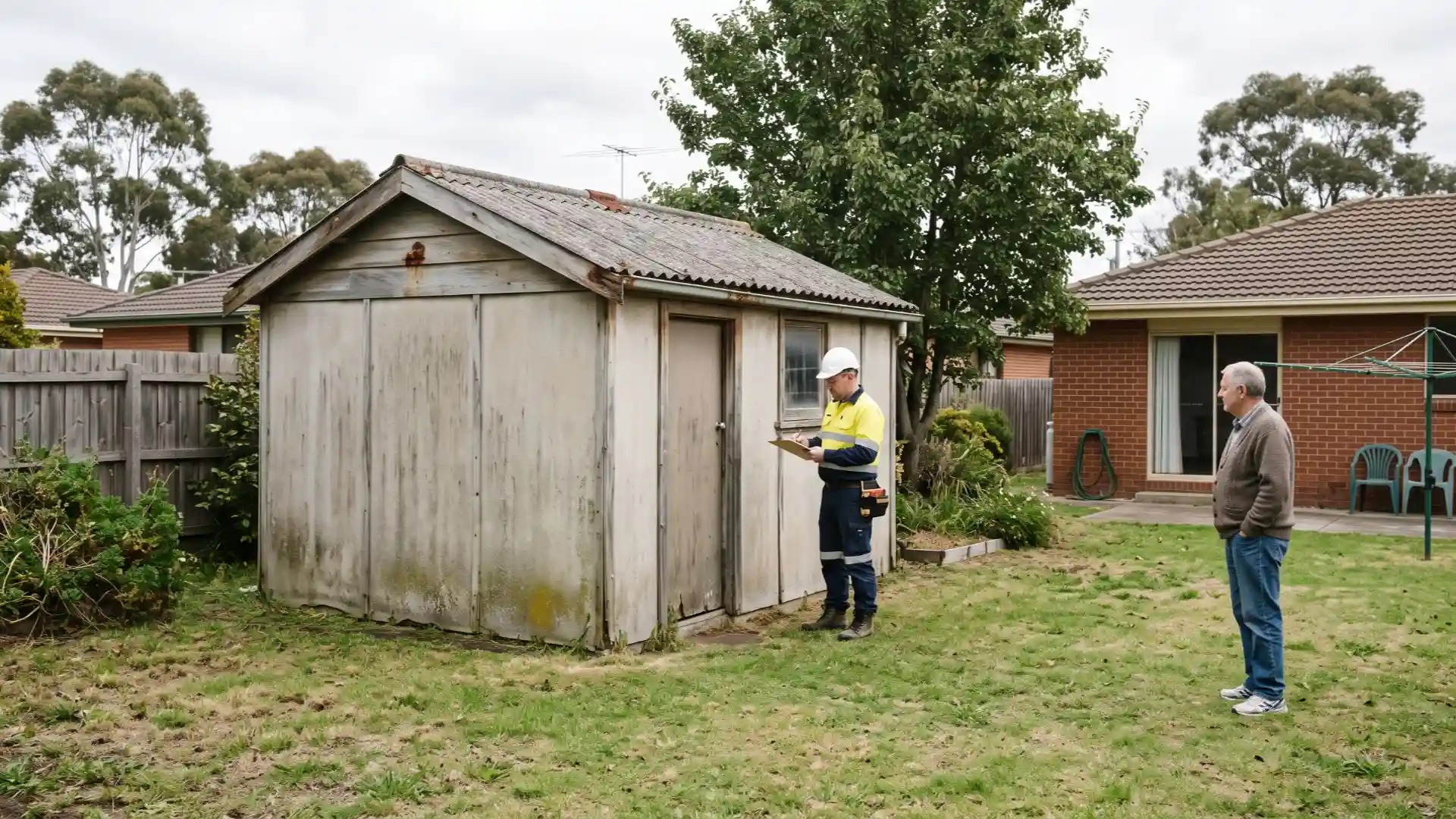
Older sheds can be useful for storage, gardening equipment and workshop space, but some were built with materials that may contain asbestos. Roofing sheets, wall panels and other cement-based building products in older structures can require careful assessment before repair, renovation or demolition.
If you are planning asbestos shed removal Melbourne, it is important to identify the material, assess its condition and understand the requirements before work begins. Professional asbestos shed removal in Melbourne may involve more than removing a few sheets, as access, surrounding structures, waste handling and the condition of the material can all affect the project.
JD Asbestos Removal provides non-friable asbestos removal for suitable residential, commercial and industrial projects. This guide explains what to look for, when professional removal may be appropriate, what affects the cost and how to request an asbestos removal quote.
Could Your Shed Contain Asbestos?
Asbestos was used in a range of Australian building products, including some cement-based sheets used in older sheds, garages and outbuildings. Depending on the structure, suspected asbestos-containing material may be found in the roof, walls, eaves or other building components.
However, appearance alone cannot confirm asbestos. Some modern products resemble older fibre-cement materials, and the age of a shed is only a clue—not proof that asbestos is present.
If you suspect asbestos, avoid drilling, cutting, sanding, breaking or disturbing the material. Do not remove a panel to check what it contains. Instead, seek advice about appropriate identification and testing. Where testing is required, a competent person can arrange suitable sampling and laboratory analysis.
JD Asbestos Removal’s testing and inspection services may be relevant if you need to investigate suspected material. Ask about the process and any applicable charges before proceeding.
Where Might Asbestos Be Found in an Older Shed?
The layout and construction of each shed differ, but areas worth considering during a professional assessment include:
- Roofing: Older cement roof sheets may require identification before replacement or demolition.
- Walls and cladding: Some older outbuildings use cement sheeting that may contain asbestos.
- Eaves and soffits: Sheet material around roof edges can be overlooked during renovation planning.
- Internal linings: Certain older structures may contain asbestos-containing sheet products internally.
- Adjacent structures: A fence, lean-to or attached garage may need to be considered if it forms part of the planned work.
These are potential locations, not confirmation that a material contains asbestos. A visual check or photograph cannot reliably establish the presence or absence of asbestos.
If your shed is being renovated or replaced, identify suspected materials before work begins. This can help you plan the project in the correct order and reduce the chance of unexpected delays.
For general background, read JD Asbestos Removal’s asbestos risks and awareness guide.
Before arranging asbestos shed removal Melbourne, confirm whether the suspected roofing or wall sheets contain asbestos and seek appropriate advice about the next steps. Avoid disturbing the material while its identity is being established.
Why Shed Condition Matters
Asbestos-containing materials are commonly described as friable or non-friable. Non-friable asbestos has fibres bound within a solid material, such as cement. When it is in good condition and left undisturbed, it is generally less likely to release airborne fibres than friable asbestos.
That does not mean non-friable asbestos is harmless in every situation. Damage, deterioration or work that disturbs the material can increase the risk of fibre release. Some material may also have become friable because of its condition or previous damage.
When assessing an old asbestos shed, the condition of the roof and walls matters alongside the amount of material. Broken sheets, weathered panels, fire damage, difficult access or a structure that is unstable may change the approach required.
Do not try to dismantle damaged panels or clean up suspected asbestos debris yourself. Keep people away from the affected area and seek appropriate professional advice about what to do next.
Understanding Non Friable Asbestos Removal Melbourne
The keyword non friable asbestos removal Melbourne is relevant when a shed contains bonded asbestos-containing material, such as suitable asbestos cement sheets. Whether the work can be handled by a particular provider depends on the confirmed material type, condition, access and project scope.
In Victoria, licensing requirements are not decided by the word “small” alone. WorkSafe Victoria states that most asbestos removal work must be carried out by an appropriately licensed asbestos removalist. Limited unlicensed removal may be allowed in specific circumstances for non-friable material, subject to restrictions that include a total area of no more than 10 square metres and a total removal time of no more than one hour over a seven-day period. Other safety requirements still apply.
These limits are not a recommendation to remove asbestos yourself. The material’s condition, the setting and the applicable legal duties must all be considered. Work involving friable asbestos or work outside the permitted conditions requires the appropriate licensed removal arrangements.
For current guidance, consult WorkSafe Victoria’s asbestos management information and Victorian guidance on unlicensed asbestos removal.
JD Asbestos Removal focuses on suitable non-friable asbestos removal projects. Contact the team with details of your shed and the planned work so the project can be reviewed against its service scope.
How Professional Asbestos Shed Removal Is Planned
Every property is different, so the exact process depends on the materials involved and the work required. A professional project typically begins by establishing the scope before removal is agreed. A professional asbestos shed removal Melbourne project should begin with a clear understanding of the material, site access and removal requirements. This assessment helps establish a suitable scope before work is agreed.
1. Describe the shed and the suspected material
When making an enquiry, explain whether the suspected material is on the roof, walls, eaves or another part of the structure. Share the property suburb, approximate shed dimensions and any existing inspection or laboratory reports.
Photographs already available may help describe the situation, provided they can be shared without approaching or disturbing the material. Do not climb onto a roof or handle sheets to obtain better images.
2. Confirm what the project involves
The removal provider needs to understand the material, its condition, access to the shed and whether other structures or renovation work are involved. Further identification or an on-site assessment may be necessary before the scope and price can be confirmed.
3. Establish the required safety controls
The work plan should account for applicable requirements, including how the work area will be controlled and how exposure to airborne fibres will be prevented. The controls required depend on the nature of the job and the condition of the material.
4. Coordinate removal with the wider project
If the shed will be replaced, renovated or demolished, asbestos work may need to be scheduled before other trades begin. Discuss the intended sequence with the relevant contractors so that the work can be coordinated appropriately.
5. Manage the resulting waste
Asbestos waste must be contained, transported and disposed of through suitable authorised arrangements. Waste generated during JD Asbestos Removal’s own removal work forms part of its removal service. This should not be confused with standalone collection of general asbestos waste or waste removed by someone else.
The Environment Protection Authority Victoria’s asbestos waste guidance explains the importance of correct waste management and using a landfill authorised to accept asbestos.
Small Asbestos Removal Jobs: Is a Shed Suitable?
Some shed projects may fall within the category of small asbestos removal jobs, such as removing a limited amount of identified non-friable sheeting. However, the amount of material alone does not determine whether a project is straightforward or suitable for a particular provider.
A small shed can still present challenges if the roof is difficult to access, the sheets are damaged, the structure is unstable or nearby buildings restrict access. A larger shed may involve a more extensive scope and additional coordination.
Before requesting a quote, explain the overall job rather than describing only the number of sheets. Include the shed’s approximate size, the suspected material, visible damage and whether you intend to repair or replace the structure.
JD Asbestos Removal can review enquiries involving suitable residential sheds and other non-friable asbestos materials. The team will need to determine whether the project falls within its service scope before confirming the work.
What Affects Asbestos Shed Removal Cost in Melbourne?
The cost of asbestos shed removal in Melbourne varies according to the project. A reliable estimate needs to reflect the work required at the actual property rather than a generic price per shed and the cost of asbestos shed removal in Melbourne can vary depending on the quantity of material, its condition, site access, safety controls and authorised waste disposal arrangements. Providing accurate project details helps the provider assess the work more effectively.
Factors that can affect the cost include:
- Shed size and material quantity: The amount of roofing, wall sheeting and other material affects the scope.
- Material condition: Deteriorated, broken or potentially friable material may require a different approach.
- Access and height: Roof access, surrounding buildings, fences, trees and ground conditions can influence the work.
- Site preparation: The work area may need specific controls to protect occupants and others nearby.
- Identification and assessment: If asbestos has not been confirmed, further assessment or laboratory testing may be needed.
- Waste management: Packaging, transport and authorised disposal arrangements must be considered.
- Project coordination: Shed replacement, renovation or other building work may affect scheduling and site access.
These factors also explain why the lowest advertised price may not represent the best comparison. Check what is included in the proposed scope, how waste generated by the work will be handled and whether any additional assessment or site requirements may affect the final price.
How to Request an Asbestos Removal Quote
When requesting an asbestos removal quote, provide the property location, a description of the shed, the suspected material and the work you want completed. Mention whether the shed is being repaired, renovated or removed entirely.
If you have existing test results or inspection reports, include that information. Be clear about anything you do not know—for example, whether the roofing or wall sheets have been confirmed as asbestos.
You can submit an enquiry through JD Asbestos Removal’s quote request page. The team can review the available information and discuss whether the project may be suitable for its non-friable removal service.
A quote should be based on a clearly understood scope. If additional assessment is required, ask what is involved and whether there are separate charges before authorising further work.
Choosing an Asbestos Removal Provider
Choosing a provider is about more than finding someone who can remove sheets from a shed. You need to understand whether the material and project fall within the provider’s scope and how the work and resulting waste will be managed.
Before proceeding, consider asking:
- Does the provider handle this type of confirmed asbestos-containing material?
- Is the proposed work within its removal service and relevant licence scope?
- Does the project need further assessment or testing?
- What site access or preparation arrangements are required?
- What does the quote include?
- How will waste generated through the work be transported and disposed of?
- Are there any scheduling considerations for shed replacement or other trades?
You can review WorkSafe Victoria’s asbestos removal licence information for official licensing guidance.
A suitable provider should explain the proposed scope and identify when additional assessment or a different specialist is needed. Avoid assuming that a job is simple just because the shed is small or the material appears intact.
Can JD Asbestos Removal Help With an Asbestos Shed?
JD Asbestos Removal provides non-friable asbestos removal for suitable residential, commercial and industrial projects across Melbourne and selected Victorian areas. Its service information includes garages and sheds among the residential structures it can review.
Whether a particular asbestos shed removal project can be accepted depends on the material, its condition, access and the overall work required. The business’s associated disposal service covers asbestos waste generated through its own removal work—not standalone collection of waste from unrelated jobs.
To get started, visit the JD Asbestos Removal services page or send details through the quote request page. Explain what you know about the shed and ask what information is needed to review the project.
Request Advice About Your Asbestos Shed
If you suspect that your shed contains asbestos, avoid disturbing the material and arrange appropriate advice before renovation or demolition. Identifying the material and understanding the required scope can help you plan the work and avoid unexpected complications.
JD Asbestos Removal can review enquiries for suitable non-friable asbestos removal projects and discuss the next steps. Visit the quote request page to describe your shed, property location and planned work.
A clear understanding of the project is the first step towards planning removal and managing the resulting asbestos waste responsibly.
Frequently Asked Questions
-
How do I know if my shed contains asbestos?
You cannot confirm asbestos by appearance or a photograph alone. Older cement sheets may warrant investigation, but appropriate sampling and laboratory analysis may be needed to identify the material. Avoid disturbing suspected sheets while arranging advice.
-
Can a small asbestos shed be removed without a licence?
Only limited removal may be permitted without a licence, and specific conditions apply. Victorian guidance includes limits on the area of non-friable material and the total time spent removing it, along with other safety requirements. Confirm the rules for your circumstances before work begins.
-
How much does asbestos shed removal cost in Melbourne?
The cost depends on shed size, the amount and condition of material, access, required controls, assessment and waste arrangements. Request an asbestos removal quote based on the actual project scope.
-
Can JD Asbestos Removal remove both shed roofing and wall sheets?
JD can review suitable projects involving non-friable asbestos-containing materials. Whether both the roof and wall sheets can be included depends on their material type, condition, access and the agreed scope.
-
Does JD collect asbestos waste from sheds already dismantled by someone else?
JD’s associated waste management is for asbestos waste generated through its own removal work. Do not assume it offers standalone collection of general asbestos waste or material removed by another contractor. Contact the team to clarify whether your project is suitable.
Leave a Reply