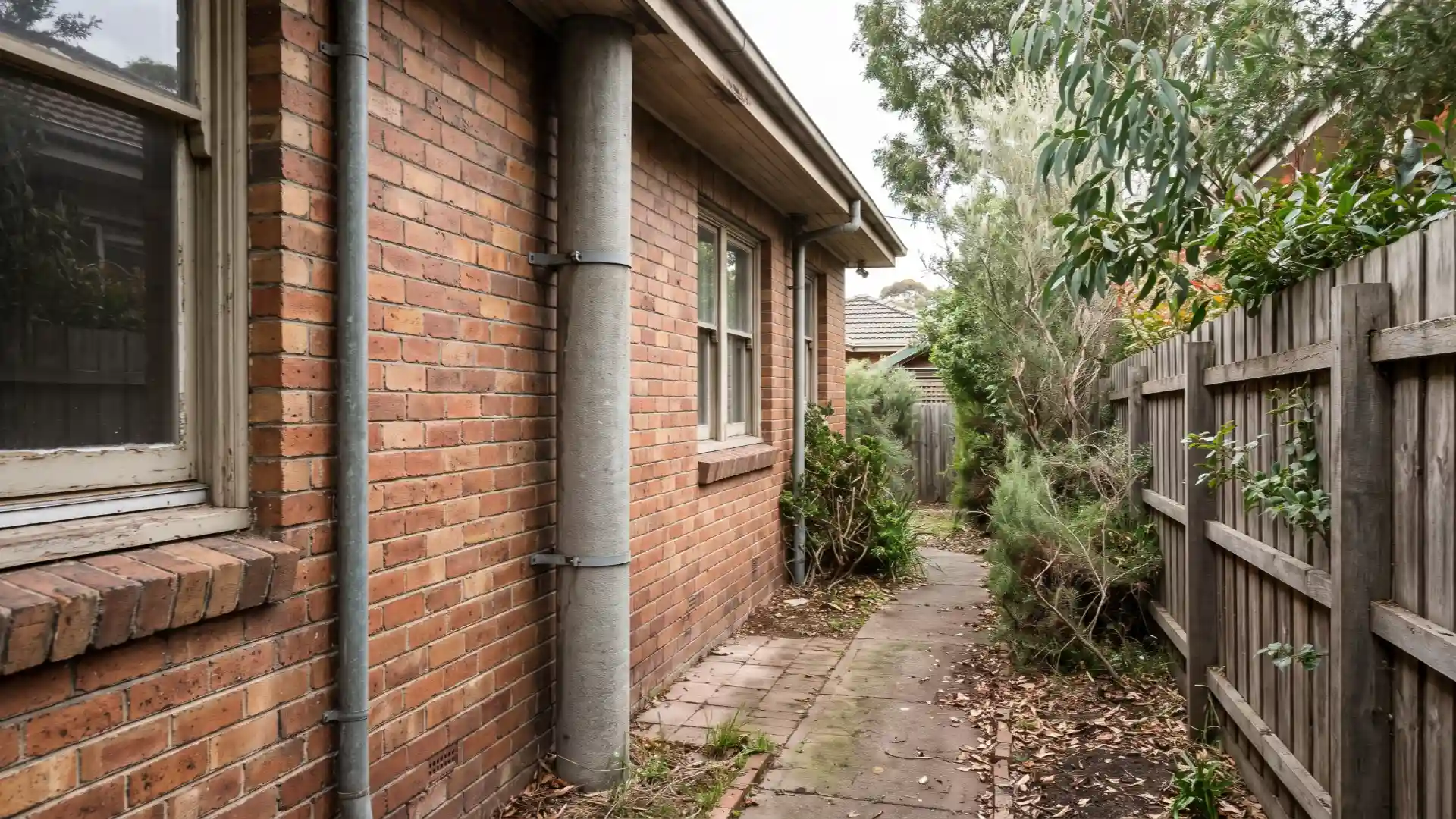
An external flue can be difficult to assess from ground level. It may be positioned beside a roof, fixed to an exterior wall, or located where fences, garden structures and neighbouring buildings restrict access. If you suspect that an older flue contains asbestos, the safest first step is to avoid disturbing it and arrange appropriate professional advice.
When planning external asbestos flue removal, access is an important part of understanding the work involved. The material, its condition, the height and position of the flue, and the available working area all help determine whether a proposed project is suitable and how it should be planned. Providing clear information before requesting a quote can help JD Asbestos Removal review the enquiry and discuss the next steps for suitable non-friable asbestos removal.
This guide explains what property owners should consider, what details to prepare and how to make an enquiry without touching or disturbing suspected asbestos.
Why plan external asbestos flue removal carefully
Planning external asbestos flue removal starts with understanding the property, the flue’s location and the conditions around it. External flues can be positioned near rooflines, walls, adjoining structures or restricted access areas. These details help establish the scope of the proposed work and support a more informed asbestos removal quote.
For external asbestos flue removal, useful access information includes:
- The approximate location of the flue, such as an exterior wall, roof edge or side passage.
- Whether it is close to a boundary, fence, garage, tree or another structure.
- The apparent height and whether the flue extends above the roofline.
- Whether a driveway, gate or side access route leads to the relevant area.
- Any visible obstructions that may limit access from the ground.
- Whether people, tenants, customers or other contractors regularly use the nearby area.
Do not climb onto a roof, use a ladder, move building components or approach the flue to obtain these details. Describe what you can already see from a safe position. If you are unsure, say so in your enquiry rather than attempting a closer inspection.
Good external flue access planning starts with details already visible from a safe position.
1. Identify the property and the flue location
Start with the property’s suburb or postcode and building type, such as a house, garage, shed or commercial premises. Then describe where the flue appears to be located: attached to an outside wall, beside a roof or running up the building’s exterior. If you do not know its purpose or construction, do not guess; a simple description is enough.
If there are several structures or flues, specify which one you mean and where it appears to be.
The phrase external asbestos flue removal access describes more than the route to the property. It also covers the space around the suspected material and the practical conditions that may affect the proposed work.
2. Explain the height and surrounding access conditions
Height is useful to communicate, but do not measure it by climbing or approaching the suspected material. Share an approximate height only if it is already known from plans or records; otherwise, describe whether the flue appears to be at ground level, above a single-storey roof or higher. Mention obstacles such as narrow passages, fences, verandas, awnings, trees, sheds, neighbouring walls or limited vehicle access. Do not move anything to create a route.
For shared driveways or commercial sites, mention gates, operating hours, deliveries, tenants or other contractors that may affect access.
Access information does not automatically determine the method of removal. The appropriate arrangements depend on the site, material, condition and agreed scope. For external asbestos flue removal, the available working space, surrounding structures and access route all help the team understand the proposed project. The purpose of the enquiry is to provide context for review, not to decide how asbestos should be handled.
For external asbestos flue removal, access conditions are an important part of the initial assessment. Information about the flue’s height, nearby structures and available working space can help the removal team understand the property’s layout. This is particularly useful when requesting an asbestos flue removal quote for a property with restricted external access.
3. Describe the material without disturbing it
A flue’s appearance alone cannot confirm whether it contains asbestos. Older cement-based products may look similar to other building materials, and photographs are not a reliable way to establish asbestos content. If you have an existing asbestos report, laboratory result or building record, include it with your enquiry.
If the material has not been identified, state that it is suspected rather than confirmed. Do not scrape a surface, break an edge, drill a hole, remove a cover or collect a sample. Do not touch the flue to check whether it feels brittle or solid. Leave the material undisturbed and seek appropriate professional advice about identification.
It is also important to distinguish non-friable material from friable asbestos. WorkSafe Victoria explains that non-friable asbestos generally has fibres bonded within a solid material, while friable asbestos can be crumbled, pulverised or reduced to powder by hand pressure when dry. Non-friable material can deteriorate and become friable over time or through damage. Read WorkSafe Victoria’s explanation of friable and non-friable asbestos for the definitions.
If you suspect the flue contains asbestos, avoid disturbing it to confirm the material. Instead, explain why you believe it may contain asbestos and provide any existing property records. This information can help the team assess an external asbestos flue removal enquiry without encouraging unnecessary contact with the suspected material.
4. Prepare existing photographs and records safely
Existing information can make an enquiry easier to review. If you already have photographs taken from a safe location, you may provide them to show the building and the flue’s general position. Do not take new photographs if doing so requires climbing, entering a restricted area, leaning over a roof edge or approaching damaged suspected asbestos. Never move vegetation, open covers or remove fittings to improve the view.
Useful supporting information may include:
- Existing asbestos identification or laboratory reports.
- Building plans or renovation documents that already show the flue.
- Previous contractor notes describing the location or condition.
- Photographs already available from a safe viewpoint.
- Details of planned renovation, roof work or other activity near the flue.
If you lack documents, explain what you know and distinguish confirmed details from estimates.
The cost of external asbestos flue removal can depend on several project-specific factors, including the flue’s position, property access, surrounding structures and the agreed removal scope. A clear description of these conditions helps the team consider the work involved when preparing an asbestos flue removal quote.
5. Explain the flue’s visible condition and any planned work
From a safe position, describe visible concerns such as a crack, missing section, loose-looking fitting, impact damage or deterioration. Do not test its stability, secure it or carry out repairs.
If renovation, roof replacement, demolition or other work is planned nearby, explain the timing so scheduling and coordination can be discussed.
The condition of suspected asbestos is important because damaged or weathered non-friable material may no longer be suitable for the same work assumptions as intact material. WorkSafe Victoria notes that non-friable asbestos can become friable through deterioration, work processes or other damage. For this reason, an enquiry should describe visible concerns without trying to classify the material yourself.
6. Understand what can affect an asbestos removal quote
An external asbestos flue removal quote should reflect the actual project requirements, not just the flue’s apparent size. Even a short component may involve access constraints, nearby structures, surrounding property conditions or coordination with other work. Providing these details helps the team understand the proposed removal scope before discussing the quotation.
When reviewing an enquiry, relevant details may include:
- Material and condition: whether the material has been identified and whether existing records describe its condition.
- Location and height: where the flue sits and how it relates to the building.
- Access: the route to the property and the available space around the work area.
- Quantity and scope: how many components are involved and what removal work is being requested.
- Site arrangements: occupancy, shared access, other contractors and any restrictions that need discussion.
- Timing: planned renovation dates or other work that may affect scheduling.
- Waste arrangements: management and disposal of waste generated through the agreed removal work.
These are considerations for reviewing the enquiry, not a fixed pricing formula. The team may need further information before confirming whether the work is suitable and preparing a quote. JD’s service includes responsible management and disposal of asbestos waste generated through its own removal work; it is not a standalone waste collection service.
For background on lawful asbestos waste disposal in Victoria, consult the EPA Victoria guidance on disposing of asbestos waste. It explains that asbestos waste must go to a facility authorised to receive it and that acceptance should be confirmed with the facility.
7. Small jobs still need proper review
A flue may look like a small removal job because it is a single component or occupies a limited area. However, the visible quantity alone does not establish the material classification, access requirements or appropriate work arrangements.
Searches for small asbestos removal jobs often come from owners who have one section of suspected material to deal with before renovation or property maintenance. It is reasonable to explain that the job appears limited, but avoid assuming that a small quantity means the work is simple or automatically suitable.
WorkSafe Victoria sets specific conditions for limited non-friable asbestos removal in certain workplace circumstances. Those conditions include limits on the area and time involved, alongside other safety requirements. They should not be treated as a general instruction for homeowners to remove suspected asbestos themselves. Read the relevant WorkSafe Victoria asbestos management guidance and seek appropriate professional advice for your circumstances.
JD reviews enquiries for suitable non-friable removal projects. Whether a particular flue is within scope depends on the material, condition, access and work requirements. A small job should receive the same careful description as a larger one.
8. What to include when requesting a quote
Before requesting an external asbestos flue removal quote, gather the property information and existing records you already have. Preparing for an asbestos removal enquiry does not require approaching, measuring or handling the suspected flue. A clear description of the location and access conditions is a useful starting point.
A practical enquiry checklist includes:
- Property suburb or postcode.
- Property type, such as residential, commercial or industrial.
- The location of the external flue on the building.
- Approximate height, if known from safe observation or existing records.
- A description of access routes and visible obstructions.
- The number of suspected components.
- Any existing asbestos report or relevant building document.
- Visible concerns observed from a safe position.
- Renovation or project timing, if applicable.
- Existing photographs that were taken without disturbing the material.
If a detail is unknown, say that it is unknown. Do not delay an enquiry simply because you do not have every item on the list. The team can review the information provided and discuss whether more details are needed.
For asbestos flue removal Melbourne enquiries, the same first step applies: provide the location, access details and any existing material records. For residential properties, explains the types of home projects the team may review, including suitable non-friable materials in external building areas. Commercial and industrial enquiries can be considered according to their own site and access requirements.
Plan the next step with clear information
Good preparation does not mean inspecting or measuring suspected asbestos yourself. It means sharing the property details, the flue’s visible location, existing records and any access restrictions you already know about. This gives the removal team a clearer starting point and helps avoid assumptions about the work.
If you are considering external asbestos flue removal, explain whether the material has been identified, where it is positioned and what access conditions may affect the project. JD Asbestos Removal focuses on suitable non-friable asbestos removal for residential, commercial and industrial properties across Melbourne and selected Victorian areas, subject to project review.
To discuss your property and request an assessment of the proposed removal scope, use the JD Asbestos Removal quote request form. Include the information you already have, and let the team advise on the next steps. Do not disturb suspected asbestos while preparing your enquiry.
Frequently Asked Questions
-
How can I tell whether an external flue contains asbestos?
You cannot reliably confirm asbestos by appearance or photographs alone. If you suspect asbestos, leave the material undisturbed and seek appropriate professional advice about identification. Existing reports or laboratory results can be shared when making an enquiry.
-
What access details should I provide for external asbestos flue removal?
Provide the property suburb or postcode, the flue’s visible location, approximate height if already known, access routes, nearby obstructions and any shared-site restrictions. Do not climb, approach or disturb the suspected material to collect information.
-
Does JD Asbestos Removal handle friable asbestos flues?
JD Asbestos Removal focuses on suitable non-friable asbestos removal. Do not assume that friable, damaged or deteriorated material falls within this service. The material and proposed work must be appropriately assessed before a removal scope is agreed.
-
Can I request a quote for a small external asbestos flue?
Yes. You can submit an enquiry describing the property, suspected material, location and access conditions. A small visible quantity does not automatically mean the work is straightforward or suitable. JD reviews the project details before discussing the next steps.
-
Should I take photographs of a suspected asbestos flue before requesting a quote?
You may share photographs that already exist and were taken from a safe position without disturbing the material. Do not climb, use a ladder, remove fittings or approach damaged suspected asbestos to take new photographs.
Leave a Reply