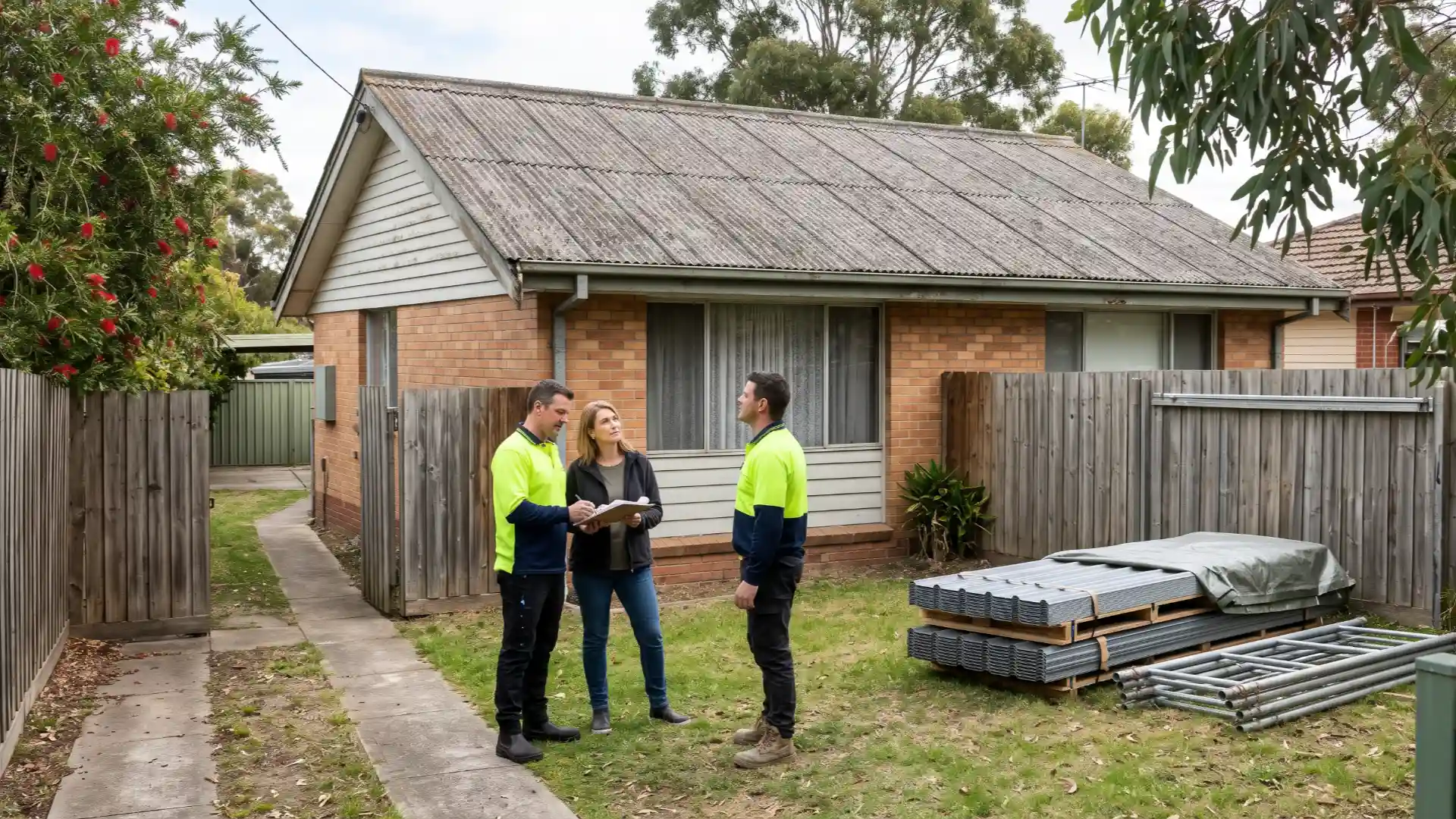
Planning to replace an older roof involves more than selecting new roofing materials and agreeing on a start date. If the existing roof may contain asbestos cement sheets, the issue needs to be addressed before roofing work begins. Disturbing suspected asbestos during removal, demolition or installation can create avoidable health and project risks. A clear plan helps the property owner, asbestos removal contractor and roofing team understand the work sequence and their separate responsibilities.
Asbestos roof sheet removal should be considered early whenever older roof materials may be affected by the proposed renovation. For property owners, an early asbestos roof sheet removal discussion can prevent the issue being overlooked during initial planning. The material must not be identified by appearance alone, and nobody should cut, drill, break, sand, pressure-wash or otherwise disturb it to investigate. Arrange appropriate professional advice before work that could affect the material proceeds.
Why consider asbestos before replacing an older roof?
Asbestos-containing materials were used in many Australian buildings, including some older roof products. Cement-based sheets may be non-friable when the asbestos fibres are bonded within a stable material, but their condition can change through damage, weathering or work processes. WorkSafe Victoria explains the distinction between friable and non-friable asbestos and why damaged non-friable material may require a different response. See WorkSafe Victoria’s explanation of friable and non-friable asbestos when reviewing the terminology.
A reroofing project can involve several trades, access equipment, removal of existing materials and installation of new products. If suspected asbestos is discovered after the roofing schedule has been set, the work may need to pause while the material is appropriately identified and a suitable removal plan is arranged. Early asbestos roof sheet removal before reroofing planning gives everyone time to clarify the scope before the roof is disturbed. Starting the asbestos roof sheet removal discussion before booking the roofing crew can also make the project sequence easier to manage.
It is also useful to distinguish asbestos removal from roofing work. JD Asbestos Removal provides suitable non-friable asbestos removal; it does not undertake roof replacement, new roof installation or rebuilding. Those activities should be arranged with a separate roofing contractor.
Could older roof sheets contain asbestos?
Some older Australian properties have asbestos cement roofing products. However, age, colour, shape, surface texture and photographs cannot confirm whether a particular roof contains asbestos. Similar-looking materials may have different compositions, and a visual guess should never be treated as a reliable identification.
If the property has an existing asbestos register, survey or laboratory report, keep the document available for the contractors coordinating the project. If the material has not been identified, explain that it is suspected rather than confirmed and obtain appropriate professional identification advice before it is disturbed. Do not collect a sample yourself or approach the roof to inspect it.
The condition of the material also matters. Non-friable asbestos generally has fibres bonded within a solid matrix, but deterioration or damage can change its condition. The appropriate response depends on the material, its state, the proposed work and applicable requirements. JD only considers projects that fall within its non-friable removal service.
Asbestos roof sheet removal: what to organise before reroofing
A useful plan begins with the information already available. Property owners do not need to access the roof or handle suspected material to prepare an enquiry. Instead, gather existing records and ask the roofing contractor to explain which areas of the roof are included in the proposed replacement.
- Property details: Record the suburb, property type and whether the building is residential, commercial or industrial.
- Existing information: Gather any asbestos reports, registers, building records or renovation documents already available.
- Roofing scope: Ask the roofing contractor to describe the intended work and identify which existing roof sections may be affected.
- Project timing: Note the expected roofing start date and any other renovation work scheduled around it.
- Access context: Share information already known about the property layout, nearby structures and access limitations. Do not climb onto the roof to obtain measurements or photographs.
- Contractor responsibilities: Clarify which contractor is responsible for asbestos removal and which contractor is responsible for roofing and replacement.
This preparation helps define the removal enquiry without assuming that every roof material is asbestos or that every project is suitable for the same service. Good asbestos roof sheet removal planning also helps prevent confusion about who will complete each stage. Clear asbestos roof sheet removal arrangements should be recorded alongside the wider renovation schedule so that contractors are working from the same project information.
Why suspected roof sheets must not be disturbed
A common mistake is allowing ordinary roofing preparation to begin before suspected asbestos has been addressed. Cutting, drilling, breaking, sanding, scraping, pressure-washing or removing a suspect sheet can release hazardous fibres if asbestos is present. Walking on an older roof to inspect it can also create a fall hazard and may damage fragile materials.
Leave suspected material undisturbed and keep people away from the affected area. This is an essential part of responsible asbestos roof sheet removal planning, particularly when several trades are expected to work around the property. Do not ask a roofer or general tradesperson to remove it as part of routine roof strip-out unless they are appropriately qualified, authorised and engaged for that asbestos work. The required controls depend on the material and the work involved.
WorkSafe Victoria provides guidance on asbestos risks in workplaces and the differences between material classifications. Its information should be considered alongside the project-specific advice of competent professionals. A property owner should not use a photograph or a visual description as a substitute for appropriate identification.
When professional non-friable asbestos removal may be suitable
Some roof sheets may be identified as non-friable asbestos-containing material and may fall within a suitable professional removal scope. That does not mean every roof removal job can be accepted. The same careful review applies when removing old asbestos roof sheets as part of a wider renovation. Material condition, access, the amount and location of material, surrounding site conditions and the proposed work all need to be considered.
JD provides non friable asbestos removal Melbourne property owners can enquire about for suitable residential, commercial and industrial projects. You can review JD’s non-friable asbestos removal services to understand the general scope before making an enquiry. Any asbestos roof sheet removal enquiry is reviewed against the material condition, site details and the agreed scope before suitability can be discussed. The team reviews the available information and proposed scope before determining whether an enquiry fits its service. JD does not provide friable asbestos removal, roof replacement or new roofing installation.
For this reason, professional asbestos roof removal should be arranged as a distinct part of the renovation plan rather than treated as an informal extension of the roofing contractor’s work. If the suspected material is damaged, deteriorated or potentially friable, do not assume it is suitable for JD’s service; seek appropriate professional advice about the material and required work.
Property owners planning a related roof fixture removal may also find JD’s article on asbestos roof flue removal before roofing work useful. It explains how to coordinate a separate asbestos removal scope with a roofing schedule.
What information can affect an asbestos removal quote?
An asbestos removal quote should be based on the actual project requirements, not simply the apparent size of the roof or the number of sheets visible from the ground. A request for asbestos roof sheet removal should therefore explain the proposed roof replacement and the specific material that may need professional attention. The contractor may need to understand the material identification, condition, location, access arrangements and the boundaries of the requested work before discussing a suitable scope.
Information that may help with an initial enquiry includes:
- The property suburb and type.
- Whether asbestos has been confirmed or is only suspected.
- Existing reports or records, if available.
- The roof area or section involved, based on existing plans or information already held.
- The planned reroofing work and its expected timeframe.
- Known access restrictions or nearby structures.
- Whether other contractors will be working at the property.
Do not climb onto the roof, move sheets, take samples or disturb materials to obtain more detailed information. Existing photographs taken from a safe location may help explain the general property layout, but they cannot establish whether a material contains asbestos.
For a more detailed preparation guide, see JD’s asbestos removal quote checklist. It outlines the types of project information that can help a contractor understand an enquiry without requiring the property owner to handle suspected asbestos.
Coordinating removal with the roofing contractor
The property owner, asbestos removal provider and roofing contractor should understand the intended sequence before work begins. The roofing contractor can explain the replacement programme, while the asbestos removal provider can review whether the identified material and requested work fall within its service scope. Each party should remain clear about the work it has agreed to perform.
A practical coordination discussion may cover:
- Which roof sections are included in the replacement project.
- Which materials have been identified or are still suspected to contain asbestos.
- Whether existing reports are available to the relevant contractors.
- Who is responsible for arranging the appropriate asbestos removal.
- What access and site arrangements are needed for the agreed removal work.
- How the removal stage will be completed and handed over before roofing work proceeds.
The schedule should allow for the actual scope and any requirements that apply to the site. Planning asbestos removal before roof replacement gives the parties an opportunity to resolve the asbestos-related stage before the new roofing work is scheduled to proceed. Avoid promising a fixed handover date before the removal contractor has reviewed the project. If the work involves commercial or industrial premises, site access, occupancy and operational activities may also need to be considered.
Waste management and project responsibilities
Asbestos waste must be managed appropriately and must not be placed in ordinary household, recycling or green-waste bins. EPA Victoria explains the responsibilities involved in managing asbestos waste and the importance of using a disposal facility authorised to receive it.
JD’s waste-management responsibility relates to asbestos waste generated through its own agreed removal work. This should not be confused with a standalone waste collection service or an arrangement to remove waste generated by another contractor. The property owner and project team should clarify responsibilities before work begins.
A practical checklist before replacing an older roof
Before the reroofing project moves ahead, check that the following matters have been discussed:
- Suspected or identified asbestos-containing roof materials have been addressed through appropriate professional advice.
- Existing asbestos reports and relevant property records have been gathered.
- The roofing contractor has described the replacement scope and proposed sequence.
- A suitable asbestos removal provider has reviewed the material and requested work.
- The responsibilities of the roofing contractor and removal provider are clear.
- Access, timing and site arrangements have been discussed.
- Waste generated through the removal work will be managed through the agreed arrangements.
- The roofing contractor knows when the asbestos-related stage has been completed and when its own work may proceed.
This checklist is intended to support project coordination, not to guide anyone through inspecting or removing asbestos. It can also help owners decide whether their enquiry involves a larger roof project or one of the small asbestos removal jobs that JD may review for suitability. Preparing a roof for replacement should never involve disturbing suspected asbestos to obtain better information.
Discuss Your Asbestos Roof Sheet Removal Project with JD
If you are planning a reroofing project and suspect the existing sheets may contain asbestos, contact JD with your property location, any existing reports and details of the planned work. Discussing asbestos roof sheet removal at this stage can help establish whether the proposed work fits the service scope. The team can review whether the proposed non-friable removal work falls within its service scope. Roofing replacement and installation should be arranged separately with your roofing contractor.
Request an Asbestos Removal Quote to share your project details with JD.
Frequently Asked Questions
Should asbestos roof sheets be removed before reroofing?
If roof sheets are suspected or confirmed to contain asbestos and the planned roofing work could disturb them, the material should be appropriately assessed and suitable removal arrangements established before work begins. Do not disturb the sheets yourself.
Can older roof sheets contain non-friable asbestos?
Some older Australian properties have asbestos cement roofing products. However, age and appearance alone cannot confirm whether a particular roof contains asbestos or establish its classification. Appropriate professional identification advice may be needed.
What information should I provide for an asbestos roof removal quote?
Provide the property suburb and type, existing asbestos reports if available, a description of the affected roof area based on information already held, access details and the planned reroofing timeframe. Do not climb onto the roof or disturb suspected materials to collect information.
Can a roofing contractor remove suspected asbestos roof sheets?
Ordinary roofing work should not be assumed to include asbestos removal. The material classification, applicable requirements and contractor responsibilities need to be considered, with suitable asbestos removal arrangements established before work proceeds.
Does JD Asbestos Removal handle small roof sheet removal projects?
JD reviews suitable non-friable asbestos removal enquiries for residential, commercial and industrial properties. Whether a particular roof sheet removal project can be accepted depends on the material, its condition, access and agreed scope. JD does not provide friable asbestos removal or roofing replacement.
Leave a Reply