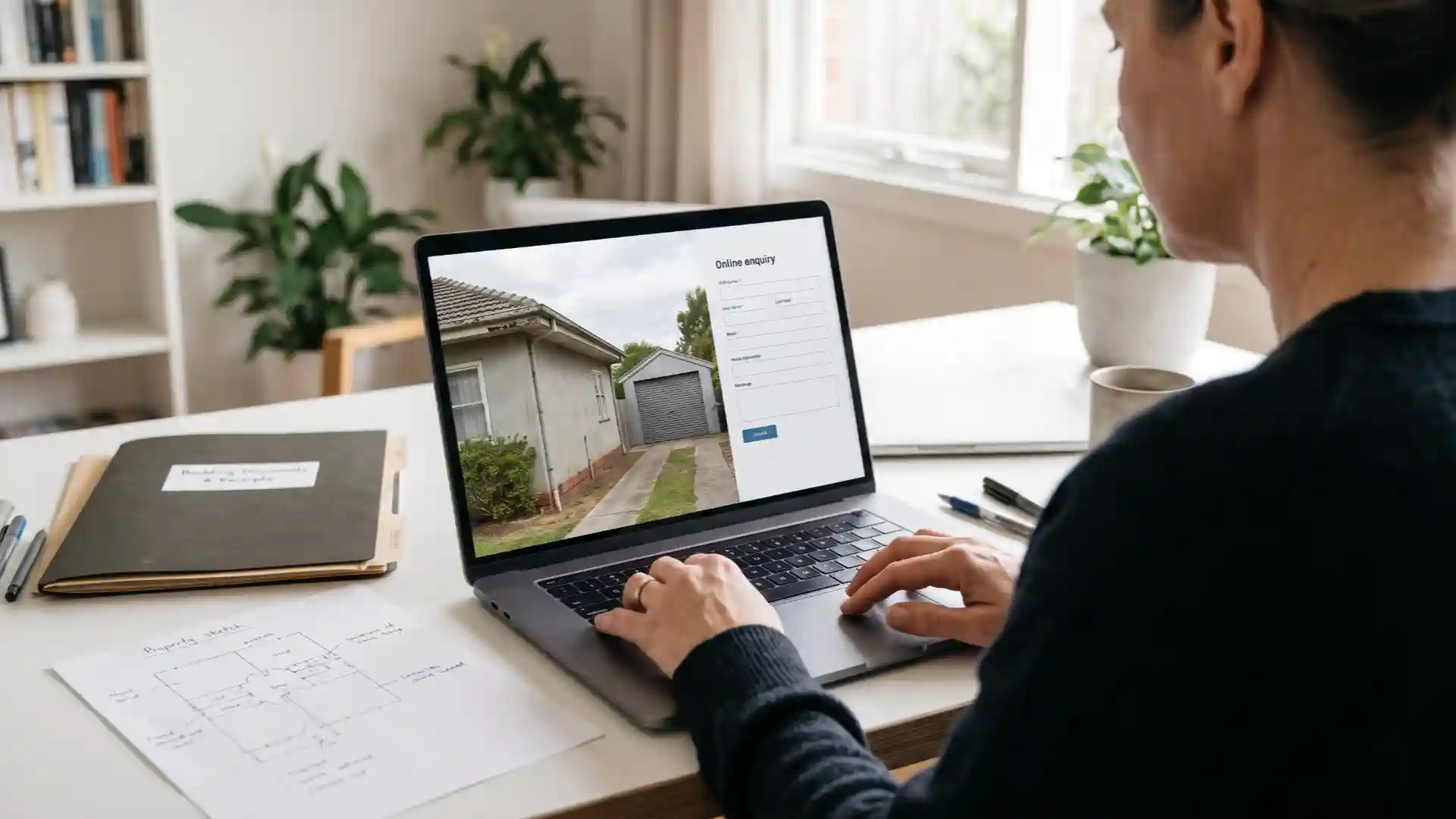
When contacting an asbestos removal contractor, photographs can help explain the property, the areas of concern and the work you want reviewed. However, unclear images or missing information can make an enquiry harder to understand.
A photograph may show only part of a wall, omit the surrounding property or leave the contractor unsure which section you want assessed. In other cases, people try to get a closer image by approaching or disturbing suspected asbestos, creating an unnecessary safety risk.
A clear asbestos removal quote enquiry starts with useful information, not a perfect photograph. This guide explains which images may help, common mistakes to avoid and what details to send alongside them. Photographs are supporting information only; they cannot confirm whether a material contains asbestos or replace appropriate identification and assessment.
Why photos matter when requesting an asbestos removal quote
A contractor needs to understand what work you are asking them to consider. Existing photographs can provide useful context about the location, surrounding structures and visible extent of an area.
For example, a homeowner may be asking about an external wall, a garage and a section of fencing. A commercial property manager may have identified several areas within a building. In both situations, a few relevant images can make the initial asbestos removal enquiry more specific.
A useful photo set does not need to be large. A small number of clear images, supported by a written description, can be more helpful than dozens of close-ups without context.
Photographs may help a contractor:
- Understand which part of the property is involved.
- See the relationship between the area and nearby structures.
- Identify which locations the enquiry refers to.
- Discuss visible access and site considerations.
- Ask more relevant questions about the proposed work.
They cannot establish a material’s composition, confirm that asbestos is present, determine whether it is friable or non-friable, or establish a final removal scope by themselves.
The most useful photos to include
When preparing an asbestos removal quote request, consider what the contractor needs to understand about the property and the location. Use photographs already available or images taken from a safe position without approaching, touching or disturbing suspected material.
1. A wider photo showing the property area
Start with a general view of the relevant part of the property. This might show the outside of a house, a garage, a shed, a fence line or the section of a commercial building where the concern is located.
A wider view provides context. It can help explain where the area sits in relation to entrances, paths, adjoining structures and the rest of the property.
Avoid sending only a close-up that could belong to almost any building. If you already have a suitable wider image, include it with a short note identifying the location.
2. An existing image showing the specific area
If you already have a photograph showing the section you are asking about, include it. For example, it may show a wall panel, eaves, roof area or external cladding from a distance.
Do not move objects, remove coverings, open cavities or climb onto a roof to improve the view. Never handle or disturb suspected asbestos-containing materials to make an image clearer.
The purpose of the image is to explain which area is involved. It does not need to prove what the material is.
3. Photos of separate locations
If the enquiry involves more than one area, label each location in your message. A simple list such as “front external wall”, “detached garage” and “rear fence” can help connect the images to the property layout.
This is particularly useful for small asbestos removal jobs, where the work may involve several separate sections rather than one large area. Explain whether the locations are at the same property and whether you would like them considered as one enquiry.
Do not assume that every location can be included in one removal scope. Each material and work area needs to be reviewed for suitability and requirements.
4. Existing reports, plans or property records
If an asbestos register, previous assessment report, laboratory result, building plan or contractor document is already available, mention it and provide a copy where appropriate.
For workplaces, an asbestos register may contain information about the location, type and condition of identified asbestos-containing materials. WorkSafe Victoria explains the role of asbestos registers in its guidance on managing asbestos in workplaces.
Do not create a report yourself or label a material as confirmed asbestos based only on its appearance. If the material is suspected but has not been identified, state that clearly.
Photo mistakes that can make an enquiry harder to assess
A photograph does not need to be professionally taken to be useful. The common photo mistakes when requesting asbestos removal usually involve missing context, unclear descriptions or attempts to photograph material from an unsafe position.
Sending close-ups without a wider view
A close-up may show a surface but not where it is located. The contractor may be unable to tell whether it is part of a roof, wall, fence or another structure.
Where a wider image is already available, send it as well. A general view and an existing image of the relevant area can provide better context than several nearly identical close-ups.
Sending images without explaining the location
Even a clear photograph can be confusing if the message does not say where it was taken. This matters when several areas or buildings are involved.
Add a short label to each image or describe it in the email or enquiry form. You can identify the front, rear, side, garage, shed or another familiar property location without approaching the material.
Assuming a photograph identifies asbestos
One of the most important mistakes is treating a picture as proof that a material contains asbestos. Many building products can look similar. Colour, texture, age or appearance alone cannot reliably confirm its presence.
There is no simple visual test for identifying asbestos. If identification is required, appropriate sampling and analysis by an approved laboratory may be necessary. Read the official WorkSafe Victoria asbestos guidance for further information.
If you are unsure, describe the material as suspected rather than confirmed. An image should support the conversation, not replace appropriate identification.
Taking unnecessary risks to get a better image
Do not climb ladders, access roof spaces, enter restricted areas or move items to photograph suspected asbestos. Do not touch, scrape, drill, cut, break, sand, pressure-clean or otherwise disturb the material.
If you cannot see the area safely from an existing position, explain that in your enquiry. The contractor can discuss what information may be needed next. Do not put yourself or another person at risk for a photograph.
If you are unsure how to photograph suspected asbestos safely, the most important rule is not to approach or disturb the material just to obtain an image. Use existing photographs or explain that a photograph is unavailable.
Sending too many unlabelled images
A large collection of images can make it difficult to understand which ones relate to the work. Select a small number of relevant photographs and organise them by location.
For example, use simple file names such as “front wall”, “garage exterior” or “rear fence”. These labels describe the location only; they should not claim that the photographed product is asbestos unless that has already been confirmed.
What information to include with asbestos removal photos
Images are most useful when they arrive with a concise description. The written details help the contractor understand the property, the reason for the enquiry and the work you are considering.
Include the following information where available:
- Property suburb: The suburb or town where the work is located.
- Property type: Residential, commercial or industrial.
- Area description: Identify each location shown in the images.
- Material information: Explain whether asbestos has been confirmed in an existing report or is only suspected.
- Condition: Mention any known damage or deterioration without touching the material to check it.
- Approximate extent: Provide an estimate only if you already know it; do not measure by handling or disturbing the material.
- Project purpose: Explain whether the enquiry relates to renovation, maintenance, refurbishment or another planned project.
- Access details: Mention known restrictions, shared access or occupancy arrangements.
- Existing documents: Note any asbestos register, report, plans or previous contractor information.
If you are requesting an asbestos removal quote for several areas, list each area separately and connect it to the relevant photograph. This helps prevent one location from being overlooked.
You do not need to guess technical details. It is better to say that the material type or quantity is unknown than to provide an unsupported estimate.
Preparing an enquiry for residential and commercial properties
The information needed can vary depending on the property and the project.
Residential properties
For a home, the enquiry may relate to an identified non-friable material in a garage, shed, fence, eaves or another building section. A property owner can explain which structure is involved, whether there are existing reports and what renovation or maintenance work is planned.
If there are several locations, make that clear from the beginning. A short list and a few relevant images may help explain the request. The suitability of the work still depends on the material, its condition, access and JD’s service scope.
Commercial and industrial properties
For a business premises, warehouse, workshop or industrial site, include relevant information about access, occupancy and nearby operations. If an asbestos register or site plan is available, mention it. Also explain whether other contractors are scheduled to work in the area.
Commercial projects may involve several work zones, different access arrangements or operational requirements. The initial enquiry should make these factors clear without assuming that photographs alone are enough to finalise a scope.
For relevant project information, see JD’s commercial and industrial asbestos removal services.
Small projects and multiple areas
A smaller project still needs clear information. People searching for non friable asbestos removal Melbourne may be dealing with one identified area or several separate locations. The actual suitability of a project depends on the material and site conditions rather than the search term or apparent size.
If you have multiple small asbestos removal jobs at one address, list each location and explain whether they are connected to the same renovation or maintenance project. Do not assume that all areas can be combined into one visit or one scope. The contractor needs to review the details before confirming what can be included.
What happens after you send the photos?
After receiving an enquiry, the contractor may review the property information, the described material, any available reports and the images supplied. The purpose of this first review is to understand the request and identify what further information may be needed.
A photograph cannot confirm asbestos content or determine whether a material is friable or non-friable. If the material has not been identified, appropriate professional identification may be required before removal is planned.
JD Asbestos Removal focuses on suitable non-friable asbestos removal for residential, commercial and industrial properties across Melbourne and selected Victorian service areas. The team reviews the proposed work, material information and site requirements before agreeing on a removal scope.
If the enquiry appears relevant, the next discussion may cover the property, the areas involved, access arrangements, any further information needed, the proposed scope and quote arrangements. An enquiry or set of photographs does not itself confirm acceptance, a final price or a scheduled removal date.
For more background before making contact, read JD’s related article on asbestos risks and awareness before renovation or removal. It explains why suspected materials should be left undisturbed and why appearance alone is not a reliable way to identify asbestos.
Asbestos removal quote: a simple photo-preparation checklist
Before sending your enquiry, check that you have included the information already available to you:
- A general photograph of the relevant property area, if safely available.
- Existing photographs showing the specific locations of concern.
- A short label or description for each image.
- The property suburb and type.
- A list of separate areas if more than one location is involved.
- Any existing asbestos reports, registers or relevant plans.
- A brief explanation of the renovation, maintenance or project requirement.
- Known access or occupancy information.
- A clear note stating whether asbestos is confirmed or only suspected.
Do not delay seeking advice because you cannot provide every item. Explain what you know and what remains uncertain. Never disturb suspected material to complete the checklist.
Good asbestos removal quote preparation is about giving the contractor an honest overview of the project, not trying to provide technical conclusions yourself.
Request a clearer quote review from JD Asbestos Removal
Good photographs can help explain your property and the areas you want reviewed, but they are only one part of an enquiry. Clear location descriptions, existing reports and project details give the contractor a better understanding of the request.
Avoid close-up photography that requires touching or approaching suspected asbestos. Do not attempt to identify a material by appearance, and do not carry out any work to make the area easier to photograph. If you have concerns about damaged or disturbed material, keep people away and seek appropriate professional advice.
If you are planning suitable non-friable removal, send JD the information already available and explain the work you are considering. JD reviews residential, commercial and industrial enquiries across Melbourne and selected Victorian service areas, subject to material suitability and project requirements.
To begin, use the JD Asbestos Removal quote enquiry form. Include your suburb, property type, a brief description of the material or areas involved, and any existing photographs or reports. The team can review the information and discuss the next steps.
Frequently Asked Questions
-
What photos should I send for an asbestos removal quote?
Where safely available, provide a general photograph of the property area, existing images of the relevant locations and a short description identifying each area. Include existing asbestos reports or property documents where available. Photographs help explain the enquiry but cannot confirm asbestos.
-
Can photographs confirm whether a material contains asbestos?
No. Asbestos cannot be reliably identified by appearance or photographs alone. Appropriate identification may require sampling and laboratory analysis by an approved laboratory. Do not disturb suspected material to obtain a sample or a clearer photograph.
-
Should I take close-up photos of suspected asbestos?
Do not approach, touch or disturb suspected asbestos to take a close-up photograph. Use existing images or photographs taken from a safe position. If the area cannot be photographed safely, explain this in your enquiry.
-
What other information should I provide with my photos?
Include the property suburb and type, a description of each location, whether asbestos has been confirmed or is suspected, any existing reports, known access restrictions and the reason for the proposed work.
-
Can I request a quote for several small asbestos removal jobs using photographs?
You can list several areas in one enquiry and provide relevant existing photographs and documents. JD will need to review the material information, condition, access and project requirements before confirming whether the proposed work is suitable and can be considered together.