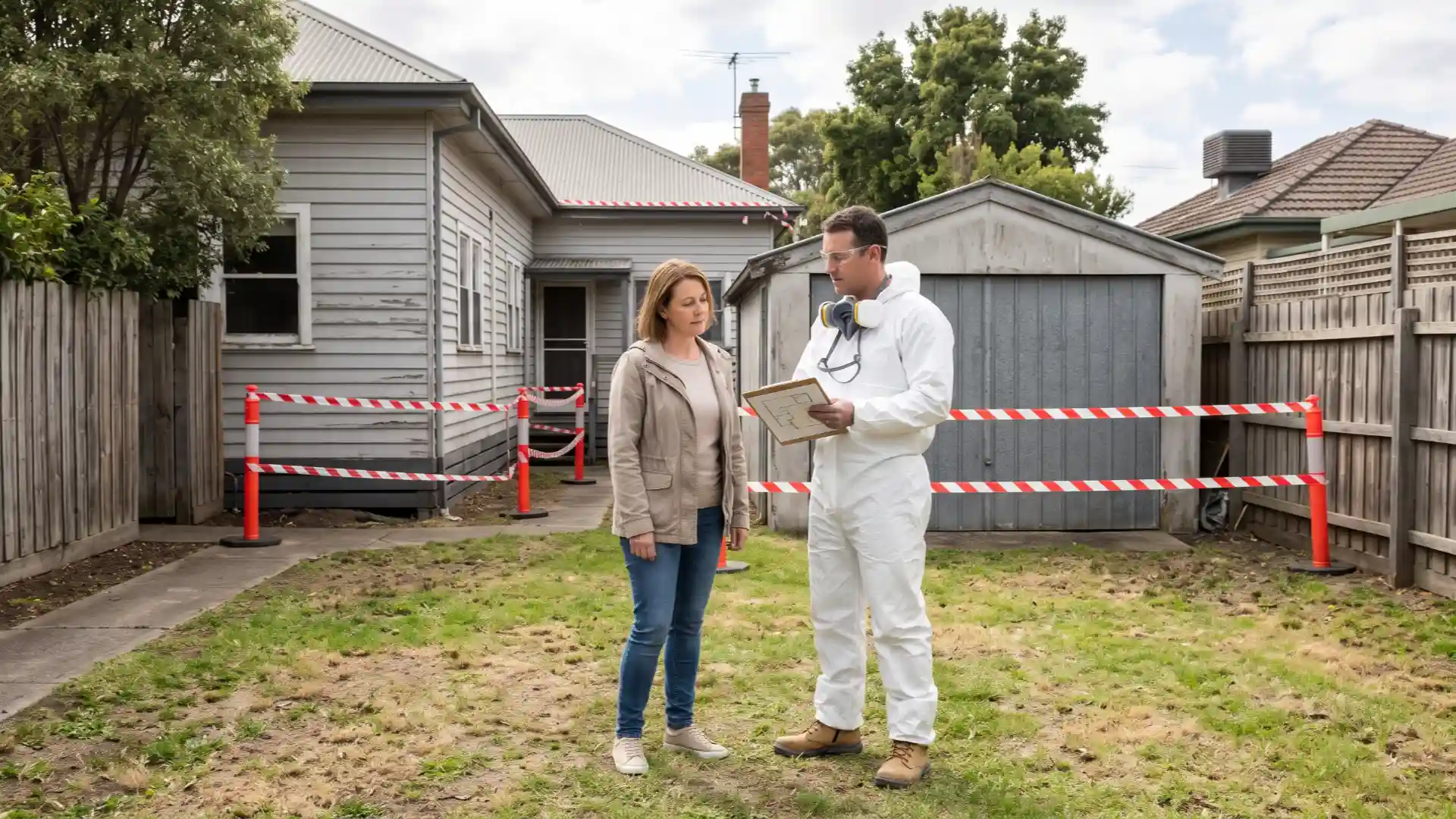
A property project does not always involve one large area of asbestos-containing material. Sometimes, a homeowner, builder or property manager has several separate areas that need attention. These may be identified during renovation planning, property maintenance or preparation for other building work.
Arranging each area as a completely separate enquiry can make the planning process harder than it needs to be. A more organised approach is to record the different locations, gather the information already available and ask whether the suitable work can be reviewed together.
Small asbestos removal enquiries still need careful assessment. The size of a task alone does not determine whether the material is suitable for removal, what controls are required or how the work should be scheduled. Material type, condition, access, site conditions and applicable safety requirements all matter.
This guide explains how to organise several potential tasks into one clear enquiry, what information to prepare and what to consider before requesting an asbestos removal quote.
Why combine separate asbestos removal tasks into one enquiry?
A property may have more than one area requiring attention. For example, an owner may have identified non-friable asbestos-containing materials in an external wall section, an outbuilding and a fence. A commercial property may have separate areas identified during maintenance or renovation planning.
When these concerns are raised at different times, important details can become scattered across emails, photographs, contractor conversations and project documents. A consolidated enquiry gives the removal contractor a clearer overview of the property and the work being considered.
The purpose is not to assume that every area can be handled in one visit. Instead, it is to provide enough information for the contractor to assess the proposed scope and determine whether the tasks are suitable to plan together.
A coordinated enquiry can help to:
- Present all known areas in one place.
- Explain the relationship between the tasks and the wider property project.
- Identify access arrangements that may affect more than one area.
- Share existing reports and relevant project information together.
- Allow the contractor to consider whether the work should be grouped or separated.
- Reduce avoidable back-and-forth caused by incomplete initial information.
Combining enquiries is primarily a planning decision. It does not automatically mean a lower price, a single site visit or a shorter project duration. Those outcomes depend on the actual work and the arrangements required.
Which small asbestos removal jobs may be suitable for a combined review?
The suitability of a combined project depends on the materials and site conditions, rather than simply the number of tasks listed by the property owner.
For example, several identified non-friable materials at one property may be suitable for review as part of the same enquiry. These could involve separate building sections or structures, provided the materials and proposed work fall within the contractor’s service scope.
JD Asbestos Removal specialises in suitable non-friable asbestos removal for residential, commercial and industrial properties. Each enquiry needs to be reviewed against the material type, condition and project requirements before a scope can be agreed.
Residential properties
A homeowner may have several areas to discuss before renovation or maintenance work begins. These could include identified non-friable materials associated with a house, garage, shed or fence.
Rather than sending separate messages about each location, the owner can prepare one summary describing the property and listing every area of concern. Existing reports and photographs may also help explain what has already been identified.
The contractor can then review whether the proposed work fits the residential removal service and whether the different tasks can be considered together.
Commercial and industrial properties
Businesses and property managers may need to coordinate asbestos removal with maintenance, refurbishment or other contractors. Several areas may be identified across one site, but each location can have different access, occupancy and operational requirements.
A combined enquiry should therefore explain the property layout and the activities taking place around the proposed work. This allows the contractor to consider the site requirements before discussing a suitable removal scope.
For projects involving business premises, review the relevant commercial and industrial asbestos removal services to understand the type of work JD considers.
When separate assessment may be necessary
Not every task should be grouped automatically. Different material types, damaged conditions, difficult access or separate site requirements may mean that areas need individual consideration.
A suspected material that has not been identified should not be treated as confirmed non-friable asbestos. Likewise, a damaged or deteriorated material may require a different professional response.
The contractor may recommend further information, a separate assessment or a different approach before confirming whether the work can proceed. Grouping tasks in an enquiry should never replace the proper assessment of each material and work area.
How to prepare grouped asbestos removal enquiries
A clear enquiry makes it easier to understand what the property owner is asking the contractor to review. It also helps prevent important details from being overlooked when several locations are involved.
Use the following preparation steps to organise the available information without disturbing suspected asbestos-containing materials.
1. List every area separately
Start with a simple list of the locations involved. Give each area a clear description, such as:
- Main house – external wall section.
- Detached garage – identified wall sheeting.
- Rear boundary – section of asbestos cement fencing.
- Commercial premises – separate identified wall or roof areas.
These are examples of how to organise an enquiry, not confirmation that every material or project will be accepted. The actual material and work requirements must be reviewed.
Avoid using vague descriptions such as “some sheets around the property”. A location-based list helps the contractor understand how many areas are involved and where they are situated.
2. Describe what is already known about the material
Explain whether asbestos has been confirmed through an appropriate report or whether it is only suspected. If a report is available, include it with the enquiry.
Do not identify asbestos based on appearance alone. Materials that look similar can contain different components, and photographs cannot reliably confirm whether asbestos is present.
If the material has not been identified, explain that clearly. Do not cut, drill, scrape, break, sand or remove a sample yourself to provide more information. Leave suspected material undisturbed and seek appropriate professional advice.
3. Record the condition without touching the material
If you already have photographs taken from a safe position, you may include them as supporting information. Do not approach, handle or disturb suspected material to obtain a closer photograph.
Mention any known damage, deterioration or previous disturbance. If you are unsure about the condition, say so rather than making an assumption.
This information is important because the condition of a material can affect the risk assessment and the suitability of the proposed work.
4. Explain access and property arrangements
Access can influence how different tasks are planned. For example, one area may be easily accessible while another is behind a locked gate, inside an occupied building or close to an active work zone.
Include relevant information about:
- Entry points and access restrictions.
- Whether the areas are indoors or outdoors.
- Occupants, tenants or business activities.
- Other contractors working at the property.
- Any known site rules or scheduling restrictions.
- Whether the different areas are located close together or in separate parts of the property.
Do not enter restricted or potentially unsafe areas to collect this information. Share what you already know and allow the contractor to explain whether further arrangements are required.
5. Explain the wider project
Tell the contractor why the work is being considered. It may be connected to a renovation, property maintenance, a planned refurbishment or another building project.
If there is a proposed project date, include it as a planning reference. Avoid assuming that removal can be completed by that date. The contractor needs to review the scope, site requirements and scheduling before confirming any proposed arrangements.
What affects the planning of multiple tasks?
The number of locations is only one part of a removal enquiry. A group of small tasks may still require careful planning if the areas have different conditions or access requirements.
Material type and condition
JD’s removal service is focused on suitable non-friable asbestos-containing materials. Non-friable materials are generally bonded within a solid matrix, such as cement. Friable asbestos is different: it can be crumbled, pulverised or reduced to powder by hand pressure when dry, or through a work process.
The distinction is important. A property owner should not assume that a material is non-friable because it looks solid or appears undamaged.
WorkSafe Victoria explains the difference in its guidance on friable and non-friable asbestos. If the material type is uncertain, seek appropriate professional advice before planning removal.
Total scope and work requirements
A contractor needs to understand the proposed work across all listed areas. This includes the type and approximate extent of the material, its condition and the work required at each location.
Several small tasks can create a more involved project when considered together. The total scope may affect the removal method, controls, site preparation and time required.
Do not assume that combining small asbestos removal tasks makes the project simpler in every case. A review is needed to determine whether grouping is practical and appropriate.
Site access and nearby activities
Access arrangements can be different for each area. A garage may have a clear entry point, while a fence section may be close to a neighbouring property or a shared access path. A commercial site may have operating hours, delivery movements or other contractors to consider.
These details should be included in the initial enquiry. They help the contractor understand the practical requirements before discussing a proposed schedule.
Applicable safety and waste requirements
Asbestos removal is subject to safety and environmental requirements. The relevant obligations depend on the type of material, quantity, location, who is carrying out the work and the circumstances of the project.
Asbestos waste must be managed appropriately and taken to a facility authorised to receive it. JD’s waste-management arrangements relate to asbestos waste generated through its own agreed removal work; they should not be confused with a standalone waste collection service.
Does combining small asbestos removal tasks reduce the quote?
It is reasonable to ask whether several tasks can be considered together when requesting an asbestos removal quote. However, combining enquiries does not guarantee a discount or a lower overall project cost.
A quote needs to reflect the work actually required. Factors may include:
- The type and condition of the materials.
- The number and location of work areas.
- The extent of the material involved.
- Site access and preparation requirements.
- Occupancy and nearby activities.
- The controls and equipment required.
- Waste handling, transport and disposal arrangements.
- Whether the tasks can be scheduled together or need separate stages.
For example, several areas at one property may appear close together but still require different access arrangements or work controls. In another situation, the areas may be straightforward to review as one project. The details make the difference.
When requesting a quote, ask the contractor to explain the proposed scope and whether the listed areas have been included. If some locations need separate consideration, clarify how they will be addressed.
Avoid comparing prices based only on the number of areas. A useful comparison should consider the materials, agreed work, safety arrangements and waste-management responsibilities included in each proposal.
Common mistakes when organising multiple asbestos removal tasks
A few avoidable mistakes can make an enquiry less useful or create confusion during planning.
Sending separate enquiries without linking the project details: If all areas are at the same property and form part of one project, explain that connection. The contractor can then decide whether a combined review is appropriate.
Assuming every material is non-friable: Material type cannot be reliably confirmed by appearance. State what is known and provide existing reports where available.
Leaving out damaged or deteriorated areas: Do not hide or minimise known damage. Explain the condition as accurately as possible without touching the material.
Expecting one visit automatically: A combined enquiry does not confirm that all work can be completed on the same day. The contractor must review access, controls, scope and scheduling.
Treating a quote as confirmation of removal suitability: A preliminary enquiry is not a substitute for the information and assessment needed to establish the final work scope.
Disturbing materials to make the enquiry easier: Never break, drill, cut, scrape or move suspected asbestos to estimate quantities or take photographs. Keep people away from the affected area and seek appropriate professional advice.
How JD reviews a combined removal enquiry
A useful first step is to provide a clear description of the property and every area involved. JD Asbestos Removal can review enquiries for suitable non-friable asbestos removal at residential, commercial and industrial properties across Melbourne and selected Victorian service areas.
The review can consider the following information:
- Property details: The suburb, property type and whether the site is residential, commercial or industrial.
- Material information: What materials are involved and whether asbestos has been identified through existing reports.
- Separate work areas: A list of each location and the approximate extent of the material, where known.
- Site arrangements: Access restrictions, occupancy and other work taking place nearby.
- Project timing: Any relevant renovation or maintenance dates that may affect planning.
- Available documents: Existing asbestos reports, project notes and photographs already taken from a safe position.
After reviewing the information, the team can discuss whether the enquiry appears to fit its non-friable removal service and what further details may be needed. The final scope, quote and scheduling arrangements depend on the project requirements.
Property owners who want to understand the wider risks before arranging work can also read JD’s related guide, asbestos risks and awareness before renovation or removal. It explains why suspected asbestos should not be disturbed and why appropriate identification matters.
Plan several asbestos removal tasks together with clearer information
When several areas need attention, a well-organised enquiry is a practical starting point. Listing each location, sharing existing reports and explaining access arrangements gives the contractor a clearer picture of the work being considered.
The key is to treat every area as part of the review, rather than assuming that all tasks are automatically suitable for one removal plan. Material type, condition, access and applicable safety requirements still need to be considered individually.
If you have several areas to discuss, prepare the available property and project information and explain that you would like the tasks reviewed together. JD Asbestos Removal can consider enquiries for suitable non-friable asbestos removal and discuss the next steps.
To request an assessment of your project requirements and an asbestos removal quote, use the JD Asbestos Removal enquiry form. Include your suburb, property type, the areas involved and any existing reports. Do not disturb suspected asbestos to gather additional information.
Frequently Asked Questions
-
Can several small asbestos removal tasks be combined into one enquiry?
Yes. You can describe the different areas at the same property in one enquiry and ask whether they can be reviewed together. Each material and location still needs to be assessed for suitability, condition, access and project requirements.
-
Does combining small asbestos removal jobs reduce the overall cost?
Not necessarily. A combined enquiry does not guarantee a discount or a single visit. The quote depends on the materials, work scope, access, safety controls, scheduling and waste-management requirements.
-
Can different non-friable asbestos materials be included in one quote?
You can list different identified non-friable materials in one enquiry. The contractor will need to review each material, its condition and the work involved before confirming which items can be included in the agreed scope.
-
What information should I provide when requesting a combined asbestos removal quote?
Provide the property suburb and type, a list of each area, information about whether asbestos has been identified, existing reports, known access restrictions and any relevant project dates. Do not disturb suspected materials to collect extra information.
-
Can JD assess small asbestos removal tasks at residential and commercial properties?
JD Asbestos Removal considers suitable non-friable asbestos removal enquiries for residential, commercial and industrial properties across Melbourne and selected Victorian service areas. The team reviews the material and project requirements before agreeing on the work scope.