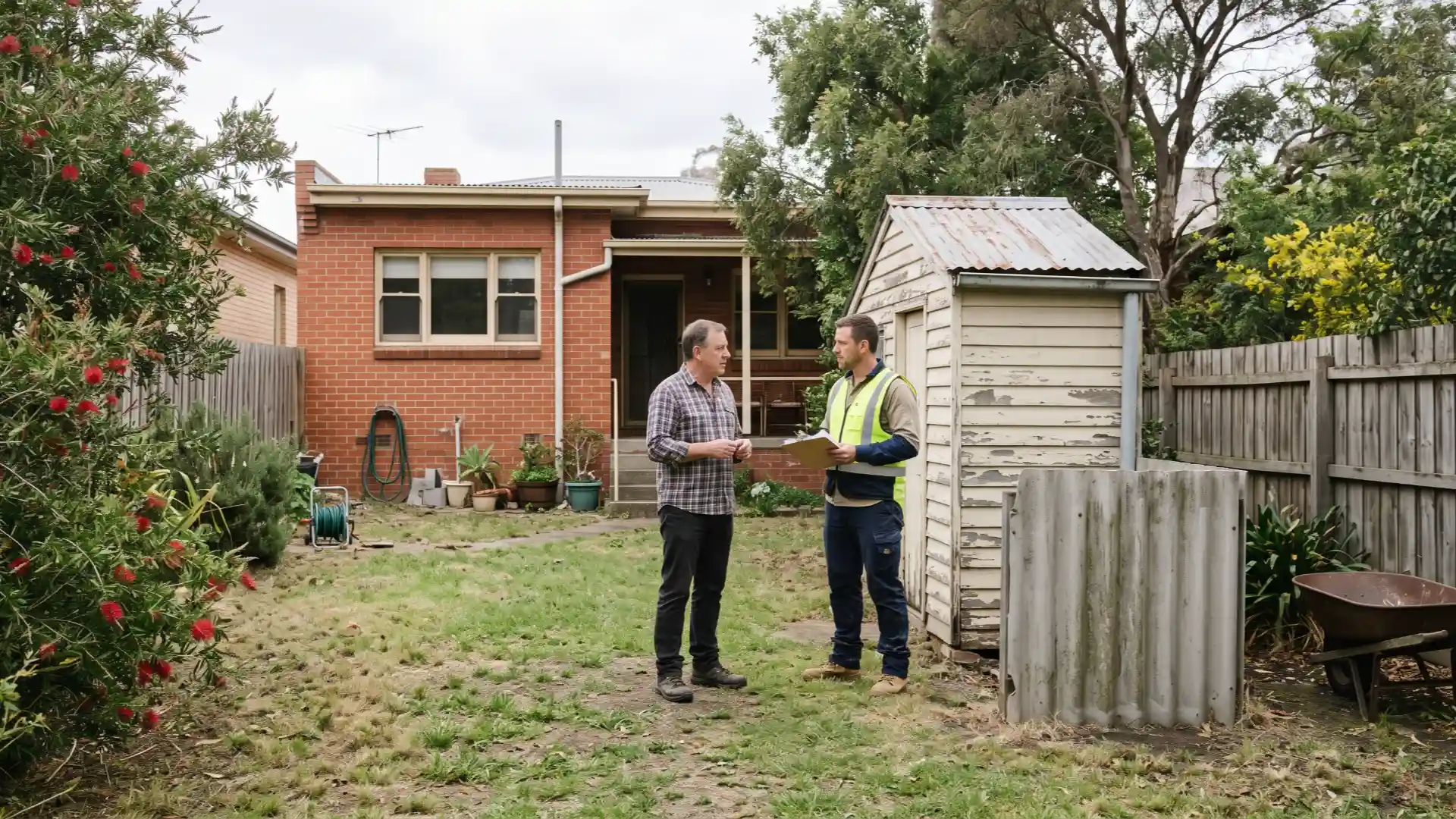
Not every asbestos removal project involves a large building, an entire roof or a major renovation. Sometimes, the concern is limited to a few sheets of old cement sheeting, part of a fence, eaves, a small outbuilding or another isolated area of a property. Even when the affected area appears small, it is important to understand the material, its condition and the requirements that apply before work begins.
If you are researching small asbestos removal jobs Melbourne, this guide explains what may count as a small project, when professional assistance is worth considering, what affects the cost and how to request an asbestos removal quote.
JD Asbestos Removal focuses on non-friable asbestos removal for suitable residential, commercial and industrial projects. Whether a particular job is suitable depends on the material, its condition, the site and the work required.
What Are Small Asbestos Removal Jobs?
Small asbestos removal jobs are projects involving a relatively limited amount of asbestos-containing material rather than the removal of asbestos throughout an entire property. The exact scope can vary considerably from one site to another.
Examples of potential small projects include:
- Removing a limited section of suspected asbestos cement fencing.
- Removing asbestos cement eaves as part of planned building work.
- Addressing a small area of non-friable asbestos-containing sheeting.
- Removing identified asbestos cement material before a renovation.
- Dealing with a limited amount of asbestos-containing material in a suitable outbuilding.
These examples are not a guarantee that every job can be treated as a small or straightforward removal project. The material must be assessed in context, and the proposed work must meet the relevant safety and legal requirements.
A few sheets can still present complications if they are cracked, deteriorating, difficult to access or close to occupied areas. Conversely, a larger-looking project may have a straightforward scope once a competent professional has assessed the site.
The important consideration is not just how much material is present. Its condition, location, accessibility and the possibility of disturbing asbestos fibres also matter.
Where Might Asbestos Be Found Around a Property?
Asbestos-containing materials were used in a range of older Australian building products. In some properties, asbestos may be present in cement sheeting used for walls, eaves, fences, garages, sheds or other external structures.
However, you cannot reliably identify asbestos simply by looking at a material. Some products may resemble asbestos cement but contain different materials. The age of a building can provide useful context, but it does not confirm the contents of a particular sheet.
If you suspect asbestos, avoid drilling, cutting, sanding, breaking or otherwise disturbing the material while arranging appropriate advice.
For further background, read JD Asbestos Removal’s asbestos risks and awareness information.
Where identification is uncertain, an appropriate assessment or sampling process may be needed. Sampling should be undertaken by a competent person, with analysis arranged through a suitable laboratory where required. Do not collect a sample yourself unless you have confirmed the appropriate procedure and are competent to carry it out safely.
Why Small Jobs Still Need Careful Planning
The word “small” can make an asbestos project sound less serious than it is. But asbestos safety is not determined by the area alone.
Non-friable asbestos usually has fibres bound within a solid material, such as asbestos cement. When the material is intact and undisturbed, it is less likely to release airborne fibres than friable asbestos. However, deterioration, impact, crushing or work that disturbs the material can increase the risk.
WorkSafe Victoria also notes that non-friable asbestos can deteriorate and may become friable. The condition of the material therefore matters when deciding how the work should be managed.
A suitable removal plan may need to consider:
- The type and condition of the material.
- The amount that needs to be removed.
- Access to the work area.
- Nearby residents, workers, visitors and neighbouring properties.
- How the area will be controlled during the work.
- How asbestos waste will be contained, transported and disposed of.
- Whether the proposed work requires a licensed asbestos removalist.
Understanding Small Asbestos Removal Jobs Melbourne
These considerations help establish a realistic scope and reduce the chance of unexpected problems during a project.
Understanding Non-Friable Asbestos Removal in Melbourne
Non friable asbestos removal Melbourne is relevant when the material is a bonded product, such as asbestos cement sheeting, that has not become friable. Although this type of material is generally more stable when intact, it still needs to be handled according to the requirements that apply to the particular job.
A common misconception is that a small amount of non-friable asbestos can always be removed without a licence. Victorian requirements are more specific than that.
WorkSafe Victoria states that limited unlicensed removal may be permitted in certain circumstances when the material is non-friable, the total area does not exceed 10 square metres and the total asbestos removal time does not exceed one hour over a seven-day period. Other safety obligations still apply. Work outside these limits, and work involving friable asbestos, may require a licensed removalist under the applicable rules.
These limits should not be treated as a recommendation to undertake removal yourself. The conditions, work setting and legal duties need to be considered before any decision is made.
For official guidance, consult WorkSafe Victoria’s information on managing asbestos and the Victorian Government’s guidance on unlicensed asbestos removal.
JD Asbestos Removal focuses on suitable non-friable asbestos removal projects. Contact the team to discuss the material and scope rather than assuming that a job qualifies based on size alone.
How Professional Small Asbestos Removal Jobs Are Planned
The process varies according to the property and the work involved, but a professional project generally starts with understanding what needs to be removed and what conditions may affect the job.
1. Describe the material and location
When making an enquiry, explain where the suspected asbestos is located. For example, it may be in external eaves, a boundary fence, a garage wall or another building element.
If you already have photographs taken from a safe distance, these may help explain the situation. Do not approach, touch or move suspected asbestos material to obtain better images.
2. Establish the scope
The removal provider needs enough information to understand the likely quantity, condition and accessibility of the material. Depending on the circumstances, an on-site assessment or further identification may be necessary before the scope can be confirmed.
3. Confirm the applicable requirements
The required approach depends on the material and the work. Relevant considerations can include licensing, risk controls, site access, notifications and waste management.
Do not assume that a job is exempt from licensing simply because it involves one sheet or a small section of a structure.
4. Plan the work area
Appropriate asbestos removal work involves controls designed to prevent exposure to airborne fibres and protect other people. The measures required depend on the job and applicable rules. They may include restricting access, using suitable protective equipment, controlling dust and managing contaminated materials.
5. Manage the asbestos waste
Asbestos waste must be handled and disposed of in accordance with the applicable requirements. In Victoria, it must be taken to a landfill authorised to receive it.
JD Asbestos Removal’s waste handling relates to asbestos generated through its own removal work. The business should not be assumed to offer standalone collection of general asbestos waste or material removed by someone else.
For disposal information, see the Environment Protection Authority Victoria’s guidance on managing asbestos waste.
What Affects the Cost of Small Asbestos Removal Jobs?
There is no single price that applies to every small project. Two jobs involving a similar amount of material may have different costs because of access, condition, work requirements and waste arrangements.
Factors that may affect the price include:
- Type of material: Different asbestos-containing products and conditions require different approaches.
- Quantity: The amount and dimensions of the material influence the scope.
- Condition: Broken, deteriorated or potentially friable material may require additional controls or a different specialist.
- Access: Restricted areas, height, nearby structures and site layout can affect the work.
- Preparation and controls: The requirements for isolating and managing the work area depend on the circumstances.
- Waste handling: Packaging, transport and authorised disposal arrangements need to be considered.
- Additional assessment: If the material has not been confirmed as asbestos, identification may be needed before the removal scope can be finalised.
The best way to understand the likely cost is to provide accurate information and ask for an itemised explanation of the proposed scope where possible.
How to Request an Asbestos Removal Quote
When requesting an asbestos removal quote, provide the property location, a description of the suspected material, its approximate size and the reason removal is being considered. Mention any visible damage or access restrictions you already know about.
It is also helpful to explain whether the work is part of a renovation, repair, demolition or replacement project. This context can help the provider understand the timing and any site coordination that may be required.
You can contact JD Asbestos Removal through its quote request page. The team can review the information you provide and advise whether the proposed non-friable asbestos removal work may be suitable for its services.
A quote should reflect the actual project scope. Avoid choosing a provider based only on the lowest advertised price if it is unclear what assessment, controls, handling or disposal arrangements are included.
Choosing a Provider for a Small Asbestos Job
A small project deserves the same careful attention to suitability and compliance as a larger one. Before proceeding, ask questions that help you understand who will undertake the work and how the project will be managed.
Consider asking:
- Does the provider handle the type of asbestos material involved?
- Is the proposed work within its service scope?
- What assessment is needed before the price can be confirmed?
- What controls will apply to the work area?
- How will asbestos waste generated by the job be managed?
- Are there any access, preparation or scheduling requirements?
- What is included in the quote, and what could change the price?
Check the relevant licensing requirements for the specific work. You can consult WorkSafe Victoria’s asbestos removal licence information for official guidance.
A suitable provider should be able to explain the scope clearly and identify when a project needs further assessment or a different specialist. Be cautious of anyone who guarantees that a job is simple without understanding the material and site conditions.
Can JD Asbestos Removal Help With Small Jobs?
JD Asbestos Removal provides non-friable asbestos removal for suitable projects across its service areas. A smaller job may be worth discussing, but acceptance depends on the material, site conditions, access and overall scope.
If you have suspected asbestos cement sheeting, eaves, fencing or another non-friable material, provide the available details through the JD Asbestos Removal services page or request a quote.
Keep in mind that the business’s associated waste handling is for asbestos waste generated through its own removal work, rather than general waste collection as a standalone service.
The next step is to explain what you have, where it is located and why you need it removed. This helps establish whether the project is appropriate and what further information may be required.
Discuss Your Small Asbestos Removal Job
If you need help with a limited amount of suspected non-friable asbestos, start by identifying the location, describing the material and explaining the work you want to undertake. Avoid disturbing suspected asbestos while arranging appropriate advice.
JD Asbestos Removal can review suitable project enquiries and discuss the scope, requirements and next steps. Visit the quote request page to provide your details and ask about an asbestos removal quote.
Taking the time to establish the right scope helps you plan the work responsibly and understand what is required before removal begins.
Frequently Asked Questions
-
Does a small asbestos removal job need a licensed removalist?
Not every limited non-friable asbestos removal task requires a licence, but exemptions apply only under specific conditions. Victorian guidance includes limits on the total area and time involved, and other safety duties still apply. Confirm the requirements for your exact situation before work starts.
-
What materials might be involved in small asbestos removal jobs?
Potential examples include asbestos cement eaves, fencing, wall sheets or material in an older outbuilding. Appearance alone cannot confirm whether a product contains asbestos, so appropriate identification may be needed.
-
How much does small asbestos removal cost in Melbourne?
Costs depend on the material, quantity, condition, accessibility, required controls and waste arrangements. Request an asbestos removal quote based on the actual job rather than relying on a general price estimate.
-
Can I put asbestos waste in my regular rubbish bin?
No. Asbestos waste must be managed and disposed of through appropriate authorised arrangements. Check the relevant Victorian guidance and landfill acceptance requirements rather than placing suspected asbestos in household rubbish.
-
Does JD Asbestos Removal collect asbestos waste from jobs completed by other people?
JD’s waste handling relates to asbestos generated through its own removal work. Do not assume that it offers standalone collection of general asbestos waste or waste from another contractor. Contact the business to clarify whether your specific project falls within its scope.
Leave a Reply