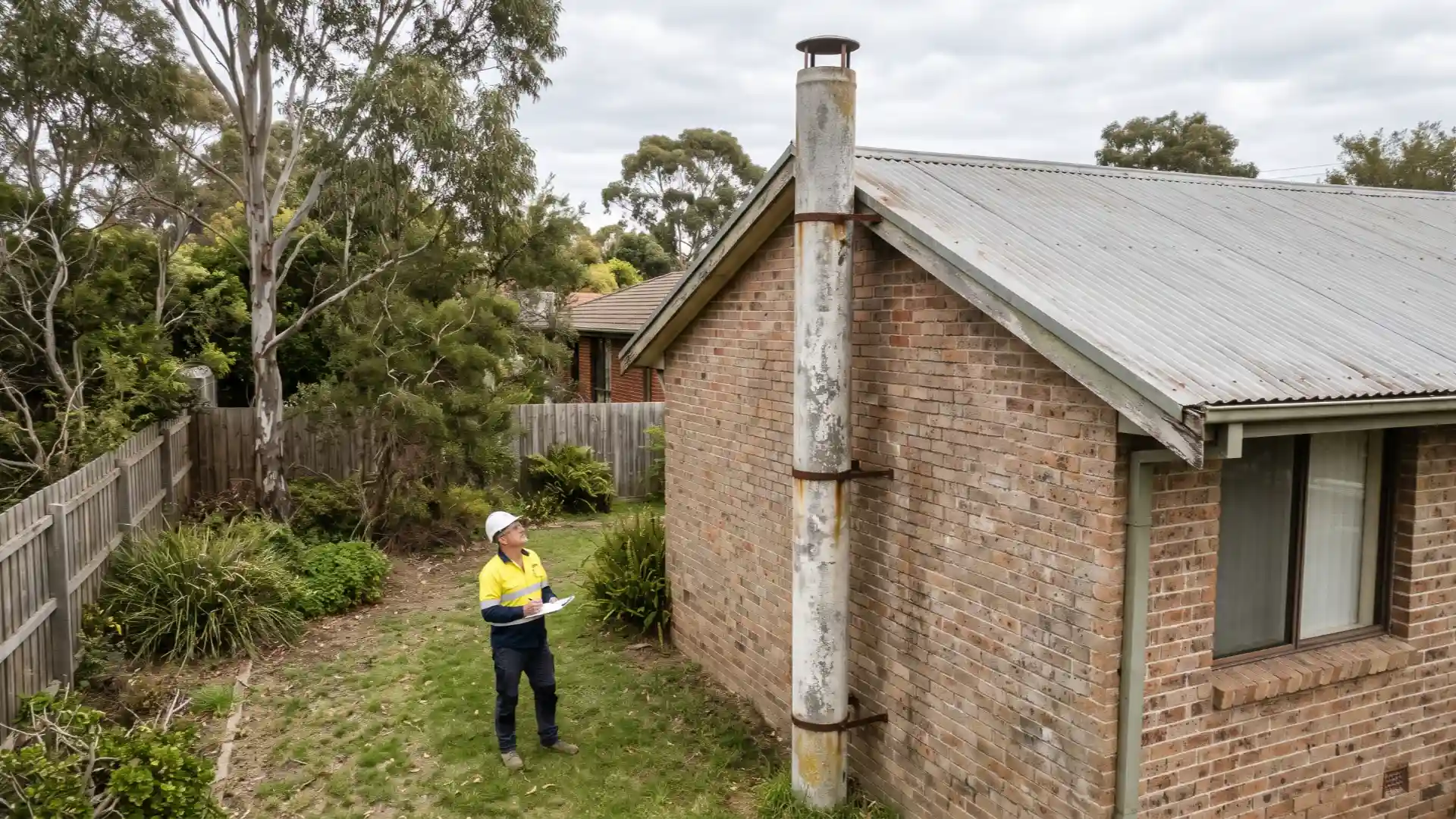
An unused or decommissioned flue pipe can become an important consideration when renovating an older property. Although the pipe may no longer serve a heating or ventilation purpose, its material and condition still matter. Some older building components may contain asbestos, so property owners should avoid assuming that an unused flue is safe to remove.
Asbestos flue pipe removal should be planned around the material’s condition, its location and the work scheduled at the property. Before arranging renovation, roof repairs or other building upgrades, establish whether the suspected material requires professional assessment and whether it falls within a suitable non-friable asbestos removal service.
For property owners in Melbourne, early planning can help avoid unexpected project interruptions and make it easier to coordinate the removal work with other contractors.
Why Decommissioned Flue Pipes Need Attention
A decommissioned flue pipe is a pipe or duct that is no longer being used for its original purpose. It may remain attached to a roof, pass through an external wall or connect to an older fireplace, heater or other building feature.
Even when it is no longer operational, the pipe may still form part of the property’s existing building materials. Its age, construction and condition can influence what should happen next.
Some older flues may be made from metal, masonry, cement-based products or other materials. Their appearance alone cannot reliably establish whether asbestos is present. A property owner should not treat every old flue as asbestos-containing, but should also avoid disturbing a material simply because it appears solid or inactive.
Common reasons for considering removal include:
- Renovating or updating an older property.
- Removing an unused fireplace or heating system.
- Preparing for roof replacement or other building work.
- Addressing an external structure that is no longer required.
- Improving the appearance or layout of a property.
- Resolving an issue identified during a broader renovation plan.
The first step is to understand what the flue is made from and whether the proposed work is suitable for the relevant removal service.
Asbestos Flue Pipe Removal: What Should Be Checked First?
Before arranging asbestos flue pipe removal, property owners should establish the basic details of the material and the proposed project. This does not mean attempting to inspect or dismantle the pipe themselves. It means gathering useful information so the appropriate professional can review the enquiry.
Consider the following points:
1. The location of the flue
A flue may be positioned above a roof, attached to an external wall or connected to an internal building feature. Its location can influence access arrangements, the work area and coordination with other trades.
For an external flue, note whether it is close to roof edges, neighbouring structures, gutters, solar panels or other building components. These details may help explain the access conditions when requesting a quote.
2. The visible condition
If the pipe appears cracked, deteriorated, weathered or damaged, do not touch it to investigate further. Avoid any activity that could disturb suspected asbestos-containing material.
Instead, describe what can already be seen from a safe distance. Existing photographs may help communicate the general location and condition, provided they can be taken without climbing onto the roof or approaching an unsafe area.
3. Available property information
Older renovation documents, building records or existing material reports may contain useful information about the property. If relevant records are available, share them with the professional reviewing the enquiry.
Do not assume that an old document covers every material at the property. The actual scope still needs to be established.
4. The intended building work
Explain whether the flue is being considered for removal as part of a renovation, roof replacement, fireplace upgrade or another project. This helps the contractor understand the reason for the enquiry and any scheduling considerations.
Understanding Non-Friable Asbestos Materials
Asbestos-containing materials are generally described as friable or non-friable. Non-friable asbestos is bonded into a solid material, while friable asbestos can be crumbled, pulverised or reduced to powder by hand pressure when dry or through a work process.
However, non-friable material can become friable if its condition deteriorates or it is affected by damage or unsuitable work processes. For this reason, the material should not be judged by appearance alone.
WorkSafe Victoria explains the distinction between these material types and the importance of appropriate asbestos removal practices. Read its guidance on friable and non-friable asbestos.
If a material is suspected to be friable, damaged or outside the company’s removal scope, it should not be treated as an ordinary non-friable removal enquiry. The appropriate next step must be established before any work is considered.
Common Situations Involving Old or Unused Flue Pipes
Different property projects can lead owners to enquire about decommissioned flue pipe removal. Understanding the reason for the work helps clarify the project requirements.
Removing an unused flue before renovation
An unused flue may interfere with planned changes to a roof, wall or room layout. If asbestos-containing material is suspected, its status should be addressed before renovation activities reach that area.
Planning asbestos flue removal before renovation can help property owners coordinate the relevant contractors and reduce the likelihood of unexpected interruptions.
Preparing for roof replacement
A flue that passes through or extends above a roof may need to be considered when planning roof replacement. The roofing contractor should understand that suspected asbestos-containing material may be present and that suitable removal arrangements may be needed before the roofing work proceeds.
The asbestos removal contractor and roofing team should agree on the relevant work sequence. Do not ask a roofing contractor to cut, break or remove a suspected asbestos-containing component as part of ordinary roofing work.
Addressing an external flue
An external flue may be exposed to weather and positioned in an area with restricted access. Its location can influence how the work is assessed and planned.
For external asbestos flue removal, useful enquiry details include the property’s general layout, the flue’s visible position, nearby structures and any known access limitations. These details help the contractor understand the proposed job without the property owner disturbing the material.
Small or isolated removal enquiries
Not every asbestos removal enquiry involves a large renovation. Some property owners may only need advice about one isolated component or a limited area of material.
Small asbestos removal jobs still require appropriate consideration of the material type, condition, quantity and work requirements. A small-looking component should not automatically be assumed to be straightforward or suitable for every removal provider.
Planning Removal Around Renovation or Building Work
Good coordination is important when an unused flue forms part of a wider property project. The property owner should communicate with the relevant contractors before work begins.
A practical planning discussion may cover:
- The flue’s location and its relationship to the roof or wall.
- Whether the material has been appropriately identified.
- The proposed renovation or roof work schedule.
- Access requirements and any site restrictions.
- Other contractors who may be working in the same area.
- The sequence in which the different activities should take place.
This information helps determine whether the removal can be planned as a separate stage before the next contractor begins.
Property owners should avoid arranging overlapping work that could lead to someone disturbing suspected asbestos material. If the removal scope or material condition is uncertain, pause the affected work until the appropriate next step has been established.
What Can Affect an Asbestos Removal Quote?
The cost of asbestos flue pipe removal depends on the specific project. A quotation should be based on the material and site requirements rather than assumptions made from the description of an unused pipe.
Factors that may influence the quote include:
- Material type: The material must fall within the suitable non-friable removal scope.
- Condition: The visible condition and any known damage may affect how the project is assessed.
- Location: A flue positioned above a roof or near other structures may involve different access considerations.
- Project size: The quantity and extent of the material can influence the work required.
- Site access: Roof height, surrounding structures and access limitations may need to be considered.
- Scheduling: The timing of removal in relation to renovation or roofing work may affect project coordination.
- Waste arrangements: The asbestos waste generated through the agreed removal work needs appropriate management and disposal arrangements.
Providing clear information at the enquiry stage can help the team understand the job and identify what additional details may be required before preparing a quote.
How to Prepare an Asbestos Removal Enquiry
When requesting an asbestos removal quote, give the contractor enough information to understand the property and the proposed work.
Where available, prepare:
- Property location: Provide the suburb or postcode so service availability can be considered.
- Property type: Explain whether the property is residential, commercial or industrial.
- Flue location: Describe whether it is on the roof, attached to an external wall or connected to another structure.
- Reason for removal: Explain whether the pipe is unused, decommissioned or affected by planned renovation.
- Existing information: Share relevant reports, records or photographs already available.
- Access considerations: Mention any known restrictions or nearby structures.
- Preferred timing: Explain whether the work needs to be coordinated with a renovation or roofing schedule.
Do not climb onto a roof, remove a cover or take the pipe apart to obtain more information. Only provide details that can be gathered safely.
How JD Asbestos Removal Can Help
JD Asbestos Removal provides suitable non-friable asbestos removal for residential, commercial and industrial properties across Melbourne and selected areas of Victoria.
For an enquiry involving an old or unused flue, the first step is to share the property details, the suspected material and the reason for the proposed work. The team can review the information and discuss whether the removal requirements fit its service scope.
Where the project is suitable, the work can be planned around the property’s access, material and scheduling requirements. JD also manages the asbestos waste generated through its own removal work, including appropriate handling and disposal arrangements.
You can explore the JD Asbestos Removal services to understand the company’s non-friable removal scope. Homeowners can also review the residential asbestos removal service for information about suitable residential projects.
The company does not treat every suspected flue as automatically suitable for removal. The material and project requirements need to be reviewed before the work can be confirmed.
Important Considerations Before Work Begins
A decommissioned pipe should not be disturbed simply because it is no longer in use. If asbestos is suspected, avoid drilling, cutting, breaking, sanding or dismantling the material.
For workplace projects, WorkSafe Victoria provides guidance about asbestos management and removal requirements. You can read its information on understanding and managing asbestos in workplaces.
Waste generated through asbestos removal must also be managed and dispose appropriately.
These requirements are important considerations when planning professional removal. They should not be interpreted as instructions for property owners to handle or transport suspected asbestos themselves.
Request a Quote for Decommissioned Flue Pipe Removal
If an unused flue pipe is affecting your renovation plans or you suspect it may contain asbestos, arrange the appropriate professional review before disturbing it.
Share the property’s location, the flue’s visible position, any available material information and the reason for removal. JD Asbestos Removal can review the enquiry and discuss whether the proposed work fits its suitable non-friable asbestos removal service.
Planning ahead can help you understand the next steps and coordinate suitable removal work with the rest of your property project.
Frequently Asked Questions
-
Can a decommissioned flue pipe contain asbestos?
Yes, some older building components may contain asbestos, but not every flue pipe does. The material cannot be reliably identified by appearance alone. Avoid disturbing a suspected material and arrange appropriate professional advice before work begins.
-
Can JD Asbestos Removal remove an unused asbestos flue pipe?
JD Asbestos Removal handles suitable non-friable asbestos removal. Whether a particular flue pipe can be included depends on its material, condition, location and the proposed work. Contact the team with your project details for a review.
-
Should an asbestos flue pipe be removed before roof renovation?
If suspected asbestos-containing material may be affected by roof renovation, its status and removal requirements should be addressed before the roofing work begins. Coordinate the relevant contractors so suspected material is not disturbed during ordinary building work.
-
What information should I provide when requesting an asbestos flue removal quote?
Provide the property suburb or postcode, property type, visible flue location, reason for removal, planned renovation dates and any existing reports or photographs that can be shared safely. Do not climb onto the roof or disturb the pipe to collect information.
-
Does JD handle asbestos waste after removal?
JD manages the asbestos waste generated through its own agreed removal work, including appropriate handling and disposal arrangements. This does not mean JD offers standalone asbestos waste collection or disposal services.
Leave a Reply