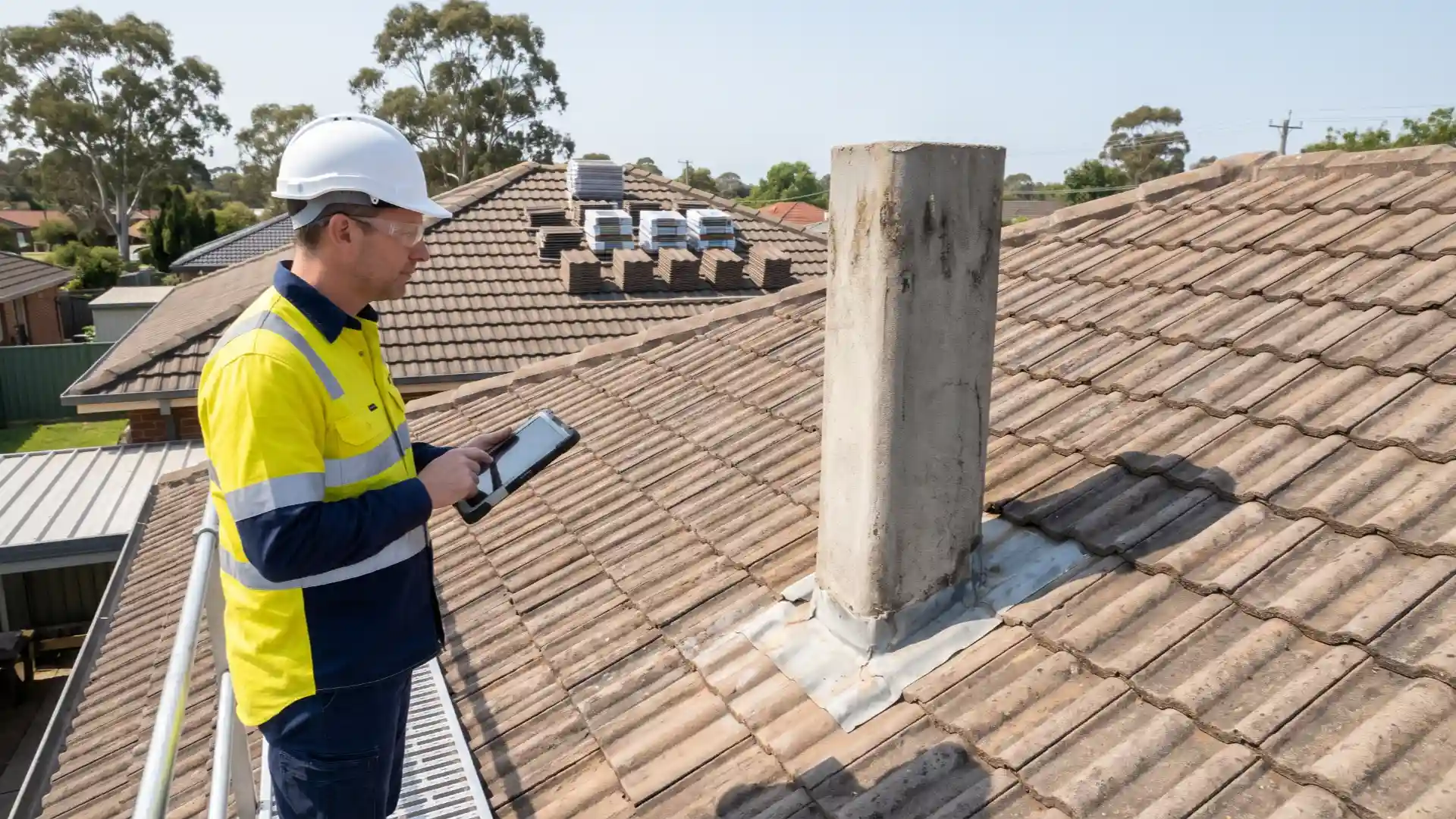
Planning a roof renovation or replacement requires careful attention to existing roof fixtures, particularly older flues that may contain asbestos. Asbestos roof flue removal should be considered before roofing work begins so the removal process can be properly coordinated with the roofing contractor. Arranging suitable non-friable asbestos removal early can help reduce scheduling conflicts, support safer work planning and prevent unexpected delays.
Asbestos-containing materials may be present in older Australian buildings, including roofing, eaves and other external building components. If a flue or surrounding material is suspected to contain asbestos, do not cut, drill, break, remove or disturb it to investigate. Appropriate professional identification and a suitable removal plan should be established before renovation work proceeds.
Why plan asbestos roof flue removal before roofing work?
Scheduling asbestos roof flue removal before roof replacement helps establish a clear sequence of work. If a suspected asbestos-containing flue is identified after roofing activities have started, the project may need to pause while the material is assessed and suitable removal arrangements are made. Early planning gives the property owner, asbestos removal contractor and roofing team an opportunity to coordinate access, timing and responsibilities before work begins.
Planning asbestos roof flue removal early helps property owners understand whether the existing material needs professional attention before the roofing project progresses. It also gives the relevant contractors an opportunity to discuss the project sequence rather than discovering an unresolved asbestos concern after work has been scheduled.
There are several reasons to consider this early:
- Project scheduling: Removal requirements may need to be addressed before roofing work can safely proceed.
- Contractor coordination: The roofing contractor and asbestos removal team may need to agree on the appropriate work sequence.
- Access arrangements: The flue’s position and surrounding structures can influence the project requirements.
- Clear project scope: Identifying the material and the work required helps avoid assumptions about what is included in each contractor’s responsibilities.
- Quotation preparation: Existing reports, property information and project details can help the removal team review the enquiry.
The aim is to establish a clear plan before the roofing contractor begins work that could affect suspected asbestos-containing material.
Identify the flue location and surrounding roof structure
The first useful step is to describe where the flue is located. An external flue may extend above a roofline, sit beside a wall or connect with another part of an older building. Its position can influence access arrangements and the scope of the proposed removal work.
When preparing an enquiry, consider the information you already know:
- Whether the flue is attached to the main residence, garage or another structure.
- Whether it is positioned on a sloping or relatively accessible roof area.
- Whether nearby trees, extensions or adjoining buildings affect access.
- Whether the roofing project involves the entire roof or only a particular section.
- Whether the flue is expected to remain, be removed or be reviewed as part of the renovation.
Do not climb onto the roof or approach the flue to collect measurements. Existing building plans, contractor records and photographs taken from a safe location may provide useful background information.
The purpose is to explain the property’s layout, not to make a technical assessment of the suspected material yourself.
Understand whether the flue contains non-friable asbestos
Not every older roof flue or external building component contains asbestos. Appearance, age and photographs alone cannot reliably confirm the presence or type of asbestos.
WorkSafe Victoria distinguishes between friable and non-friable asbestos-containing materials. Non-friable materials generally have fibres bonded within a stable material, while friable materials can be crumbled, pulverised or reduced to powder by hand pressure when dry. Non-friable material can also deteriorate or become friable through damage or work processes.
For this reason, the material’s condition and classification matter when determining whether a project is suitable for a non-friable removal service.
If you have an existing asbestos report, provide it when requesting a quote. If the material has not been identified, explain that it is suspected rather than confirmed and seek appropriate professional identification advice before any disturbance.
Coordinate roof renovation asbestos preparation with contractors
Roofing work and asbestos removal should not be treated as interchangeable activities. Each contractor needs to understand the work they are responsible for and when their part of the project can proceed.
Good roof renovation asbestos preparation starts with clear communication. The property owner or project manager should explain the suspected or identified material to the roofing contractor and the asbestos removal provider before work begins.
Useful coordination points include:
- The planned start date for the roofing project.
- The location of the suspected or identified flue.
- Whether the roofing contractor expects the flue to be removed before replacement work.
- Any existing asbestos reports or relevant property records.
- Access restrictions around the property.
- Whether other renovation activities are scheduled at the same time.
This discussion helps establish which work needs to be completed first. It also reduces the likelihood of one contractor making assumptions about another contractor’s responsibilities.
For commercial or industrial properties, the planning process may also need to consider site access, occupants, business operations and other scheduled activities.
Consider access requirements before requesting a quote
Access can be an important part of an external asbestos removal enquiry. The position of a flue, roof height, nearby structures and available working space may all influence how the proposed work is reviewed.
When explaining access conditions, describe what is already known without attempting to inspect the material yourself.
For example, you can mention whether the property has a narrow side passage, a nearby extension, limited vehicle access or an adjoining structure close to the flue. Existing photographs taken safely from ground level may also help communicate the general layout.
Do not attempt to reach the flue, move surrounding materials or remove roof components to make access easier. Any required arrangements should be discussed with the relevant professionals.
Providing accurate information about access helps the team understand the property before discussing the removal scope and quotation.
What affects an asbestos removal quote for a roof flue?
An asbestos removal quote should reflect the actual project requirements rather than relying only on the apparent size of the flue.
Several factors may influence the review:
1. Material identification and condition
Existing reports can help establish whether the material has been identified as asbestos-containing and whether it is classified as non-friable. If the material remains unidentified, further professional advice or appropriate testing arrangements may be needed.
2. Location and access
The flue’s position, surrounding roof structures, available access and property layout can affect the proposed work arrangements.
3. Agreed removal scope
The team needs to understand which material is being considered for removal and whether the work involves only the flue or other identified non-friable components within the agreed project scope.
4. Property type
Residential, commercial and industrial projects can have different access, occupancy and scheduling requirements.
5. Roofing schedule
The proposed start date and the sequence of other renovation activities may influence project coordination.
A clear enquiry allows the team to review these details and explain what further information may be needed before providing a suitable quote.
Small roof flue projects still need proper review
A flue may appear to be a relatively small component compared with an entire roof replacement. However, the apparent size of a component does not establish whether its removal is straightforward or whether it falls within a particular service scope.
Small asbestos removal jobs still need to be considered in relation to the material, its condition, the work process and applicable requirements.
WorkSafe Victoria explains that specific conditions apply to limited non-friable asbestos removal. These conditions should not be interpreted as general permission for homeowners or roofing contractors to remove suspected asbestos themselves.
For property owners, the practical approach is to describe the project accurately and allow the appropriate professionals to determine the next step.
JD reviews suitable non-friable asbestos removal enquiries for residential, commercial and industrial properties. The suitability of a particular flue removal project depends on the available information and agreed scope.
Preparing information for an asbestos removal quote
Before contacting a removal provider, gather the information and records you already have. You do not need to approach or handle the suspected material to prepare an enquiry.
A useful enquiry can include:
- Property suburb and property type.
- A brief description of the flue and its location.
- Whether asbestos has been confirmed or is only suspected.
- Existing asbestos reports or relevant building records.
- Photographs already available from a safe location.
- A short description of the planned roof replacement or renovation.
- The roofing contractor’s expected project timeframe.
- Any known access restrictions or site arrangements.
If the roofing contractor has provided a written scope of work, it may also help explain why the flue needs to be considered before the renovation begins.
This information supports a more useful conversation about the proposed removal work. It also helps avoid confusion between the roofing contractor’s responsibilities and the asbestos removal scope.
How JD reviews a roof flue removal enquiry
JD Asbestos Removal provides non-friable asbestos removal for suitable residential, commercial and industrial properties across Melbourne and selected Victorian areas.
The team reviews the property information, materials involved and proposed work to establish whether the project fits its removal service.
The general process involves:
Share the project details: Provide the property location, information about the flue, existing reports and the planned roofing work.
Review the proposed scope: The team considers the available information, material identification, condition, access and project requirements.
Discuss the quote and arrangements: If the project is suitable, the removal scope, quotation and proposed scheduling can be discussed.
Complete the agreed removal work: Suitable non-friable removal is carried out according to the agreed scope and applicable requirements. JD manages the asbestos waste generated through its own removal work.
If the material has not been identified, explain this clearly when making contact. An enquiry does not replace appropriate identification or laboratory testing.
You can explore JD’s residential asbestos removal service to understand the types of residential projects the team reviews.
Plan the next step before roofing begins
An existing roof flue should not become an unexpected issue once a roofing project is underway. Considering suspected asbestos early gives property owners and contractors time to understand the material, discuss the proposed work and coordinate the appropriate next steps.
Keep existing reports and project information together, communicate clearly with the roofing contractor and avoid disturbing any suspected asbestos-containing material.
If you are planning a roof replacement or renovation and need to discuss a suitable non-friable removal project, contact JD Asbestos Removal with the information already available. The team can review your enquiry and discuss whether the proposed work falls within its service scope.
Visit the JD asbestos removal quote page to share your property and project details.
Frequently Asked Questions
-
Should an asbestos roof flue be removed before roof replacement?
If a roof flue is identified or suspected to contain asbestos and the roofing work could disturb it, the material should be appropriately assessed and the required removal arrangements established before work begins. Discuss the project with the relevant professionals and avoid disturbing the material.
-
Can an old roof flue contain non-friable asbestos?
Some older building components may contain asbestos, but appearance and age alone cannot confirm the material or its classification. Appropriate professional identification and testing may be required before deciding whether it is suitable for non-friable asbestos removal.
-
What information should I provide for a roof flue asbestos removal quote?
Provide the property location, a description of the flue, existing asbestos reports, photographs already available from a safe location, access information and details of the planned roofing work. Explain whether asbestos has been confirmed or is only suspected.
-
Does JD Asbestos Removal handle roof-related asbestos removal?
JD Asbestos Removal reviews suitable non-friable asbestos removal projects, including identified roofing and eaves materials. Whether a particular roof flue project can be accepted depends on the material, its condition, access and agreed removal scope.
-
Can a roofing contractor remove suspected asbestos before replacing the roof?
A roofing contractor should not assume that suspected asbestos can be disturbed or removed as part of ordinary roofing work. Applicable asbestos requirements and the material’s classification must be considered, and suitable removal arrangements should be established before work proceeds.
Leave a Reply