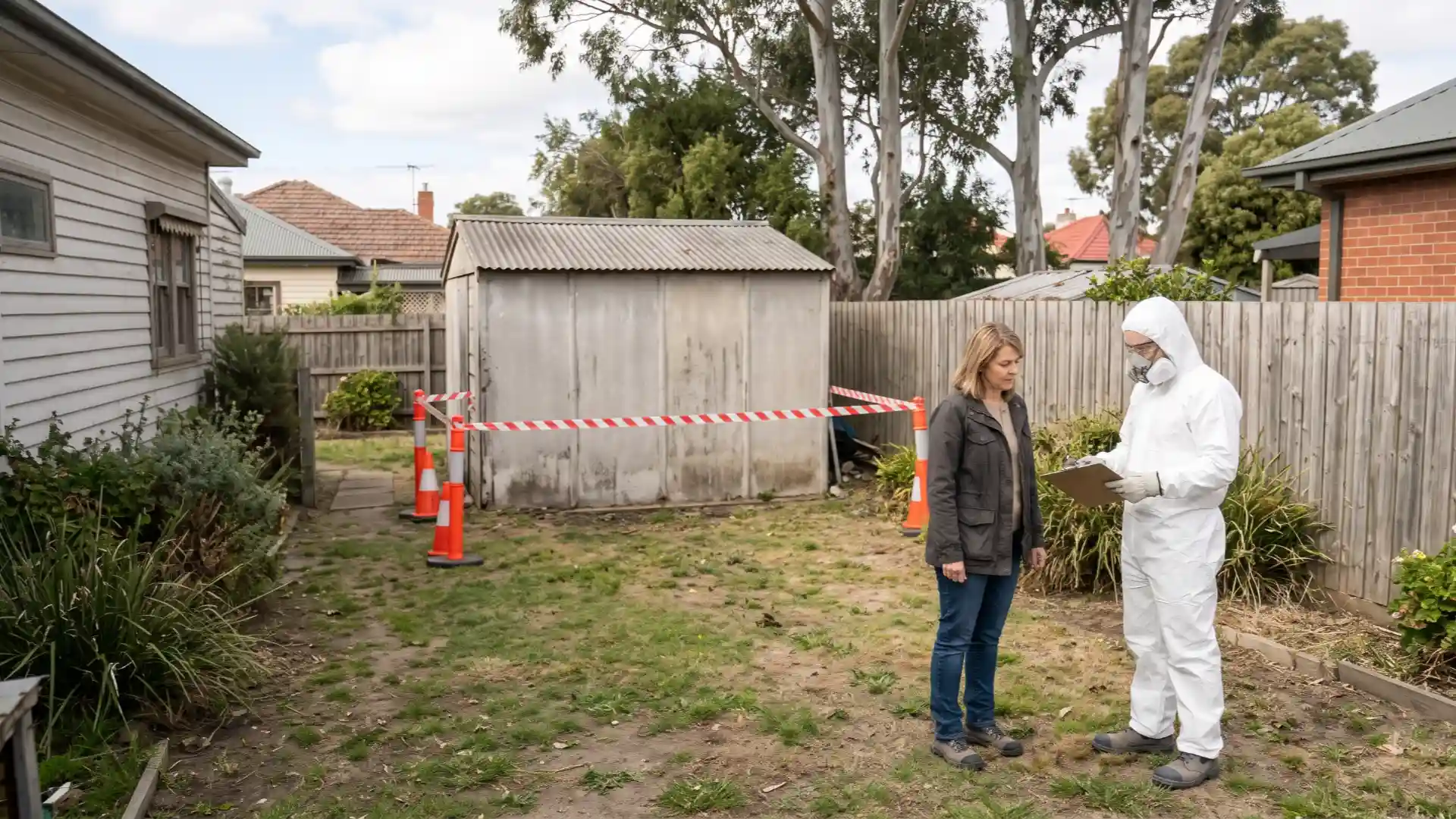
A small shed can appear to be a straightforward structure to renovate, replace or clear from a residential property. However, when older cement-sheet panels or other building materials may contain asbestos, the project needs careful consideration before any dismantling or building work begins. The size of the shed does not, by itself, establish whether the work is simple, low-risk or suitable for a particular removal service.
Good small shed asbestos removal planning starts with understanding the material, its condition, the location of the structure and the work the property owner wants to complete afterwards. These details help establish whether the proposed project involves identified non-friable asbestos-containing materials and whether it falls within the service scope of a professional removal contractor.
JD Asbestos Removal specialises in non-friable asbestos removal for suitable residential, commercial and industrial properties across Melbourne and selected Victorian areas. This guide explains the information worth preparing before making an enquiry, the practical factors that can affect a quote and why suspected asbestos should not be disturbed during early project preparation.
Why Small Shed Asbestos Removal Planning Matters
A detached shed may have cement-sheet wall panels, roofing components, internal linings or other older building products. Some asbestos-containing materials were manufactured with asbestos fibres bonded into cement or another stable material. WorkSafe Victoria identifies asbestos cement sheet as an example of non-friable asbestos-containing material. However, a product’s appearance, age or location cannot confirm that it contains asbestos.
The first step in small shed asbestos removal planning is therefore to establish what is known about the materials. If an appropriate report or previous assessment is available, keep it with the property’s renovation records. If the material is only suspected, do not treat a visual impression or photograph as confirmation. Seek appropriate identification advice before planning work that could disturb it.
A small structure can also create practical challenges that are not obvious from its floor area. It may sit close to a fence, have a narrow side entrance, share a boundary with a neighbouring property or contain stored items that restrict access. The surrounding garden, paving, trees and other structures may influence how a professional approaches the agreed work.
Planning early helps separate asbestos removal from ordinary shed dismantling, landscaping, construction and waste-clearing activities. This distinction is important because suspected asbestos materials should not be handled as ordinary building debris.
Identify the Shed Materials Before Work Is Arranged
Not every older shed contains asbestos, and not every panel in a structure should automatically be treated as asbestos-containing. A shed may include several different materials installed at different times. For example, wall sheets, roof products, timber framing, metal components, insulation and later repairs may all form part of the same building.
Property owners should gather existing material records rather than attempting to identify products themselves. Useful information may include previous asbestos registers, renovation documents, laboratory reports or records supplied by a former owner or property manager. If no reliable information exists, ask an appropriate competent professional about identification and testing options.
WorkSafe Victoria explains that there is no simple visual test for asbestos and that laboratory analysis should be carried out by an appropriately accredited laboratory. Its guidance also distinguishes friable material, which can be crumbled or reduced to powder by hand pressure when dry, from non-friable material, where fibres are generally bonded within a stable material.
This distinction matters because JD’s removal service is focused on suitable identified non-friable asbestos-containing materials. If a material is damaged, deteriorated, powdery or otherwise raises concern that it may be friable, do not assume it is suitable for JD’s non-friable service. Keep away from the affected area and seek the appropriate specialist advice.
For small shed asbestos removal planning, it is better to describe uncertainty honestly. Tell the contractor whether asbestos has been confirmed, whether a report is available or whether the material is only suspected. This avoids creating an inaccurate project scope before the material has been properly identified.
Understand the Condition and Construction of the Shed
The condition of a shed can influence the way a project needs to be reviewed. A structure that appears intact may still contain materials requiring careful management. Conversely, visible damage does not establish the exact material type or its classification. Both the condition and the proposed work need to be considered together.
Relevant observations to report include:
- Whether any panels appear cracked, broken, weathered or damaged.
- Whether the roof, walls, eaves or internal linings are included in the proposed work.
- Whether the shed has been affected by a storm, impact, fire or previous alteration.
- Whether repairs or additions have introduced different building materials.
- Whether the structure is attached to another building or stands separately.
- Whether the project involves removing selected materials or replacing the entire shed.
Do not touch, lift, scrape, sweep, drill, cut, sand, break or dismantle suspected asbestos-containing products to investigate their condition. Do not collect loose fragments or attempt to clean the area. If a panel is damaged or debris is already present, prevent people from approaching it and obtain appropriate professional advice.
A clear description of the condition helps the contractor understand what the owner has observed without turning the enquiry into a DIY inspection. Photographs taken from a safe distance may help show the general structure and access arrangements, but they cannot prove whether a material contains asbestos.
Plan Property Access and the Surrounding Work Area
A small shed may be positioned at the rear of a property, beside a driveway, behind a garage or within a narrow garden area. The route from the street to the structure can be just as important as the shed itself.
During small shed asbestos removal planning, consider the information a contractor may need about:
- Driveway width and available vehicle access.
- Side gates, narrow paths, steps or changes in ground level.
- Fences and boundaries adjoining neighbouring properties.
- Trees, garden beds, retaining walls and paved areas.
- Nearby homes, garages, windows and outdoor living spaces.
- Stored items or other structures close to the shed.
- Whether residents, tenants, pets or other contractors use the surrounding area.
These details help establish the practical conditions of the proposed work. For example, a shed located behind a house with a narrow side passage may require different access arrangements from a detached structure beside an open driveway. A property with shared access or close neighbouring buildings may also require additional coordination.
Owners should not move suspected asbestos materials or dismantle parts of the shed to create access. Instead, explain the access limitations during the enquiry. The contractor can then consider the information when reviewing the project and discussing suitable arrangements.
If the shed is part of a larger property improvement, identify which other activities are planned nearby. Landscaping, fencing, garage replacement, paving and general demolition may need to be coordinated with the asbestos removal stage. Keeping these activities clearly separated helps prevent unplanned disturbance of suspected materials.
How Non-Friable Asbestos Removal Fits the Project
Non-friable asbestos-containing products generally have fibres bonded within a solid material such as cement. WorkSafe Victoria notes that asbestos cement sheets are a common example. While intact non-friable products are generally less likely to release fibres than friable material, they can still present a health risk when disturbed, damaged or deteriorated.
JD specialises in non friable asbestos removal Melbourne property owners may require for suitable residential, commercial and industrial projects. The company reviews the identified material, its condition, location, access and proposed work before determining whether the enquiry fits its service scope.
A shed project may involve identified wall panels, suitable cement-sheet components or other non-friable materials. However, the building type alone does not determine whether JD can undertake the work. The actual material and agreed removal scope must be considered.
If the material has not been identified, make that clear when contacting JD. An appropriate identification or testing process may be needed before the removal requirements can be established. JD’s non-friable removal service should not be confused with a general promise to remove every type of asbestos material.
The official WorkSafe Victoria asbestos guidance provides further information about asbestos-containing materials, their categories and workplace management responsibilities. It is useful background for property owners and project coordinators, but it does not replace advice about a particular shed or removal project.
What Affects a Small Shed Asbestos Removal Quote?
A quote should reflect the actual project rather than an assumption based only on the shed’s dimensions. Two structures with similar floor areas may have different materials, access conditions and removal requirements.
When preparing small shed asbestos removal planning, consider the following factors.
1. Identified Material and Quantity
The type and amount of identified material help define the proposed scope. A project involving selected wall panels may differ from one involving several wall sections and roofing components. The contractor needs to understand which materials are included and whether the available identification information covers the relevant areas.
2. Material Condition
The condition of the material can affect whether the proposed work is suitable for a non-friable removal service. Damaged, deteriorated or potentially friable material must not be assumed to fall within the same scope as intact non-friable cement sheeting. Any uncertainty should be raised before work is arranged.
3. Location and Access
A shed with direct access from an open driveway may present different site conditions from one behind a house or within a confined rear garden. Gates, pathways, slopes, fences and neighbouring structures may all affect project planning.
4. Surrounding Property Features
Nearby buildings, gardens, outdoor areas and shared boundaries may need to be considered when defining the work area. Owners should explain whether the shed is close to occupied rooms, neighbouring properties or other areas used by residents.
5. Project Timing and Other Contractors
The intended schedule can influence how removal is coordinated with later building work. If a builder is waiting to replace the shed or a landscaper is scheduled to work nearby, provide those details early. The removal stage should be agreed before ordinary dismantling or renovation begins.
6. Available Reports and Project Information
Existing reports, photographs, plans and renovation details can help clarify the enquiry. Missing information may mean that further identification or discussion is needed before a suitable quote can be prepared.
For these reasons, an asbestos removal quote should be based on the material and project information available, not a generic price per shed. JD reviews the enquiry and discusses whether the proposed non-friable removal work fits its service scope.
Preparing a Clear Enquiry for JD Asbestos Removal
A well-organised enquiry can make the initial discussion more useful. It does not need to be complicated. The aim is to provide enough information for JD to understand the property, the suspected or identified material and the work being considered.
Before sending an enquiry, prepare:
- Property location: Provide the suburb or postcode so the service area can be considered.
- Structure details: Explain whether the shed is detached, attached to another building or positioned within a larger outbuilding area.
- Material information: State whether asbestos has been confirmed or is only suspected. Include existing reports if available.
- Photographs: Share existing images taken from a safe distance, showing the overall shed and general access route. Do not approach or handle damaged material to obtain photographs.
- Condition observations: Describe any visible damage or deterioration without touching or testing the material.
- Planned work: Explain whether the shed is being renovated, replaced, cleared or affected by a wider property project.
- Access details: Mention gates, narrow pathways, shared driveways, nearby buildings or other restrictions.
- Timing considerations: Explain any planned renovation or contractor dates that may affect project coordination.
These details give JD a clearer starting point for reviewing the request. They do not automatically confirm that the material is asbestos-containing or that the work can be accepted. The proposed scope must still be assessed against the company’s non-friable removal service.
For suitable small asbestos removal jobs, a defined scope is particularly important. A property owner may describe a project as small because the shed is compact, but the actual material, condition and access requirements still determine what needs to be reviewed.
Why DIY Shed Dismantling Is Not the Right Starting Point
Removing a small shed may seem like an ordinary property-maintenance task. However, if suspected asbestos-containing materials are present, treating the structure as standard demolition waste can create unnecessary exposure risks.
Do not remove panels, pull out fixings, break sheets, use power tools, sweep debris or place suspected materials in a general skip. These actions can disturb the material and potentially release hazardous fibres. Children, visitors, neighbours, pets and other tradespeople may also be affected if the area is approached without suitable controls.
The safest starting point is to stop work around the suspected material and keep others away. Do not attempt to package, transport or dispose of asbestos yourself based on online instructions. Obtain appropriate professional advice about identification and the next steps.
Coordinating Shed Removal with Future Property Improvements
A shed may be removed because the owner wants to install a new storage structure, extend a garden, improve vehicle access or prepare the property for a broader renovation. The asbestos removal stage should be considered before the ordinary building or landscaping activities begin.
When discussing small shed asbestos removal planning, explain what is expected to happen after the agreed removal work. For example, the owner may plan to replace the shed, install a new fence, prepare a concrete base or redesign the backyard. This context helps clarify why the work is required and which parts of the property are involved.
Where several contractors are engaged, the owner or project manager should coordinate their activities around the agreed asbestos removal scope. Builders and landscapers should not begin dismantling or disturbing suspected asbestos-containing materials while waiting for a separate removal arrangement.
A clear sequence can also help prevent misunderstandings about responsibility. JD’s role is limited to the agreed non-friable asbestos removal and management of waste generated through its own work. General shed reconstruction, landscaping, replacement materials and unrelated building work should be arranged separately with the relevant contractors.
Arranging Your Small Shed Asbestos Removal Enquiry with JD
The most useful first step is to explain the project accurately. Share the property suburb, the type of shed, the materials identified or suspected, available reports and the work planned afterwards. Include access details so the enquiry can be considered in the context of the actual property.
JD Asbestos Removal provides non-friable asbestos removal services for suitable residential, commercial and industrial properties. Its team reviews project information to determine whether the identified material and requested work fall within its service scope. If the material remains uncertain, appropriate identification may be needed before removal can be planned.
A small structure still deserves a properly defined removal plan. Taking time to explain the materials, access and intended property work helps establish a clearer starting point for a suitable professional enquiry.
Frequently Asked Questions
-
Can a small shed contain non-friable asbestos?
Yes. Some older sheds may contain asbestos cement sheets or other bonded building products. However, a shed’s age or appearance cannot confirm asbestos. Appropriate identification is needed before removal is planned.
-
Can JD remove asbestos from a small residential shed?
JD can review suitable residential projects involving identified non-friable asbestos-containing materials. Acceptance depends on the material, its condition, location, access and the agreed removal scope.
-
What affects a small shed asbestos removal quote?
The quote may depend on the identified material, quantity, condition, shed layout, site access, nearby structures and the work planned after removal. Providing available reports and project details helps JD review the enquiry.
-
Can I dismantle my shed before requesting an asbestos removal quote?
Do not dismantle, cut, drill, break or disturb suspected asbestos-containing materials. Keep people away from the affected area and seek appropriate professional advice before arranging work.
-
What information should I provide when enquiring about shed asbestos removal?
Provide the property suburb, shed description, available asbestos reports, existing photographs taken from a safe distance, material condition observations, access details and the work planned after removal. Photographs alone cannot confirm asbestos.