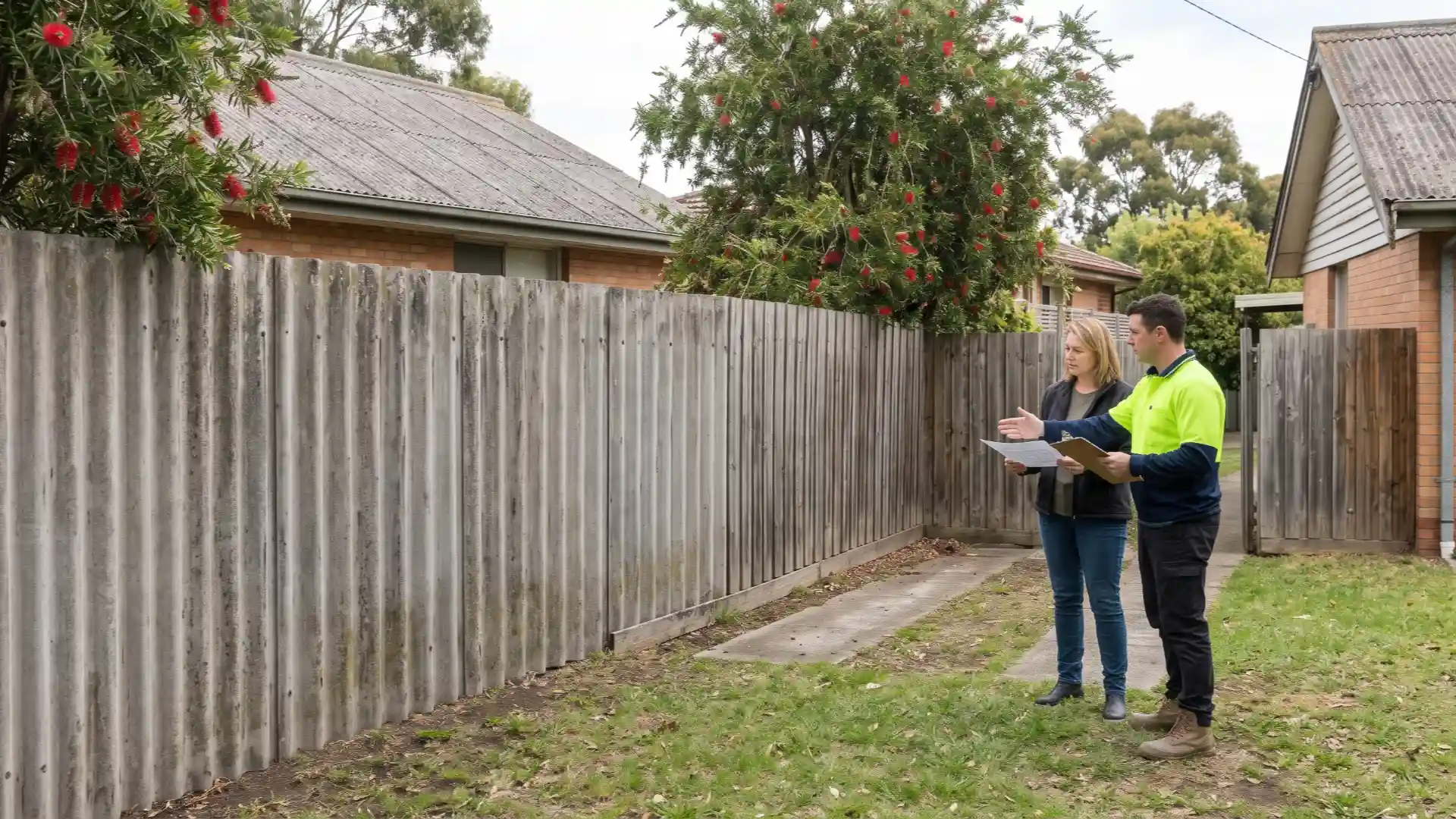
A damaged fence can become a concern when the panels may contain asbestos. Cracks, deterioration, impact damage or weathering can raise questions about the material’s condition and whether the affected area needs professional attention. However, not every older cement fence contains asbestos, and a damaged panel should never be disturbed simply to investigate it.
Professional asbestos fence removal starts with understanding what material is involved, its condition and whether the proposed work is suitable for the removal provider. JD Asbestos Removal considers suitable non-friable asbestos removal projects across Melbourne and selected Victorian areas. The team reviews the available information before agreeing on a project scope.
If you have noticed damaged asbestos fencing at your property, avoid touching or attempting to repair it. A clear enquiry can help establish the appropriate next step without creating unnecessary disturbance.
Why damaged asbestos fencing needs careful attention
Older properties may contain asbestos cement fencing installed many years ago. These panels can remain in place for long periods, but their condition may change through weather exposure, impact or deterioration. A fence that appears stable from a distance may still require professional consideration if there are visible cracks, broken sections or other signs of damage.
Asbestos cement is generally associated with non-friable material when the fibres remain bonded within the cement matrix. However, damage or deterioration can affect that condition. WorkSafe Victoria explains that non-friable asbestos can become friable due to factors such as damage by fire or certain work processes. Its guidance on friable and non-friable asbestos is a useful reference when understanding why material condition matters.
The important point is not to make your own classification based on appearance. A cracked, crumbling or severely deteriorated panel should not automatically be treated as suitable non-friable material. Where the condition may fall outside JD’s service scope, a provider appropriately equipped and authorised for the relevant work may be required.
When professional asbestos fence removal may be appropriate
Professional asbestos fence removal may be considered when asbestos-containing fence material has been appropriately identified and the proposed work falls within a suitable non-friable removal scope. The material, its condition, location and surrounding site requirements all matter.
A property owner may begin looking for damaged asbestos fence removal after noticing a panel has cracked, a section has been affected by an impact, or an old fence is being considered as part of a renovation. These situations are reasons to seek appropriate advice, not reasons to start dismantling the structure.
JD reviews suitable non-friable asbestos removal enquiries. If the material is badly deteriorated, crumbling, fire-damaged or potentially friable, do not assume the work can be accepted under this service. The condition and proposed work need to be considered before any removal arrangement is confirmed.
For property owners comparing an asbestos fence removal service, it is important to understand the actual scope offered. The provider should be able to explain what material and work are included, what information is still needed and whether the project is suitable for its service.
Signs that a fence needs professional review
Some visible changes may prompt a property owner to seek advice. These can include:
- Cracks or fractures across a fence panel.
- A section that appears broken or displaced.
- Deterioration around panel edges.
- Damage following an impact or severe weather.
- Sections that appear to be crumbling or breaking apart.
- A fence that is due to be affected by planned renovation or landscaping work.
These observations do not confirm that asbestos is present. They also cannot establish whether the material is friable or non-friable. Photographs may help explain the general location and visible circumstances during an enquiry, but they cannot conclusively identify asbestos.
Do not approach an unstable or damaged section to obtain a closer photograph. Do not cut, drill, sand, scrape, pressure-wash, break, move or attempt to repair suspected asbestos material. Keep people away from the affected area where reasonably possible and seek appropriate professional advice.
JD’s article on asbestos risks and awareness around older properties provides further context about where asbestos may be found and why suspected materials should not be disturbed unnecessarily.
Understanding non-friable asbestos removal in Melbourne
The term non-friable describes asbestos-containing material in which fibres are bonded within a stable material, such as cement. This classification is based on the material’s physical properties; it does not mean the material is harmless or that it can be handled like ordinary building waste.
For people researching non friable asbestos removal Melbourne, the condition of the fence is a key consideration. A material that was previously non-friable may deteriorate or change as a result of damage or other circumstances. WorkSafe Victoria’s guidance explains this distinction and why the classification must be considered carefully.
JD’s removal service is focused on suitable non-friable asbestos-containing materials. A request involving damaged asbestos fencing Melbourne properties should therefore explain what is known about the material and its current condition. If a report is available, include it with the enquiry. If asbestos is only suspected, make that uncertainty clear.
For a broader explanation of material identification and removal planning, read non-friable asbestos removal for Melbourne property owners. It explains why the material, project scope and available information should be considered before work is arranged.
What to prepare before requesting an asbestos fence removal quote
A useful asbestos fence removal quote enquiry should provide enough information for the team to understand the property and proposed work. You do not need to investigate or handle the fence yourself to prepare these details.
Consider including:
- Property location: Provide the suburb and general property details.
- Fence location: Explain whether it is a front, side, rear or boundary fence.
- Approximate size: If already known, provide an approximate length or the number of affected sections.
- Material information: State whether asbestos has been confirmed in a report or is only suspected.
- Visible condition: Describe what you have noticed from a safe position, without touching or moving the panels.
- Project reason: Explain whether the enquiry relates to damage, renovation, property maintenance or planned replacement work.
- Existing documentation: Include relevant reports or records already available.
- Access considerations: Mention gates, shared access, nearby structures or other known site restrictions.
This information helps JD review the enquiry and determine whether the proposed work may fit its service scope. It also helps avoid confusion between the removal of identified non-friable material and other work that may need a separate provider.
Can small asbestos fence removal jobs be considered?
Not every enquiry involves a long boundary fence or a large property project. Some property owners may only be concerned about a limited section or a small number of panels. Small asbestos removal jobs still require an individual review because the quantity alone does not establish whether the material or work is suitable.
The condition of the affected section, the type of material, site access and the proposed removal requirements all need consideration. A small area that is badly deteriorated or potentially friable should not be assumed to fit a non-friable removal service.
When discussing a smaller project, explain which section is involved and what is already known. Avoid estimating the material classification or attempting to remove a panel to reduce the scope. JD can review the details and discuss whether the work is suitable for its service.
Property owners considering residential asbestos removal can also review residential asbestos removal service information. The page outlines the types of residential materials and projects the team may review, including suitable asbestos cement fencing.
What affects the removal scope and project planning?
A damaged fence removal project can involve more than the panels themselves. The surrounding property, access arrangements and other planned activities may influence how the work is considered.
Important planning factors may include:
Material condition: The condition of the fence is central to determining whether the proposed work falls within a non-friable removal scope. Material that may be friable requires a different level of specialist consideration.
Fence location: A fence beside a driveway, garden, neighbouring property or occupied area may have access and site-planning considerations.
Extent of the affected area: The number of panels or approximate length can help describe the proposed work, although it does not determine suitability by itself.
Other property work: If landscaping, building renovations or replacement fencing are planned, explain the sequence of activities. This helps the team understand the wider project context.
Site access: Restricted entry, narrow side passages, shared driveways or nearby structures may need to be discussed before a scope is agreed.
Professional asbestos fence removal should be based on the actual site circumstances rather than a general assumption about how long a job will take or what it will cost. JD reviews the information and discusses the proposed scope, quote and next steps before any work is agreed.
Why asbestos waste management matters
Asbestos waste must be managed separately from ordinary household rubbish and general construction waste. EPA Victoria explains that asbestos waste must be directed to a place authorised to receive it. Its guidance on disposing of asbestos waste outlines the importance of using an authorised receiving facility and checking acceptance requirements.
JD’s service includes responsible management and disposal of asbestos waste generated through its own agreed non-friable removal work. This should not be interpreted as a standalone collection service for unrelated asbestos waste, material left by another contractor or waste already stored at a property.
Property owners should not place suspected asbestos material in household rubbish, recycling or green waste bins. Do not transport damaged panels yourself to obtain a disposal quote. Explain the circumstances in your enquiry and allow the appropriate arrangements to be discussed as part of the agreed removal scope.
How to choose a suitable asbestos removal provider
When comparing asbestos removal contractors, look beyond a general statement that a company removes asbestos. The important question is whether the provider’s actual service scope matches the material and work involved.
Before proceeding, consider asking:
- Does the provider undertake the relevant type of non-friable removal?
- Will the material’s condition and the proposed work be reviewed before the scope is agreed?
- What property and access information is needed?
- What work is included in the quote?
- How will asbestos waste generated through the agreed work be managed?
- Are any additional inspections, reports or arrangements required before removal?
A professional asbestos removal Melbourne enquiry should be based on accurate information and a clearly defined project. Avoid choosing a provider solely because the job appears small or the fence looks similar to another property.
JD reviews suitable residential, commercial and industrial non-friable asbestos removal enquiries across Melbourne and selected Victorian areas. The team can discuss the available information and explain whether the proposed work appears to fit its service.
How to request professional asbestos fence removal from JD
If you are concerned about a damaged fence, the next step is to provide a clear description of the property and the circumstances. Include the location, the affected section, any existing asbestos report and the reason the work is being considered.
When making a professional asbestos fence removal enquiry, distinguish between confirmed asbestos and suspected material. Explain whether the fence has visible damage and whether other property work is planned. Do not disturb the panels to collect additional information.
JD will review the enquiry and consider whether the proposed work falls within its non-friable asbestos removal scope. Further information may be needed before the team can discuss a quote or confirm the next steps. Submitting an enquiry does not automatically confirm project acceptance, a booking or a removal date.
To begin, use JD’s asbestos removal quote enquiry form and provide the information already available. The team can then review the request and discuss the appropriate next step.
Arrange the Right Support for Damaged Asbestos Fencing
A damaged fence should not be treated as an ordinary repair or demolition task when asbestos may be present. Avoid disturbing the material, do not rely on appearance to identify it, and seek appropriate professional advice about its condition.
Professional asbestos fence removal requires a clear understanding of the material, the proposed work and the site requirements. JD Asbestos Removal reviews suitable non-friable asbestos removal enquiries for residential, commercial and industrial properties across Melbourne and selected Victorian areas.
If your fence is damaged or deteriorating, share the available information with JD so the team can consider whether the proposed project is within its service scope. A clear enquiry is the practical first step towards understanding the work required.
Frequently Asked Questions
-
Can damaged asbestos fence panels be professionally removed?
Damaged asbestos fence panels should be reviewed before any work is arranged. JD considers suitable non-friable asbestos removal projects. If the material is badly deteriorated, crumbling or potentially friable, it may fall outside JD’s service scope and require a different appropriately qualified provider.
-
Can a damaged asbestos cement fence still be non-friable?
The classification depends on the material’s physical condition and whether the asbestos fibres remain bonded within the material. Damage or deterioration can affect that condition. Appearance alone cannot confirm the classification, so seek appropriate professional advice and do not disturb the fence.
-
Can I request a quote for a small asbestos fence removal job?
Yes. You can submit an enquiry for a small project. JD reviews the material, its condition, location, access and proposed work before deciding whether the project is suitable for its non-friable asbestos removal service.
-
What should I do if my suspected asbestos fence is cracked or broken?
Do not touch, cut, drill, sand, scrape, pressure-wash, move or attempt to repair the panels. Keep people away from the affected area where reasonably possible and seek appropriate professional advice. Photographs or appearance alone cannot confirm whether a material contains asbestos.
-
Does JD include asbestos waste disposal in its fence removal service?
JD manages and disposes of asbestos waste generated through its own agreed non-friable removal work. Unrelated asbestos waste, material left by another contractor or standalone waste collection should not be assumed to be included.
Leave a Reply