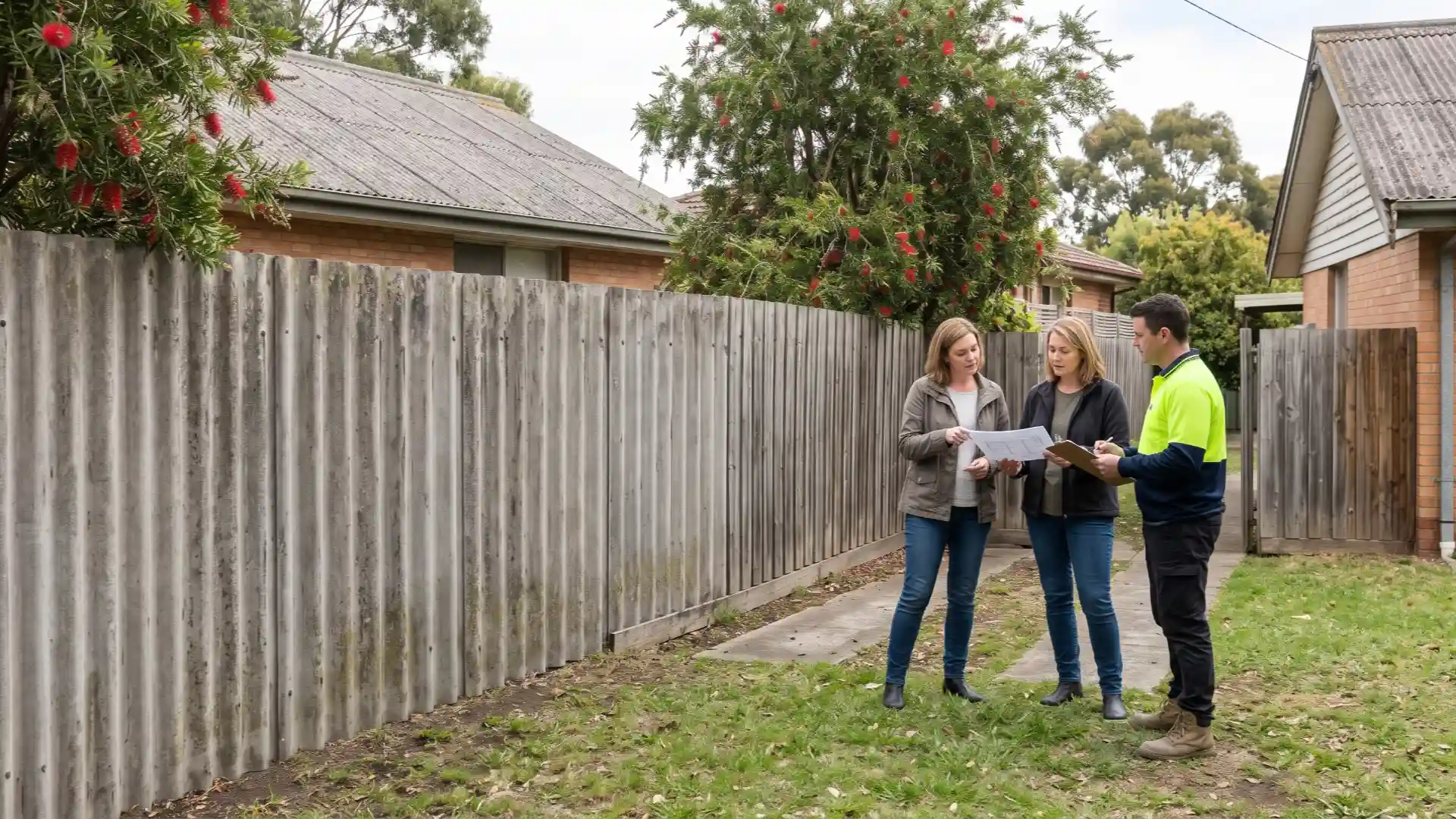
A fence along a shared property boundary can raise extra questions when it is suspected or confirmed to contain asbestos. Unlike a straightforward fencing project, the owners may need to consider the material, its condition, access to both properties, and who is authorized to arrange the work.
Making clear shared boundary asbestos fence removal enquiries helps establish what is known and what needs to be clarified before any removal is considered.
JD Asbestos Removal considers suitable non-friable asbestos removal projects across Melbourne and selected Victorian areas. Its service includes management and disposal of asbestos waste generated through its own agreed removal work. Every enquiry is reviewed against the material, its condition, the proposed work and JD’s service scope; submitting a request does not confirm acceptance or a booking.
Why shared boundary asbestos fence removal enquiries need clear planning
A boundary fence may serve two properties, but that does not automatically mean both owners have the same understanding of its ownership or condition. One owner may be planning renovations while the adjoining owner may simply want the existing fence addressed.
Before arranging a contractor, it is sensible to clarify the property circumstances and discuss the proposed project with everyone who may be affected.
The phrase shared boundary asbestos fence removal enquiries often describes more than a request to take down panels. It can involve questions about the location of the legal boundary, access, the length of fence involved, existing reports, and the timing of other property work.
These matters should be discussed separately from the technical removal method.
Do not assume that a shared fence gives either neighbour unrestricted access to the other property or authority to arrange work affecting both properties. If ownership, responsibility, consent, or boundary location is unclear, seek appropriate property or legal advice.
JD’s role is to review whether the proposed asbestos removal work fits its service scope, not to resolve private boundary disputes.
What to establish before requesting a removal quote
A useful enquiry gives the removal contractor a clear picture without asking the property owner to investigate or disturb the material. Before making shared boundary asbestos fence removal enquiries, gather information that is already available:
- Property location: Provide the suburb and the relevant property details.
- Fence location: Explain which boundary the fence follows and whether it appears to sit between adjoining properties.
- Material information: State whether asbestos has been identified in an existing report or is only suspected.
- Project background: Explain whether the enquiry relates to renovation, planned fencing work or another property improvement.
- Access considerations: Mention any known access limitations or the need to coordinate with the adjoining owner.
- Existing documents: Share relevant reports or professional information already available.
Do not cut, drill, sand, break, scrape, or move suspected asbestos fencing to obtain a better look or prepare photographs. Appearance alone cannot confirm whether a fence contains asbestos.
If the material has not been identified, explain that clearly and seek appropriate professional advice about identification before disturbance.
For additional context on the planning stage, JD has published a guide to preparing a property for professional asbestos fence removal.
That article discusses boundary considerations, property access, and project scope.
This current guide focuses more specifically on the information to provide when contacting a contractor about a shared-boundary project.
Understanding non-friable asbestos fencing
Many older asbestos cement products are classed as non-friable because the fibres are bonded within a solid material. However, non-friable does not mean harmless, and the material’s condition matters.
Damage, deterioration, or inappropriate work can change the risk. WorkSafe Victoria explains the distinction in its guidance on friable and non-friable asbestos.
The material and circumstances need to be considered before any work is agreed.
If the enquiry concerns a condition or material outside JD’s service scope, a different appropriately qualified provider may be required.
Property owners looking for non-friable asbestos removal Melbourne services should describe the material’s known condition and provide existing documentation rather than making their own technical assessment.
If the classification is uncertain, say so. Do not treat a visual impression or an online description as confirmation.
Coordinating with the neighbouring property owner
Communication can help prevent misunderstandings, particularly when a fence divides two occupied properties.
Before confirming arrangements, consider who is coordinating the enquiry, whether the adjoining owner has been informed, and whether access to neighbouring land may be needed.
Any agreement about access or shared costs should be handled between the relevant parties and not assumed to be part of the asbestos contractor’s quote.
It may also help to record the practical questions that need answering: which section is being considered, whether the proposed work affects one or both properties, who will be the main contact, and whether other contractors are scheduled nearby.
These details can help JD understand the project context when reviewing shared boundary asbestos fence removal enquiries.
For Melbourne homeowners, asbestos fence removal Melbourne enquiries should describe the actual property and the work being considered rather than assume every fence project is alike.
Where the structure is a home boundary, residential asbestos fence removal may be relevant, subject to the material and project requirements.
A request involving asbestos fencing between neighbours should also explain whether the adjoining owner has been informed.
If the issue concerns neighbouring property asbestos fence removal, clarify which property is making the enquiry and whether the proposed scope affects both sides.
These details can make shared asbestos fence removal enquiries more useful for an initial review.
In particular, shared boundary asbestos fence removal enquiries should explain whether the request concerns the whole fence or only a defined section.
When several owners are involved, shared boundary asbestos fence removal enquiries should identify one main contact for communication.
A contractor’s quote should relate to a defined removal scope. It should not be taken as an agreement to settle a boundary disagreement, provide legal advice, replace the fence, or carry out unrelated building work.
Replacement fencing and repairs should be arranged separately with the relevant provider unless explicitly confirmed as part of another agreed contract.
What can affect an asbestos fence removal quote?
An asbestos removal quote cannot be accurately determined from the phrase “one shared fence” alone. The proposed scope and site circumstances need to be reviewed.
Information that may be relevant includes:
- The approximate length and configuration of the fence, based on information already available.
- The property location and access arrangements.
- The material and its known condition.
- Whether the project involves a clearly defined section or a larger area.
- Any existing asbestos reports or relevant professional documentation.
- Coordination requirements involving occupants, neighbours or other contractors.
These details help explain why small asbestos removal jobs still need an individual review. A small area does not automatically establish that a project is suitable or that a particular removal method applies.
JD considers the actual request and confirms whether it falls within its non-friable removal service.
For suitable residential work, property owners can review JD’s residential asbestos removal service to understand the general types of residential projects considered. The service page is not a guarantee that every fence, material or location will be accepted.
Asbestos waste must be managed carefully and directed to a facility authorized to receive it.
The Environment Protection Authority Victoria provides guidance on disposing of asbestos waste, including the need to check that the receiving facility is authorized and to confirm its acceptance requirements.
It should not be assumed that the service includes unrelated waste already on the property, material left by another contractor, or standalone collection and disposal.
Clarifying this point when reviewing the proposed scope helps keep responsibilities clear.
Do not place suspected asbestos material in household rubbish, recycling, or green waste bins.
Leave the material undisturbed and discuss the appropriate next step with a suitable professional.
How to submit a clear enquiry to JD
When you are ready to discuss the project, provide the property suburb, a description of the fence and its location, what is known about the material, any existing reports, and the reason removal is being considered.
If the fence is shared, explain what has been discussed with the adjoining owner and whether access arrangements may need attention.
JD can review shared boundary asbestos fence removal enquiries to determine whether the proposed work appears to fit its non-friable asbestos removal scope.
Availability and project suitability are confirmed individually.
To start the discussion, use JD’s asbestos removal quote enquiry form or contact the team directly.
A submitted form is an enquiry, not confirmation that the work has been accepted or scheduled.
Get the right support for a shared fence project
A shared boundary asbestos fence project is easier to discuss when the property details, material information, and responsibilities are clearly explained.
Avoid disturbing suspected asbestos, clarify any neighbour or access issues independently, and provide existing reports where available.
Early, well-documented shared boundary asbestos fence removal enquiries can help clarify the project scope.
If you need to make shared boundary asbestos fence removal enquiries in Melbourne or a selected Victorian area, JD Asbestos Removal can review the details for a suitable non-friable removal project.
The next step is to submit accurate information so the team can consider the scope and explain what is required.
shared boundary asbestos fence removal enquiries
Frequently Asked Questions
-
Can an asbestos fence along a shared boundary be removed?
A shared boundary asbestos fence may be considered for removal where the material and proposed work are suitable. Property owners should clarify ownership, access and any relevant agreements before work is arranged. JD reviews suitable non-friable asbestos removal enquiries individually.
-
Do both neighbours need to agree before arranging asbestos fence removal?
Ownership, property boundaries, access arrangements and any applicable agreements should be clarified before work is arranged. If responsibility or consent is uncertain, seek appropriate property or legal advice before proceeding.
-
Can I request a quote for a small shared boundary asbestos fence?
Yes. You can submit an enquiry for a small asbestos fence removal project. JD will review the location, material, condition and proposed scope to determine whether the work is suitable for its non-friable asbestos removal service.
-
What information should I provide when requesting an asbestos fence removal quote?
Provide the property suburb, approximate fence location and length if known, information about the material and its condition, existing asbestos reports, access details and any relevant neighbour coordination information. Do not disturb suspected asbestos to collect information.
-
Does JD manage asbestos waste after fence removal?
JD manages asbestos waste generated through its own agreed removal work. The enquiry should clarify the proposed removal scope and waste arrangements. Unrelated asbestos waste or standalone collection should not be assumed to be included.
Leave a Reply